
Over half the SKUs a typical food and beverage brand is holding stock for right now haven't sold a single unit in three months. The data shows that's regardless of size—small operators and large ones both land close to that same 50% mark.
That's thousands of products sitting in a warehouse or fulfillment center, tying up cash and showing up on a balance sheet as an asset while behaving like nothing of the sort. And every day they sit there, they age toward a point where a food or beverage product becomes unsellable.
Where's all this stock coming from?
New products launch faster than most of them earn a lasting spot on the shelf.
In 2025, the 200 best new consumer products in the U.S.—spanning food, beverage and household goods—accounted for only 1% of total store sales, but they were responsible for 21% of the industry's total sales growth that year (Circana, 2026). In the U.K., only one in four new food and beverage product launches reach 1% household penetration in their first year (NielsenIQ, 2026).
Every new flavor and pack size becomes a permanent SKU as soon as it launches. Nothing in a normal planning cycle forces a brand to revisit that SKU once the initial excitement fades, and most don't. Since the review that would catch a stalled SKU isn't built into how most brands operate, catalogs keep expanding.
Adding more products to the catalog doesn't fully explain the amount of dead stock, though. That only happens if demand isn't keeping up, and right now, it isn't. U.S. retail food and beverage sales grew 2.2% in the first half of 2026, but that growth came entirely from higher prices. The actual volume of units sold stayed flat (Circana, 2026).
Sales stay about the same, but they're divided among more and more SKUs. Each new flavor or pack size takes a piece of the same demand instead of creating new demand. The average SKU sells less, and some fall below the level needed to justify keeping them in stock.
More channels, more problems?
When you add more sales channels, you have more inventory to keep track of and more chances for things to go wrong. So it makes sense to think you'd end up with more dead stock as well.
The data says otherwise. Single-channel food and beverage brands carry a median dead-stock rate of 66.7%. Brands selling across two or more channels carry 45.5%.
If a product is slow to sell on one channel, it gets another chance on a second or third. Wholesale, marketplaces and retail all offer different ways to reach buyers. An SKU only needs to sell on one of these to avoid sitting unsold. Single-channel brands don't have this backup: If something doesn't sell in their only channel, it doesn't sell at all.
Catching the stalled SKU
Single or multichannel, most brands do catalog reviews once or twice a year, tied to a planning calendar. An SKU can sit unsold for months before anyone with the authority to cut it takes a look.
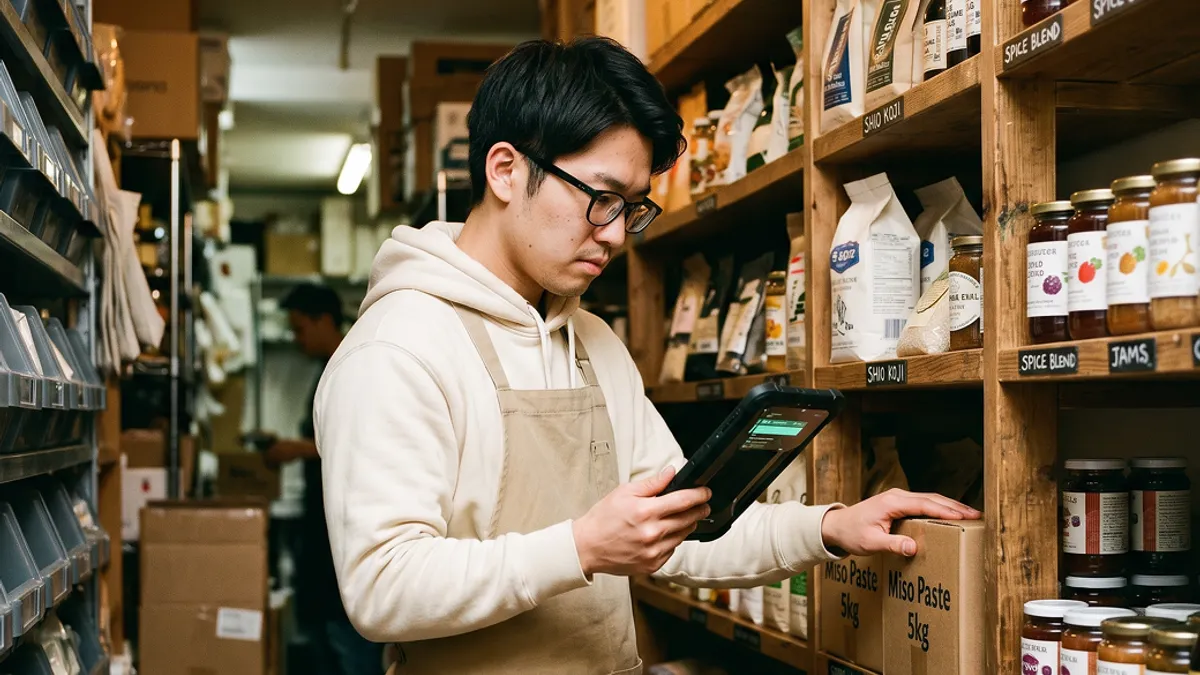
To catch this early, you need to track two numbers that change with every order and batch: how many days since an SKU last sold and how many days are left before it expires. A monthly report can't show either number accurately because they will have changed by the time anyone reads it.
Those two numbers together decide what happens next. A stalled SKU with months of shelf life left can sit until the next planned production run without cost. One close to its expiration date can't because the cost of waiting is the product itself. You need both numbers to be visible and up to date at the SKU and batch level to tell these two situations apart.
And it gets harder as a brand sells across more channels and locations. The same SKU might sell steadily through wholesale while sitting untouched at a retail location, or move well in one warehouse and stall in another. To catch that, businesses need to be able to see sales and shelf life by SKU, location and channel—and they need to do it continuously, based on real-time insight into sales and shelf life.
Rationalization is many times a once-a-year cleanup. In an industry adding new SKUs every quarter to a market that isn't growing, it needs to become more of a habit.