The Friday Checkout is a weekly column providing more insight on the news, rounding up the announcements you may have missed and sharing what’s to come.
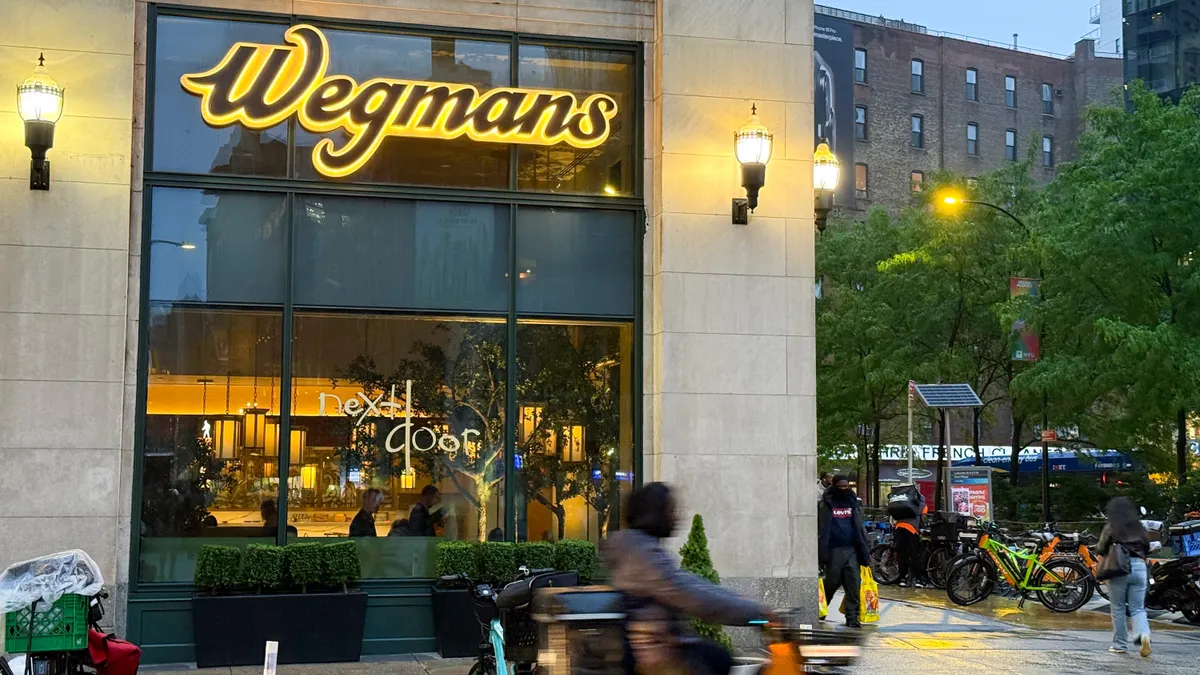
The signs posted outside Wegmans’ New York City stores read like something out of a dystopian science-fiction novel. They advise consumers that the retailer may be collecting their biometric information, including facial recognition, eye scans and “voiceprints,” at those locations.
“Wegmans Food Markets, Inc., collects, retains, converts, stores or shares customers’ biometric identifier information,” one such sign says at a store, according to Gothamist, which broke the news of the signs’ presence earlier this week. The advisory goes on to note that this information is collected for security purposes only and that Wegmans doesn’t trade, lease or profit off the data.
While this ominous block of tech legalese may satisfy lawyers and executives — not to mention New York City law — it understandably confused and frightened consumers, many of whom don’t like the idea of a grocer collecting their most sensitive personal information while they shop for bananas and cereal.
Wegmans was forced to play defense this week as news outlets followed Gothamist’s report with stories that raised questions about the practice. “Popular grocery chain uses biometric surveillance on shoppers, raising privacy concerns,” a Fox News story proclaimed.
Eager to have its say, Wegmans issued a statement on Monday — and then reissued it on Thursday — outlining several key points it failed to note with its store signs. It turns out the stores only use facial recognition cameras and do not, in fact, collect eye scans or voice prints. Wegmans also said that it only uses the technology in a “small fraction” of stores to identify shoppers it has flagged as security concerns and that it understands the fairness concerns surrounding this technology.
While these follow-up points might not fully assuage shoppers’ concerns, they certainly offer a clearer picture of the practice than alarming signage that looks like something out of “Minority Report.” Providing consumers with comprehensive, upfront messaging about sensitive matters like the use of biometric technology can be tricky — but without it, retailers risk dealing with media feeding frenzies and consumer uproar.
In case you missed it
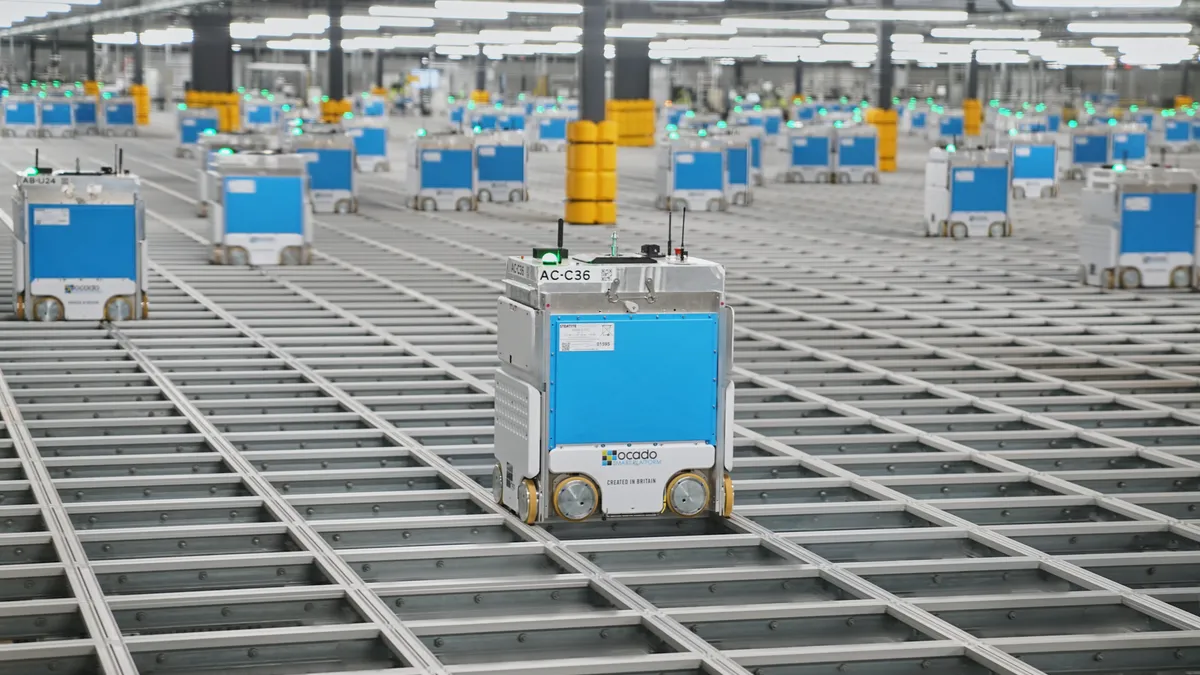
Ocado ends exclusive arrangement with Kroger
The U.K.-based warehouse robotics specialist said at the end of December that its deal to supply automated e-commerce fulfillment technology exclusively to the supermarket company had ended. Ocado has also wound down similar agreements with retailers in other markets, adding that it will continue to work with its existing retail partners while also looking to land additional customers.
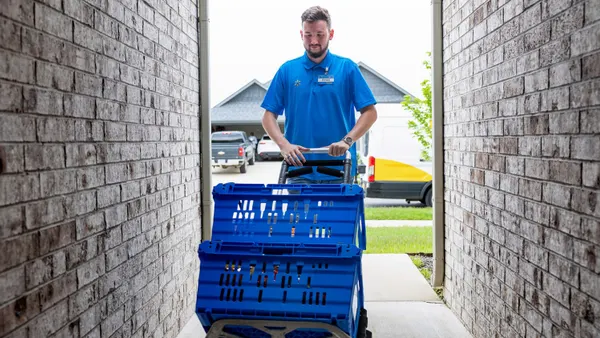
Kroger asked to repay $1.4 million to Florida city
Officials in Groveland, Florida, have demanded that the retailer repay the more than $1.4 million the city spent to help the grocer develop an automated e-commerce fulfillment center, which is slated to close this month, the Tampa Bay Times reported this week. Groveland exempted the project from building permit fees and offered tax incentives to Kroger, but has concluded that the retailer’s decision to shutter the facility breaches its agreement with the city, according to the newspaper. Kroger has already repaid the incentives and rebates it received from Lake County, where Groveland is located.
Sprouts Farmers Market adds more in-store coffee shops
The specialty grocer added Klatch Coffee locations to stores in Diamond Bar, La Verne, Glendora and Rancho Cucamonga, California, during the fourth quarter of 2025, building on a partnership that began in 2024, the woman-owned coffee company announced this week. Klatch Coffee intends to open 16 more locations in Sprouts stores in 2026, with the first one set to debut in late January
Impulse find
New Florida grocery store to launch with a naked pitch
A trio of entrepreneurs plans to open a grocery store in Miami that will sell only food without artificial flavors and colors, genetically modified ingredients and chemical preservatives — and lure shoppers with the promise of a “nude” shopping environment, the Miami Herald reported. The catch? While the nearly 5,000-square-foot store, known as Nude Miami, will indeed offer a stripped-down assortment, shoppers will not be able to enter in the buff.
Nude Miami is set to open early in 2026 on the ground floor of a building in the Florida city’s Brickell neighborhood.
“[Miami] deserves a place that reflects how much people here care about their health. It’s not just about what’s on our shelves and in our food — it’s about the experience,” Nude Miami CEO Charles Amine told the Herald.