The Friday Checkout is a weekly column providing more insight on the news, rounding up the announcements you may have missed and sharing what’s to come.
A Senate hearing earlier this week on artificial intelligence-powered “surveillance pricing” added fuel to the fire over grocery pricing practices, building on calls for regulation by consumer and labor advocates. Already, several states have signed off on legislation that restricts how retailers use consumers’ individual data to influence their pricing.
While it’s still unclear how many more states — or Congress — will green light similar restrictions, Tuesday’s hearing held by the Senate Judiciary Subcommittee on Crime and Counterterrorism highlighted how grocers could soon have a PR crisis on their hands.
Sen. Josh Hawley, a Republican from Missouri and chairman of the subcommittee that hosted the hearing, did not mince words in his opening remarks.
“This is one of the biggest scams in American history — this marriage between the AI industry and these mega corporations. And they’re trying to pull it off against every American consumer,” Hawley said. “AI surveillance pricing is the unholy trinity of everything Americans hate: spying on people, ripping them off and taking away jobs.”
Testimony from the panelists — which included a policy expert for the United Food and Commercial Workers International Union and a former Visa chief data officer — painted a picture of companies collecting, selling and analyzing troves of consumer data and then using that information to determine what to charge individuals.
What will come of legislative efforts, especially after the hearing? Several proposed federal laws — including the One Fair Price Act, the No Rigged Grocery Prices Act and the Stop Price Gouging in Grocery Stores Act — haven’t advanced. Following the hearing, Hawley said he expects to soon introduce his own surveillance pricing legislation, according to news reports.
As retailers battle for grocery market share, worries over personalized pricing threaten to erode consumer trust. FMI — The Food Industry Association, which has defended retailers’ use of electronic shelf labels and stated that consumers voluntarily enroll in loyalty programs that can collect their data in exchange for savings, noted in a statement about the hearing that “maintaining consumer trust remains paramount.”
In case you missed it
Target spotlights private label with new cookbook
The mass retailer earlier this week unveiled a cookbook with 100 recipes that feature its Good & Gather private brand. Developed by Target’s test kitchen staff, “Good & Gather: Discover Delicious Every Day” includes dishes like mango and coconut overnight oats, potato chip butterscotch cookies, and chicken and vegetable soup with potstickers.
“The launch reflects Target’s ambition to be a more craveable food discovery destination and is the latest example of its merchandising authority in food and beverage,” according to the company’s announcement.
Harris Teeter bundles prescription and grocery delivery
The Mid-Atlantic grocer announced Monday that it expanded its delivery service to allow customers to receive grocery and pharmacy orders together. Shoppers can order through the Harris Teeter app or website and Instacart will handle the delivery.
Before receiving prescription delivery, shoppers first need to sign up for the grocer’s prescription services and enable online pay, the press release noted.
T&T sets opening day record for Loblaw
Asian grocer T&T Supermarkets’ U.S. expansion is a hit so far. During parent company Loblaw’s earnings call last week, CEO Per Bank said its San Jose, California, T&T store that opened in June recorded the highest ever first-week sales of any store opening in Loblaw’s history.
The opening marked T&T’s third location in the U.S. and first in California. The banner plans to open two more stores this year, Bank said. T&T’s website lists four upcoming stores in California.
Impulse find
DoorDash embraces the cringe
Shoppers buy a lot of items on DoorDash that they might otherwise be embarrassed to purchase in person. A condom gets sold through the delivery service every 37 seconds, while two laxatives get rung up every minute.
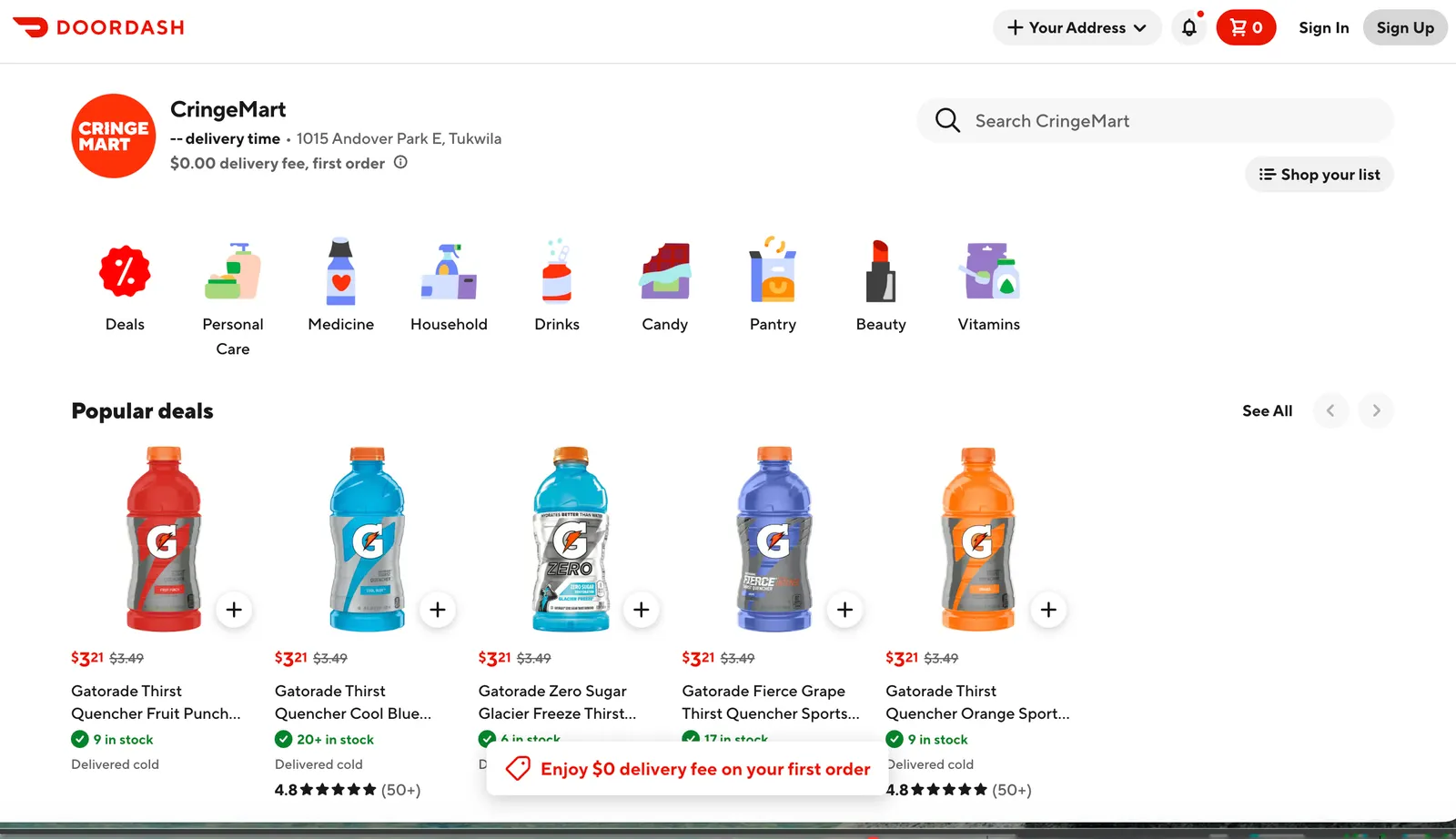
Rather than keep sales like this on the downlow, DoorDash has decided to lean into the cringe factor by launching a new digital storefront dedicated to these must-have (but not must-tell-all-your-friends-about) products.
CringeMart, which debuted Monday, includes a collection of products like hemorrhoid cream, digestive aids, condoms, sex toys and contraceptive tablets. The curated selection is grouped into colorfully named categories like “Plan A” (condoms), “Daily dump” (digestive aids and laxatives) and “Flow state” (pads and tampons).
“There’s nothing actually ‘cringe’ about any of these items, but buying them can still feel that way,” Zaria Parvez, head of brand social at DoorDash, said in the company announcement. "If it’s in CringeMart, it’s probably something you need but don’t want to be seen in public with, which is exactly why we built it.”
Further embracing the cringe, DoorDash is celebrating the launch of its new storefront with billboards in New York and Los Angeles that feature a live count of the number of condoms shoppers are buying on DoorDash.