


Dive Brief:
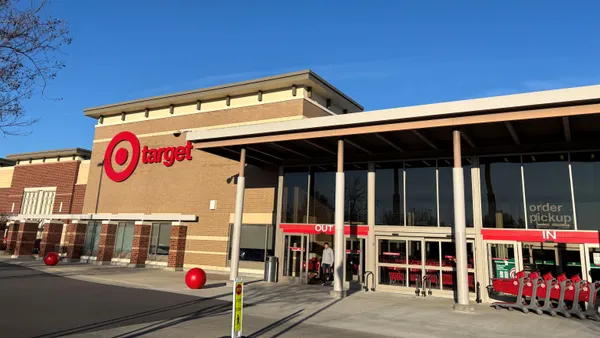
- Target’s fourth quarter net sales dropped 1.5% year over year to $30.5 billion, per a Tuesday press release. Comparable store sales declined 3.9%, while comparable digital sales grew 1.9% for the quarter.
- The retailer saw increases in net sales for food and beverages as well as for its beauty category. Target posted a decline in apparel and accessories net sales, hardlines, home merchandise and household essentials.
- Of the approximately $5 billion that Target expects to put toward capital expenditures in 2026 — up more than $1 billion from last year — more than $1 billion will be spent in support of the retailer’s food and beverage business, company executives said during aTuesday earnings call.
Dive Insight:
Target’s turnaround has yet to yield direct top-line gains, though its forward-looking guidance implies leadership thinks the best is yet to come, with groceries playing a key role.
This year, Target expects to invest more than twice in its food business than it has in recent years, CFO James Lee said on the earnings call.
That planned investment follows Target’s growing food and beverage sales amid “a challenging top line backdrop for the company overall” in 2025, led by mid- to high-single-digit growth in nonalcoholic beverages and candy, Lee said.
Even as food remains a bright spot for the retailer, its sales lagged during the holiday quarter last year compared with the holiday period in 2024, despite numerous initiatives leading up to the winter festivities. Target announced a slew of merchandising initiatives leading up to the 2025 holiday season. The retailer debuted an AI-powered holiday gift finder, brought back its “Hot Santa” marketing persona along with new characters, doubled its new merchandise for the season and expanded next-day delivery services.
“There is no way to sugarcoat it; Target underperformed over the holiday quarter,” GlobalData Managing Director Neil Saunders said in emailed comments Tuesday. “As poor as the numbers are, Target gets something of a pass this quarter. Not because there are excuses for this performance, but because there has been a change at the top – and with it has come a change in tone.”
For the full fiscal year 2025, Target’s net sales declined 1.7% to $104.8 billion. The company expects net sales to grow about 2% for fiscal year 2026, reflecting a “small increase” in comparable sales and growth in net sales for every quarter, per the release.
Target veteran Michael Fiddelke officially took on the CEO role in February, though his influence on the retailer’s turnaround efforts began after his appointment was announced in August. Since then, the company has announced new investment efforts, as well as layoffs and a C-suite switch-up.
Target also added to its recent C-suite changes by tapping Michelle Mesenburg as its chief brand officer, according to a LinkedIn post from the executive about three days ago. Mesenburg has worked at the company for nearly 20 years, most recently serving as senior vice president of marketing. The company told Retail Dive that she'll be responsible for Target's brand strategy, voice and creative expression.
Fiddelke remained upbeat about the retailer’s future in a statement Tuesday.
“Target saw a healthy, positive sales increase in February, serving as an important milestone on our path back to growth this year, and reinforcing my confidence in the momentum we're building and the future we're creating together,” the CEO said.
Catherine Douglas Moran contributed reporting.