The grocery industry has faced high prices, record-breaking inflation, price-sensitive consumers and, most recently, the looming threat of tariffs over the past five years — yet specialty grocers have been mostly unfazed by the chaos.
In Q3 2024, specialty grocers outperformed traditional grocers consistently in monthly year-over-year visit growth and, in Q2 of 2025, even overtook discount grocers in foot traffic growth, according to Placer.ai reports.
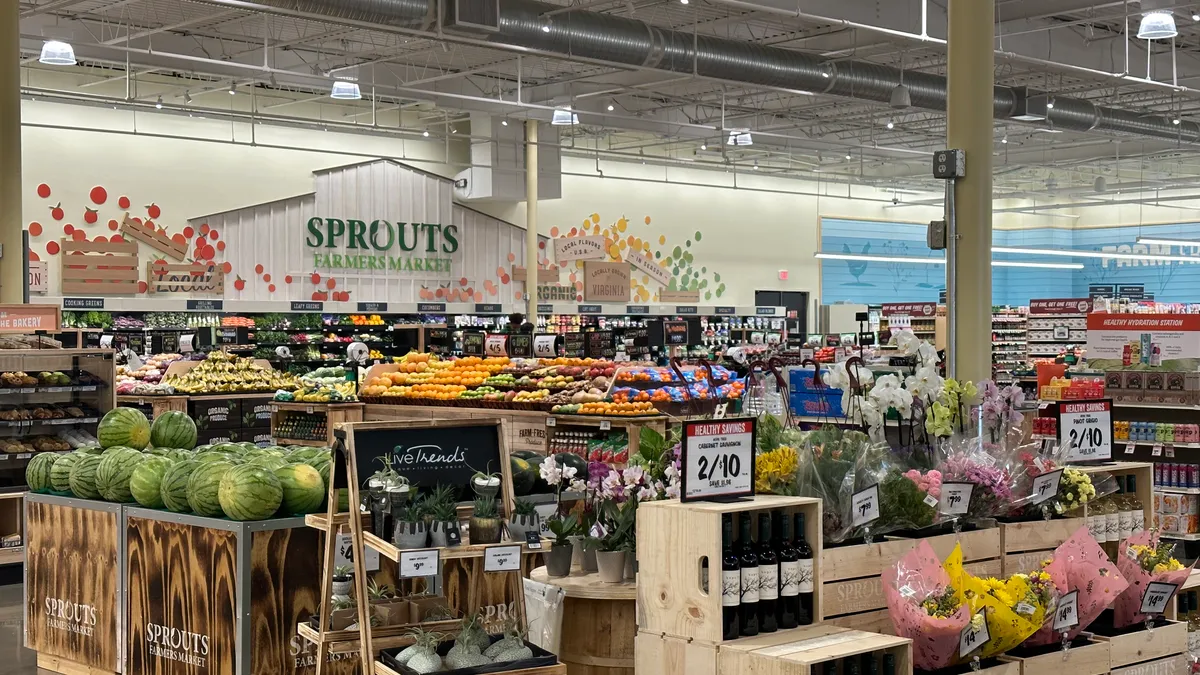
But this success wasn’t a given, as many specialty grocers took a serious hit during the height of the COVID-19 pandemic. Just look at Sprouts Farmers Market — during its final quarter for 2020, the specialty grocer reported comparable-store sales growth of 3.7% year over year. By the next quarter, comp sales tanked, declining 9.4% year over year. Sprouts didn’t report positive comp sales again until the start of fiscal year 2022.
Yet experts credit the COVID-19 pandemic for boosting consumer awareness of health and wellness, spurring them to seek out the products specialty grocers are known for. As specialty grocers look to navigate post-pandemic industry headwinds, another key force is helping them: high-income shoppers.
“Richer getting richer, poorer getting poorer — that impacts retail,” Errol Schweizer, a former Whole Foods executive who worked for the grocer for over a dozen years, said in an interview. “So these specialty grocers, even though they’re all trying to work on their price perception and increasing their amount of private label, products are significantly more expensive than conventional mass market products.”
The positives of price inflation
There are very few benefits to prices getting higher, but Schweizer took note of how inflation has come in clutch for specialty grocers following the pandemic.
“Specialty grocers have capitalized on the fact that folks with income who care about what they’re eating are really putting more money into that, particularly as prices go up,” he said. “I do want to emphasize that a good deal of the dollar growth in specialty grocers does come from price inflation.”
Schweizer used Sprouts as an example. He estimates that between 3% to 4% of the specialty grocer’s growth during its most recent earnings report was from price inflation. This sales boost, however, only manifests if the retailer can keep transactions and unit volumes up — something Sprouts continues to prove it’s able to do, he said.
Specialty grocers have also benefited from the fact that organic foods haven’t gone up as much in price as conventional ones.
“The price gap to organic has shrunk significantly in the last four to five years as organic has not faced the same price inflation pressures as previously cheaper commodity conventional foods,” Schweizer said. “I do think that’s part of it as well, and once again, that plays into the fact that a lot of people are consciously trying to eat healthier.”
James Ren, vice president of revenue and growth for specialty supplier GoodSam Foods and former head of food merchandising for specialty e-grocer Thrive Market, added that specialty grocers have always catered to the premium-tier shoppers, even before the pandemic and sky-high prices.
When prices went up, these grocers didn’t deal with unit sales declines because their customers didn’t sacrifice purchases with them.
“From a specialty retailer standpoint… yes, things got more expensive, so you’re taking home more dollars at the end of the day,” Ren said.
Commitment to value
Specialty grocers have also been able to skirt the pressures of price inflation by maintaining their role as a top-up grocery shopping destination. Sprouts’ CEO Jack Sinclair frequently notes how the chain serves more as an add-on trip than a stock-up one for its shoppers.
However, communicating value is still something that their high-income consumer base demands, and these grocers are turning to tried and true methods to deliver on this.
Like traditional grocers and discounters, private brand launches have been a powerful tool for specialty grocers as they ramp up their value propositions, Stewart Samuel, director of retail futures at retail market research firm IGD, said.
“Value is more than just low prices,” he said, noting that specialty grocers’ private label offerings project premium positioning as well as value — something that resonates with both established and new customers.
Leaning into private label allows specialty grocers to source and offer products that meet their quality standards at a lower cost, he added.
Natural Grocers has been dishing out new private label products consistently all year, from food and beverage items to vitamins and, most recently, organic essential oils. Over the past few years, Natural Grocers has seen net sales climb in part due to its fast-growing and creative private label assortment.
Loyalty programs are also projecting value for specialty grocers as well as helping them further understand their customers.
“The investment in loyalty enabled a really high precision way of personalizing those offers to consumers,” Samuel said. “Loyalty is not just about communicating and delivering on price, but it’s also enabling them to do that sort of values communication storytelling as well.”
Earlier this year, Natural Grocers encouraged shoppers to sign up for its rewards program through a limited-time deal that offered up to 42% off its new line of private label eggs. The specialty grocer introduced this initiative at a time when egg prices were particularly high.
The benefits of introducing store brand products and loyalty programs that lean into personalization are far from new to the industry. However, given how specialty grocers cater to a niche market that isn’t as strapped for cash, gaining insights only makes these retailers more competitive with their traditional and discounter counterparts.
Holistic health & wellness takes the front seat
Since COVID, consumers across income and political divides have shown they’re determined to eat healthier. They’re seeking out foods that fit specific dietary needs and introducing GLP-1s to their routine, prompting grocers to find ways to meet these needs.
But, as expected, specialty grocers have an edge over other grocery formats when it comes to health and wellness.
“They do the homework for you, particularly Whole Foods and Natural Grocers,” Schweizer said. “It’s an easier shop because the assortment is framed towards your preferences, and you know what you’re hoping to find.”
Healthy eating has also become much more intentional in recent years, Ren said, and the reason is two-fold. First, people are putting more care into what they are consuming rather than restricting what they eat, he said. Second, individuals are now looking at products more holistically, ensuring they align not only with health needs but also with overall values such as sustainability and ethical sourcing.
“What specialty [grocery] does is they put out a shelf with purpose… which makes the experience for the consumer feel not just curated, but more local [and] community-oriented and honestly — the most important part — trusted,” Ren said.