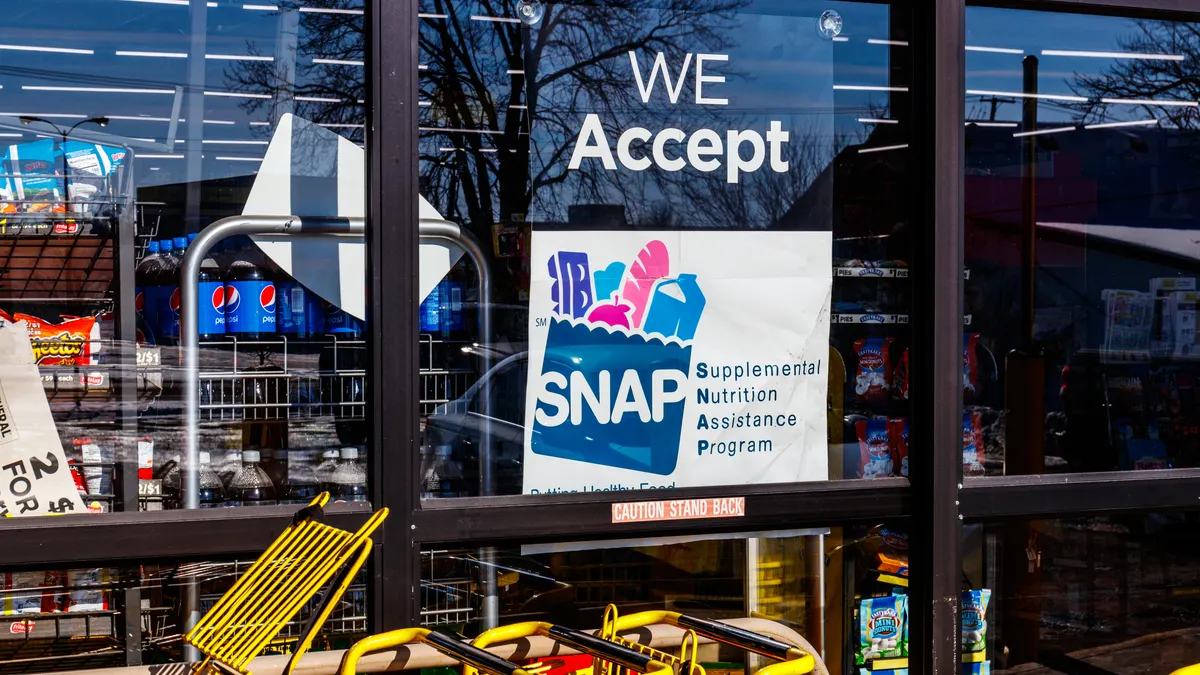
Despite an 11th-hour push by more than two dozen states for the Trump administration to fund SNAP, November benefits lapsed Saturday for over 40 million people amid the ongoing government shutdown.
However, at least nine states last week announced plans to use their own state funds to partially provide benefits to SNAP participants, allowing these consumers to use their EBT cards at the grocery store. While states are not in a position to meaningfully fund SNAP long-term, these efforts aim to curtail food insecurity until federal funding resumes for the food assistance program.
Tapping a budget surplus, Virginia created an emergency nutrition assistance program that will add a weekly payment for food assistance to SNAP participants’ EBT cards. The benefits “will be issued weekly, not monthly, in hopes the federal shutdown will end soon,” according to Governor Glenn Youngkin’s office.
Similarly, Delaware’s Department of Health and Social Services is administering funds to EBT cards on a “week-by-week, as-needed basis” in November, starting as soon as Nov. 7.
Seven other states — Vermont, Ohio, Rhode Island, New Mexico, Arizona, Louisiana, Hawai’i — and Washington, D.C. have also set up temporary, state-funded financial assistance programs for SNAP participants.
Meanwhile, over a dozen states that aren’t loading funds to EBT cards have focused on ramping up funding for food banks.
On Friday, two federal judges separately ruled that the Trump administration cannot suspend SNAP funding. It’s unclear if the Trump administration plans to appeal the rulings or how quickly federal funding for SNAP could get loaded onto program participants’ EBT cards.