Dive Brief:
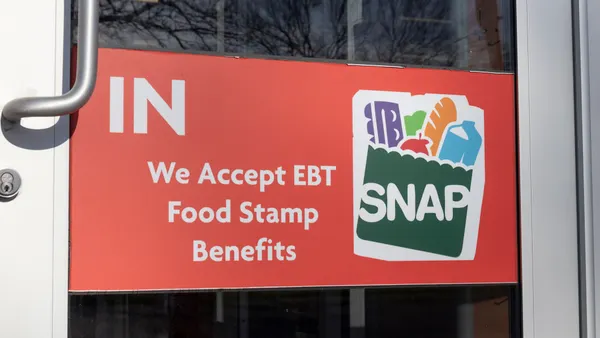
- The USDA asked South Carolina, North Dakota and Ohio to push back implementation of waivers that would ban SNAP participants from buying certain foods such as candy and soda, according to the states.
- South Carolina and Ohio said the USDA asked for the delay to allow the federal government enough time to seek public comments on both states’ waivers.
- The USDA told South Carolina it is requesting the delay as both its general counsel and the Justice Department continue to review and analyze a federal district court judge’s ruling earlier this year that vacated similar SNAP food restriction waivers in five other states.
Dive Insight:
While the judge’s decision in June only blocked waivers in Colorado, Iowa, Nebraska, Tennessee and West Virginia, the ruling is impacting the status of other previously approved waivers.
Shiela Corley, acting administrator of the USDA’s Food and Nutrition Administration, said that allowing public comments on the state’s waiver will “demonstrate FNA’s commitment to transparency,” according to a copy of the letter shared by South Carolina.
South Carolina and North Dakota’s waivers were set to take effect on Aug. 31 and Sept. 1, respectively. The USDA requested that both states push back implementation to Nov. 1. Ohio’s waiver, which was set to take effect Oct. 1, is “on hold” until the state receives further guidance, the state announced.
The USDA told South Carolina that it plans to seek those comments through the Federal Register at least 30 days prior to when the waiver is set to take effect. Similarly, the USDA requested that Ohio delay implementation so it could issue a notice in the Federal Register and assess public comments prior to implementation.
North Dakota said that the delay gives the state more time for retailers to continue to prepare and for SNAP participants to become more familiar with the upcoming changes.
Virginia has also delayed the start date for its SNAP food restriction waiver. Earlier this year, the state pushed back implementation of its waiver from April 1 to Oct. 1. The state’s website now says that the waiver is set to take effect on Nov. 1.