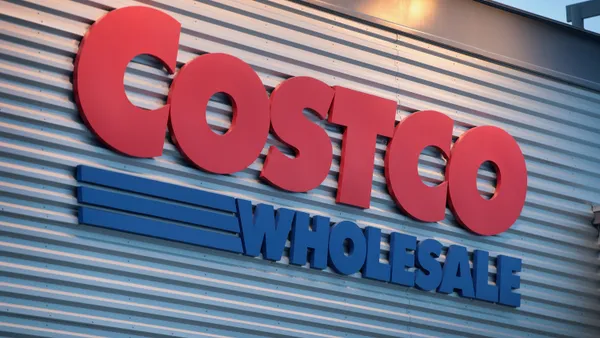
When I was apartment hunting three years ago, proximity to a grocery store was one of the top items on my list. So when I saw news reports about Costco’s plan to build a first-of-its-kind warehouse in Los Angeles that will be the base of an affordable housing complex, it made me wonder why this approach isn’t more common.
Before joining Grocery Dive, I closely covered the frenzied interest of developers in building mixed-use projects in Tysons, Virginia, a city in the greater D.C. area that has been trying to position itself as an East Coast version of Silicon Valley. As major companies moved into Tysons — Capital One, Freddie Mac, Booz Allen Hamilton and Hilton Worldwide all have headquarters there — city planners and developers recognized a need for walkable communities where people can live, eat and shop without needing to drive. Whole Foods Market, for example, opened its Mid-Atlantic flagship store in a building with apartments on top in Tysons in 2019.
This line of thinking — cut down the travel time needed for experiential outings, whether going to a restaurant or buying groceries — always struck me as a smart approach.
Costco seems to be following suit. The planned development in L.A.’s Baldwin Village neighborhood will designate about 180 of the 800 apartments for low-income residents, Fox 11 reported. Costco, I bet, will become those residents’ go-to store. Maybe some of the 400 workers at the Costco will live in the units above, creating a developer’s dream flywheel of letting people work, live and shop in the same space.
For the club retailer, coupling up with apartments is a way to maximize space in urban areas, where land isn’t readily available for standalone retail buildings and expansive outdoor parking lots. While a typical Costco needs about 14 to 16 acres, this project is only using five acres.
While the Costco store isn’t expected to open until 2027, I anticipate we’ll see more supermarkets becoming anchor tenants at mixed-use and residential developments.
For one, these types of developments are trendy. Between 2012 and 2021, the number of “live-work-play developments” completed each year quadrupled, according to an analysis by commercial real estate research firm Yardi Matrix, sister site Multifamily Dive reported.
These developments provide unique perks — and challenges — to grocers.
“Lower vacancy rates and the desire to expand to more urban environments have prompted grocers to seek out mixed-use environments where smaller footprints and limited parking can produce similar or stronger sales numbers,” architectural firm Nadel Architects wrote in a blog last year.
Another plus: Foot traffic in mixed-use developments is usually 20-30% higher than at traditional retail locations, according to findings by real estate company JLL cited by consultancy ASG.
On the downside, grocers face more stakeholders with these projects, necessitating clear coordination and communication between the involved parties, as well as complex planning for features like parking, entrances and large truck access, Nadel Architects noted.
“By proactively tackling these issues, developers can create a grocery store that enhances the overall mixed-use environment while maintaining functionality and customer convenience,” Nadel advised.
Grocers might also face steeper occupancy costs. Retail spaces in mixed-use developments typically have rents that are 10-20% higher than traditional shopping centers, the International Council of Shopping Centers found.
Still, grocers providing the convenience of selling groceries and essentials in the same building where hundreds, if not thousands, of people live guarantees repeat customers.
While I did not snag an apartment with a grocery store just an elevator ride away, it is common to see Whole Foods and other grocers located on the ground floor of residential buildings in nearby neighborhoods.