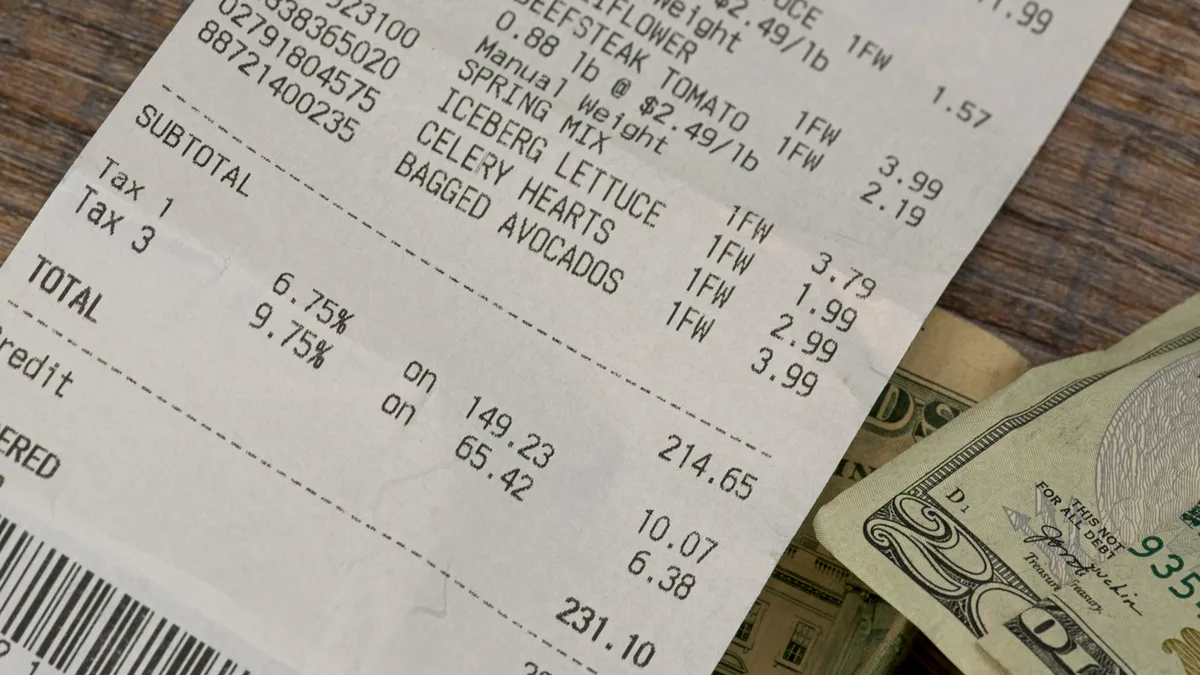
As 2026 kicks off, states continue to reduce or do away with their sales taxes on grocery items.
On Jan. 1, Arkansas and Illinois ended their statewide taxes of 0.125% and 1%, respectively, on groceries. Groceries are still subject to local sales tax in both states, with the Jacksonville Journal-Courier reporting that more than half of Illinois residents will continue to pay a local grocery tax.
Virginia legislators are poised to consider a new bill to repeal the state’s 1% grocery tax when its General Assembly reconvenes later this month, WSLS reported. While the proposal would save consumers around $150 annually, it would cut about $250 million in state revenue, the news outlet reported.
These movements follow the ongoing trend of states eliminating or reducing grocery taxes. At the start of 2025, Kansas eliminated its grocery tax following a multi-year phasedown, and in the summer, Mississippi reduced its grocery tax from 7% to 5%, while Alabama dropped its grocery tax from 3% to 2%.
Tennessee lawmakers last year unsuccessfully attempted to eliminate the state’s 4% sales tax on groceries as well as the local tax on those items. A fiscal analysis of that proposal found that it would deplete the state government of nearly $824 million.
Opponents of grocery taxes say that the levies hinder food affordability, while supporters point to the revenue that the taxes generate to support local communities.
A handful of other states also have levies on groceries. Some jurisdictions and states, such as Hawai’i and Idaho, offer grocery tax credits to improve food affordability for eligible consumers.