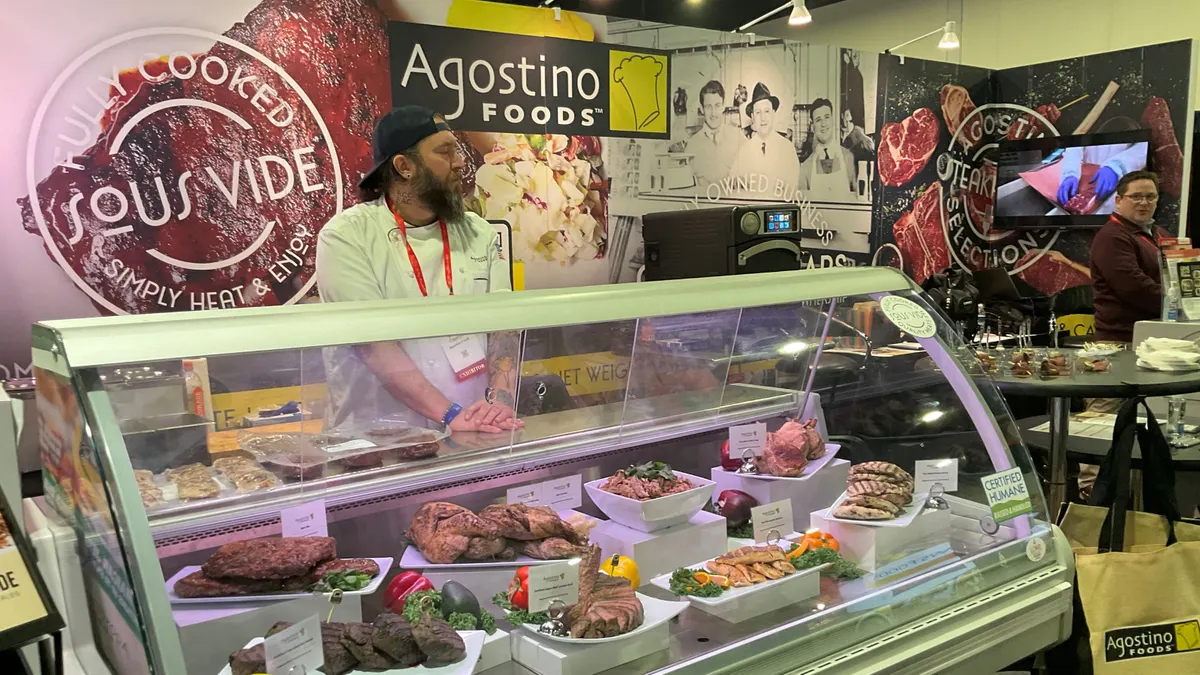
Shoppers bought more meat last year despite strong price increases across much of the category, according to data released last week by the Meat Institute and FMI — The Food Industry Association.
An increase in the number of people who purchased meat and poultry, high trip frequency and higher spending per trip drove meat department sales in the U.S., the trade groups reported in the latest edition of their Power of Meat report. Volumes were up by almost 2%, with growth of nearly 3% in the amount of fresh meat people bought offsetting a slight decline in the quantity of processed meat they purchased.
The department’s sales hit a record $111.9 billion in the United States in 2025, a year-over-year increase of just under 7%.
Beef sales rose last year at a faster clip in terms of volume and dollar sales than other types of animal-derived protein, according to the report. Fresh beef volumes rose by more than 4%, to 6.2 billion units, while sales came in at $45 billion, reflecting an increase of over 12%.
By comparison, chicken volume was up by 3.2%, turkey volume rose 0.6% and the number of pork units sold climbed 1.1%. Chicken sales rose 6.5% to $20.7 billion in 2025, while turkey and pork sales were up by 3.9% and 3.3%, respectively.
The research also found that younger shoppers are playing a strong role in pushing meat consumption ahead. Members of Generation Z and millennials were responsible for two-thirds of unit growth last year, with unit sales among Gen Z shoppers up by nearly half.
People who use GLP-1 medications are more likely to eat meat and poultry often, especially for breakfast and snacks, according to the report.
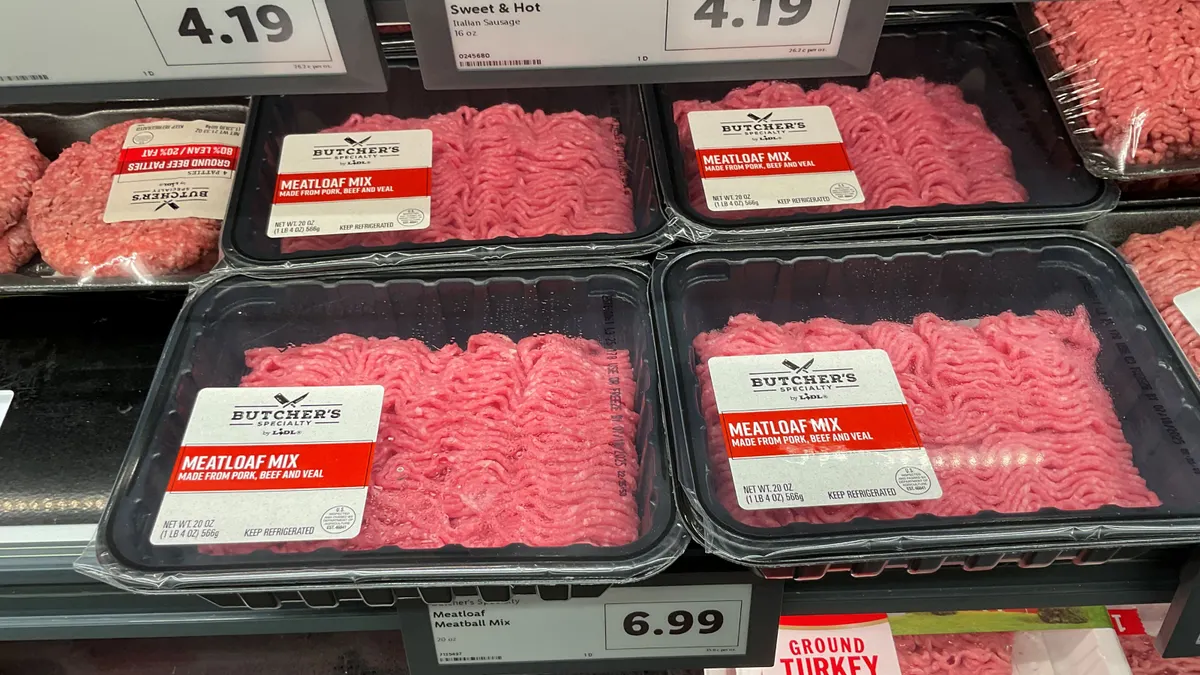
The meat industry saw shopper interest rise last year against a consistent backdrop of steep cost increases. Meat prices accelerated at an annual clip of more than 9% in December 2025, with prices for beef and veal up by double digits, the Bureau of Labor Statistics reported.
To deal with price hikes, shoppers took steps that included looking for promotions, shopping at stores with lower prices and switching to less expensive cuts and kinds of meat, according to the report.
Consumer demand for protein could drive meat sales
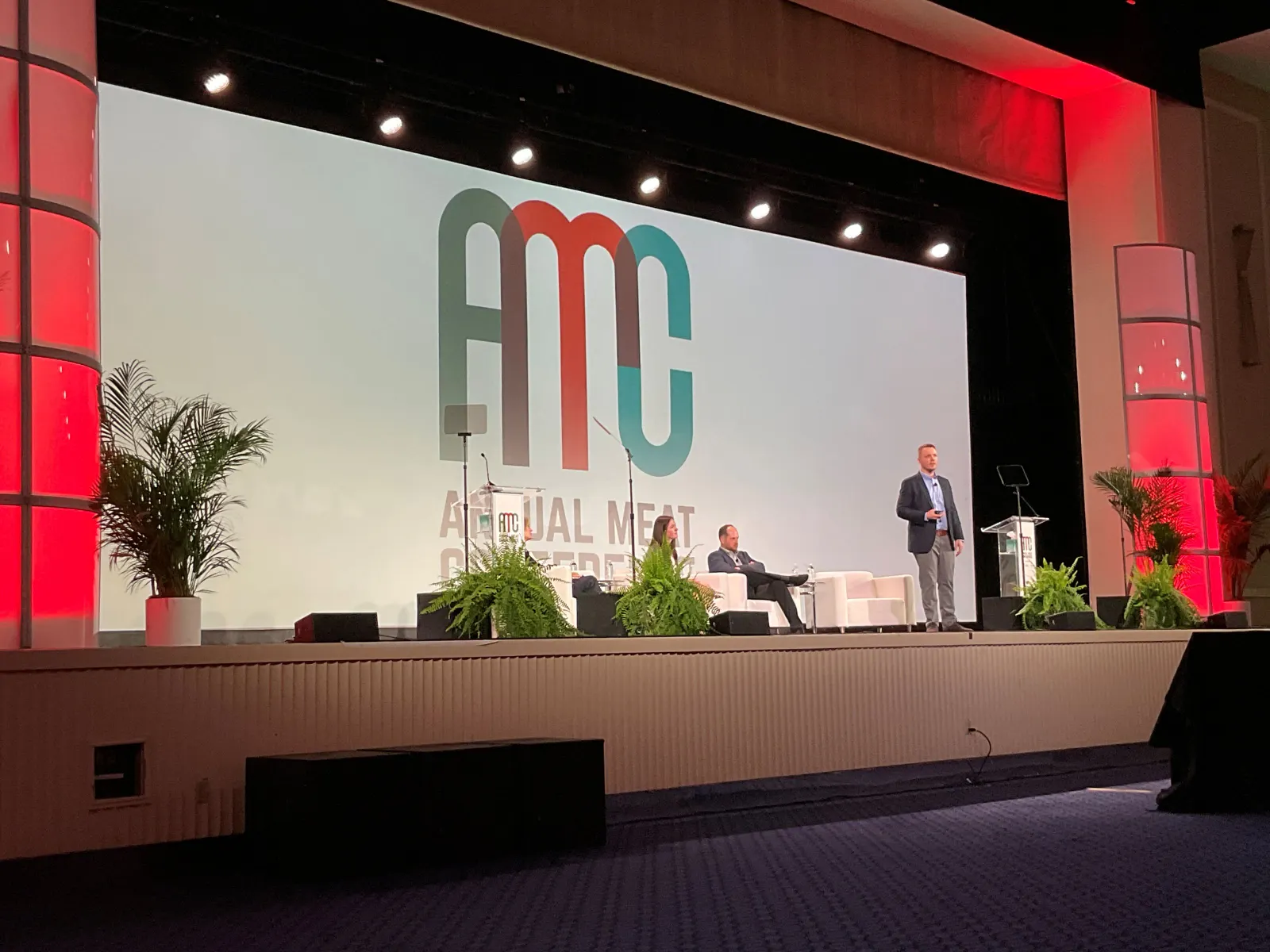
To increase meat sales even as prices rise, the meat industry should tap into strong consumer interest in consuming more protein, Chris Costagli, vice president and food and beverage insights lead for NielsenIQ, said Tuesday during a session at the Annual Meat Conference in National Harbor, Maryland.
Forty-four percent of shoppers polled by NielsenIQ in February started consuming more protein last month, up from 33% of respondents in a survey by the research firm in December 2025 who said they planned to boost their protein intake in 2026.
“This has been a long-term trend, so we have to think about designing value-based systems for the consumer … how do we essentially justify the price point?” Costagli said. “We can do that with protein, but we can do that with being more intentional about educating, about being transparent and clear about just how much protein are you actually getting from the product.”
Costagli added that technology, especially wearable items like the Apple Watch, is spurring people’s interest in increasing their protein intake, in part because it helps them track how much protein they eat.
Nearly a quarter of people NielsenIQ surveyed in December who use wearable gear said they have boosted the amount of protein they consume since starting to use that gear. By comparison, 19% of people in that group said they have started eating more fruits and vegetables.
“Technology is certainly enabling consumers that are prioritizing protein to really be intentional about actually having more of it,” said Costagli.
The meat industry is also benefiting from relatively strong consumer trust. Sixty percent of shoppers NielsenIQ surveyed in January said they somewhat or strongly trust the sector, with about the same proportion indicating that they expect retailers and meat producers to provide fresh, high-quality goods and affordable prices. A similar share said they are willing to pay more for meat that meets higher standards.
Beef suppliers can also entice consumers by emphasizing the utility of different cuts of meat, Mandy Carr Johnson, senior executive director of scientific affairs for the National Cattlemen’s Beef Association, said Tuesday during another session at the conference. Shoppers understand the versatility of ground beef, but tend to be less aware that beef in other forms can have many uses, she said.
“Many consumers don’t realize you can prepare a roast and shred it and then it can … be an ingredient for this recipe, for this taco, for this quick-and-easy snack,” Carr Johnson said. “I think there’s still an opportunity there for beef to really help consumers have more confidence in being versatile across the category.”
On the other hand, concern among some consumers that beef can be harmful to their wellbeing is a key reason some decide to eat less of the meat, putting pressure on the industry to focus on its benefits, Carr-Johnson noted.
“We always have to wonder where are those trade-out points or trigger points for consumers,” she said. “Health still is pulling the consumer back, so our opportunity to move them forward will continue to bring us into the future.”
Research firm 210 Analytics conducted the Power of Meat study for the Meat Institute and FMI. Circana supplied sales data in the report.