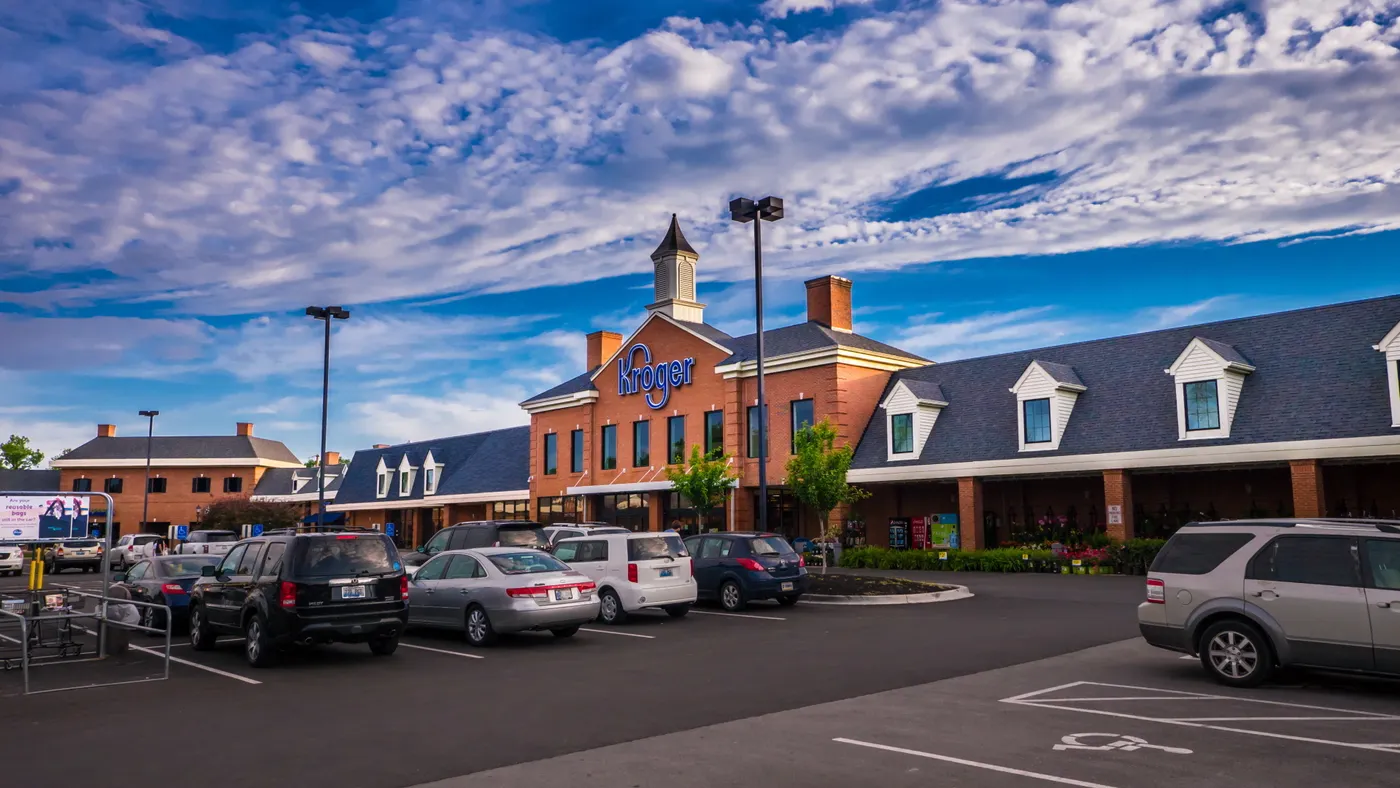
When Kroger made its pitch to merge with Albertsons, it focused on growing competition from industry titans like Walmart, Amazon and Costco. But there’s another competitive threat that’s also rising: Regional chains like Publix and H-E-B that inhibit Kroger’s presence in key markets and limit the grocer’s ability to nab larger portions of shoppers’ wallet share.
Kroger’s bid to merge with Albertsons, announced back in 2022, was the company’s attempt to address this increasingly competitive landscape. But after the merger fell apart late last year, Kroger is back at square one and facing stiffer competition.
Dunnhumby’s Competitive Threat Evaluator, a platform that combines geolocation data from Placer.ai as well as findings from the firm’s Retailer Preference Index database, identified 74 rivals in an analysis of 116 Kroger-designated market areas, Erich Kahner, director of strategy and insights for the Americas at Dunnhumby, said in an interview.
Regional grocers often don’t make it into the top quartile of Dunnhumby’s Retailer Preference Index for U.S. Grocery, which measures customer preferences in the industry, but nearly all of the ones that do are considered some of Kroger’s biggest competitors. Kroger may be the nation’s largest grocery retailer, but its empire appears to struggle in markets where customers are fiercely loyal to their hometown, regional supermarket, Dunnhumby’s data indicates.
Here’s a breakdown of key battleground markets where Kroger faces the steepest competition, according to Dunnhumby. The firm’s competitive breakdown, based on Placer’s traffic data, includes the majority of retail locations but not an exact count.
The Windy City
Mariano's lags behind Jewel-Osco in terms of wallet share and store count, making it difficult for the chain to continue expanding.
Chicago claimed the top spot in Dunnhumby’s Competitive Threat Evaluator as the market where Kroger faces the toughest competition.
Kroger has around 50 stores in the greater Chicago area, with the majority operating under its Mariano’s banner, according to Kahner, leaving plenty of room for Kroger to expand in the city. However, there is a regional grocer that is stifling Kroger’s opportunity to increase its foothold — Jewel-Osco.
Not only is Jewel-Osco one of the stronger Albertsons banners, Kahner noted, but it also has a massive footprint in the region that’s around five times larger than Mariano’s.
Kahner also noted that Meijer, another regional grocer with a strong reputation, has expanded in the greater Chicago area. Chicago is relatively close to its headquarters in Grand Rapids, Michigan, and the supercenter retailer already operates various store formats across six Midwestern states. Meijer beat out Kroger and Jewel-Osco in Dunnhumby’s most recent Retailer Preference Index for U.S. Grocery, underscoring that the retailer is well-positioned for long-term success.
The Lone Star State
Despite Kroger having more stores in both Houston and Dallas, H-E-B is able to stay competitive in terms of wallet share.
Houston
Dallas
H-E-B’s hold on Texas is growing stronger and making major markets in the state more competitive, Kahner said.
The regional Texas grocer already dominates Houston and is continuing to further its reach in the Dallas-Fort Worth area, an expansion effort that began in 2022. As of August, H-E-B has nine locations under its namesake brand in the Dallas region and is also working to bring more of its Joe V’s Smart Shop discount format to the area.
Prior to bringing its flagship banner to the Dallas-Fort Worth market, H-E-B previously only ran its upscale Central Market specialty banner there.
Despite H-E-B’s growing dominance and its loyal customer following — the Texas-native grocer claimed the No. 1 spot in Dunnhumby’s latest Retailer Preference Index ranking for the third consecutive year — Kroger is not backing down from the challenge. This past summer, Kroger consolidated its Houston and Dallas divisions in an effort to simplify operations and increase efficiency. It also announced plans to open four large Marketplace stores in the Dallas-Fort Worth area.
Even though Kroger has a larger footprint in both Houston and Dallas, H-E-B has operated stores longer in Houston and its growing footprint in Dallas threatens to erode Kroger’s share in that market, Kahner said.
Phoenix battleground
While Fry's grabs more wallet share than WinCo, the regional chain remains competitive despite fewer stores.
The Phoenix market is a competitive landscape with national grocers, regional chains and club retailers all vying for wallet share.
WinCo is what Kahner calls a “super regional,” and one of Kroger’s toughest competitors in the area. The grocer moved up 10 spots in Dunnhumby’s Retailer Preference Index this year compared to last year, coming in fourth behind Costco, Market Basket and H-E-B.
Idaho-based WinCo has been successful in putting Kroger’s Phoenix stores under threat, Kahner said. But Kroger’s Fry’s banner is managing to defend its home turf, he said.
Kroger must figure out how to keep up with fast-growing regionals, especially in markets like Phoenix, where population growth in recent years has been among the highest in the country.
Publix’s growing empire
Though Publix still trails behind Kroger in its newer outposts, its increasing popularity and strong growth momentum pose a threat to Kroger.
North Carolina
South Carolina
Virginia
Regionals typically lose wallet share the further they drift from their home market, but Publix is proving to be an exception. So much so that the Florida grocer has a high potential of disrupting Kroger in its own backyard of Cincinnati, Kahner said. Publix set its sights on Kroger’s hometown a few years ago.
Of all the newer markets Publix is entering, Kentucky — another Kroger hub — is where the regional grocer is having the most success nabbing wallet share, Kahner said. In the designated market area for Lexington, Kentucky, which is made up of 40 counties, 17 of Kroger’s 34 stores in the region are seeing customers cross-shop at the sole Publix that opened in Lexington, according to Kahner.
“One Publix has become a threat to 17 Kroger stores,” he said.
In another ominous sign, some of Kroger’s Cincinnati customers are also cross-shopping with the standalone Publix store in Lexington, he said.
“This one Publix in Lexington is sort of serving as a scout for Publix, and for even Kroger customers,” Kahner said, noting that word is getting across state lines about Publix’s value proposition.
Southeastern states tell a similar story. Of the top 15 most competitive designated market areas for Kroger ranked in Dunnhumby’s Competitive Threat Evaluator, eight are in North Carolina or South Carolina, or Virginia, Kahner said. What those states have in common is the presence of Publix.
Editor’s note: This story was updated with the correct number of markets across the Carolinas and Virginia that are among the 15 most competitive markets for Kroger, according to Dunnhumby data.
Correction: A previous version of this story had a chart that misidentified WinCo and Fry’s.