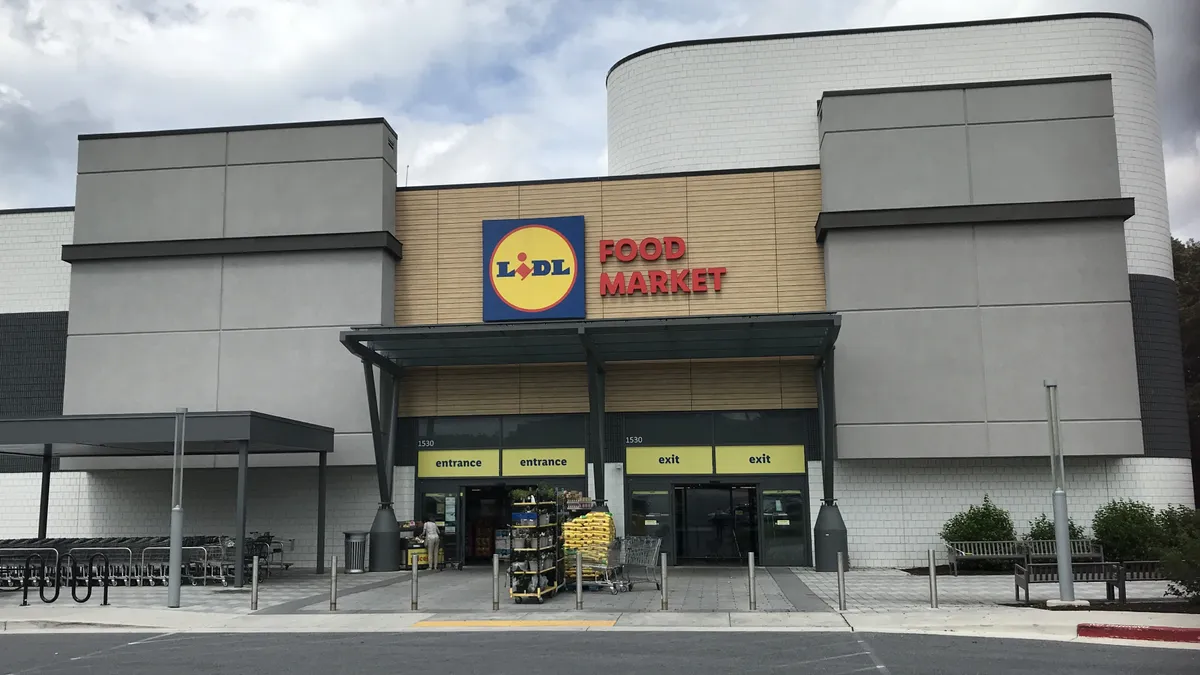
The news that Lidl US is going through yet another top-level leadership transition could easily be viewed as just the latest sign that the German-owned discount grocer is still trying to find stability on this side of the Atlantic Ocean.
But while now-former CEO Joel Rampoldt was the chain’s fifth leader since it opened its first stores in the United States not even a decade ago, the value-focused retailer is in a noticeably stronger position now than it was when Rampoldt took the helm in 2023, according to industry analysts.
Back then, Lidl US was going through a tumultuous period that contributed to a sense among retail experts that it had missed the boat on connecting with inflation-battered shoppers and did not have a well-defined plan to determine which areas to target with new stores. Today, however, the grocer is showing clear signs of progress as it pursues a more disciplined approach to growing its store footprint and concentrates on building its presence in promising markets, analysts said.
“I believe this was more of a transition than an ouster,” said Michael Infranco, assistant vice president of retail intelligence provider RetailStat. “I think [Rampoldt] was brought in to lay a foundation, put the ship right … because they were a mess before he came along.”
A key indication that Rampoldt’s departure from the CEO position reflects more of a gentle transition than a radical shift for Lidl US is that he is remaining as an advisor to the company instead of abruptly leaving, Infranco said. Marco Giudici, Lidl US’s chief customer officer and former CEO of Lidl Romania, has stepped in temporarily to manage the discounter, Lidl US said in a statement about Rampoldt’s exit as CEO.
Under Rampoldt, who previously worked for management consultancy AlixPartners, Lidl US improved store operations, refined its approach to fresh food and focused on adding stores in the New York City, Atlanta and Washington, D.C., areas instead of trying to expand in communities up and down the East Coast as it did previously, Infranco said.
“I think you’re going to see that it’s not so much disarray …, because at this point they have to put something on the table” in order to be competitive going forward, especially given the rapid growth in the U.S. of fellow German discounter Aldi, with which Lidl is often compared, he said.
Still, Lidl has lost crucial ground in the U.S. because of the executive churn the company has experienced, said Doug Munson, head of advisory services business development for RetailStat.
“They’ve got to figure out who they are to create a differentiation from Aldi,” but the company’s frequent leadership changes have complicated that mission, said Munson.
Infranco said the fact that Lidl US did not make a formal announcement that Rampoldt had left his position could leave people inside the company feeling uneasy.
“There’s no press release. There’s nothing that says, ‘This is what we’re doing. This is why we’re doing it. This is what’s going on,’ [and] that does lead to confusion and might be a little bit of a morale thing as well,” he said.
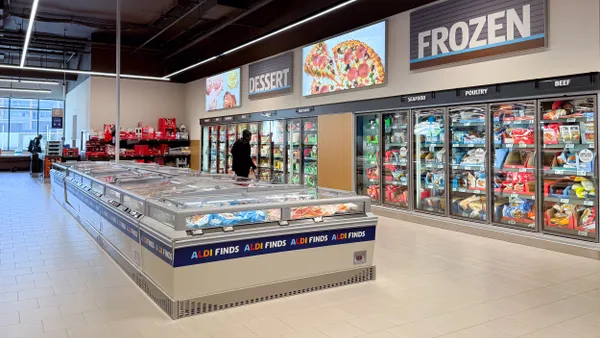
Analysts said Lidl US’ top challenge going forward will be to figure out how to operate in Aldi’s shadow without trying to compete head-on with its rival, which has a much bigger footprint in the U.S. Lidl runs about 190 stores in the U.S., while Aldi plans to open about that many stores in this country this year alone and expects to have around 3,200 U.S. locations by the end of 2028.
Lidl US also faces the challenge of convincing landlords that renting space to host its stores represents a good bet, Munson added, noting that he thinks the grocer’s frequent CEO changes have adversely affected its real estate strategy.
“For long-term viability right now, I don’t know that I could tell you that [Lidl is] who I’d want to put on a 20-year lease,” he said.