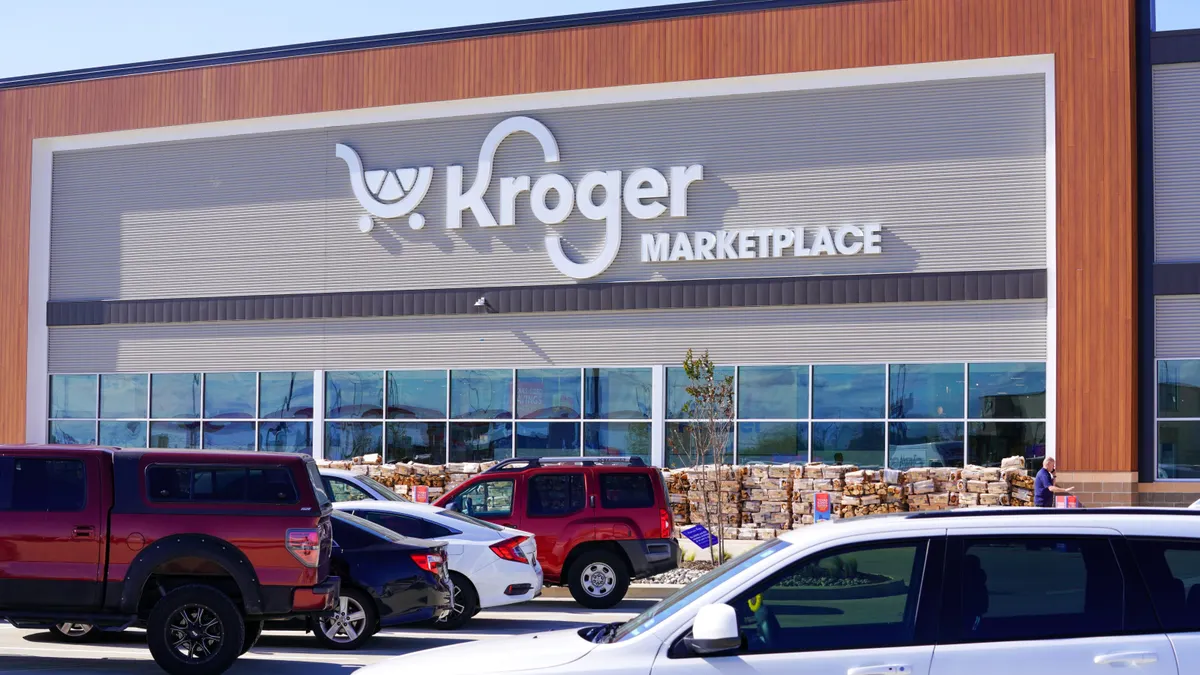
As Kroger continues to redirect its growth strategy in the wake of its unsuccessful effort to merge with Albertsons, the nation's largest conventional supermarket chain is banking on its large-format Marketplace banner to give it a much-needed competitive lift.
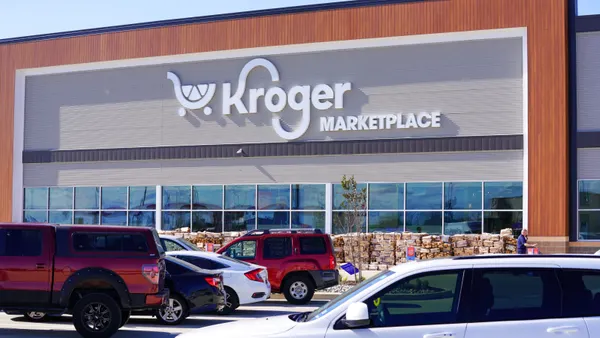
The retailer has in recent weeks announced plans to add multiple locations to the banner, which carries an array of general merchandise not found in ordinary supermarkets in addition to a standard grocery assortment. Stores under the banner generally occupy between 99,000 and 130,000 square feet. By contrast, the average U.S. grocery store spans about 44,000 square feet, according to FMI — The Food Industry Association.
Kroger’s plans for expanding its Marketplace banner span several states.
Indiana
Kroger said in January that it had broken ground on a Kroger Marketplace store in Crawfordsville, Indiana. The 123,000 square-foot location, which the company said represents a $38 million investment and is expected to take about a year to complete, is part of a broader drive by the grocer’s Central Division to build, expand and upgrade stores in its Central Division. Kroger plans to spend $200 million on that project in 2026.
“This is a time of growth for Kroger and this community,” Colleen Juergensen, president of Kroger’s Central Division, said in a statement. “Our company is accelerating its pace of construction around the country.”
In addition, Kroger said last month that it broke ground on a new Marketplace store in Zionsville, Indiana, last November. That store is expected to enter service by the end of 2026.
Kroger also plans to open a Marketplace location in Noblesville, Indiana, this summer.
Texas
In December, Kroger announced plans to build new Marketplace stores in the North Texas cities of Fate and McKinney. The company said it also intends to develop a Marketplace location at a third location in the region, but did not specify where that store will be located. Kroger expects to start constructing all three of the planned locations this year.
A Kroger spokesperson said the grocer opted to close a standard-size supermarket in McKinney this year “as part of a larger company-wide decision to run more efficiently and ensure the long-term health of our business.”
The new Marketplace stores slated for North Texas are in addition to four other Marketplace stores Kroger is in the process of adding to the Dallas-Fort Worth area as part of a $160 million investment the company announced in mid-2025. Kroger opened the first of those stores in the Bonds Ranch section of Fort Worth last October and is building Marketplace stores in Little Elm and Anna, Texas, and the Sendera Ranch community of North Fort Worth, which are anticipated to open over the next year.
West Virginia
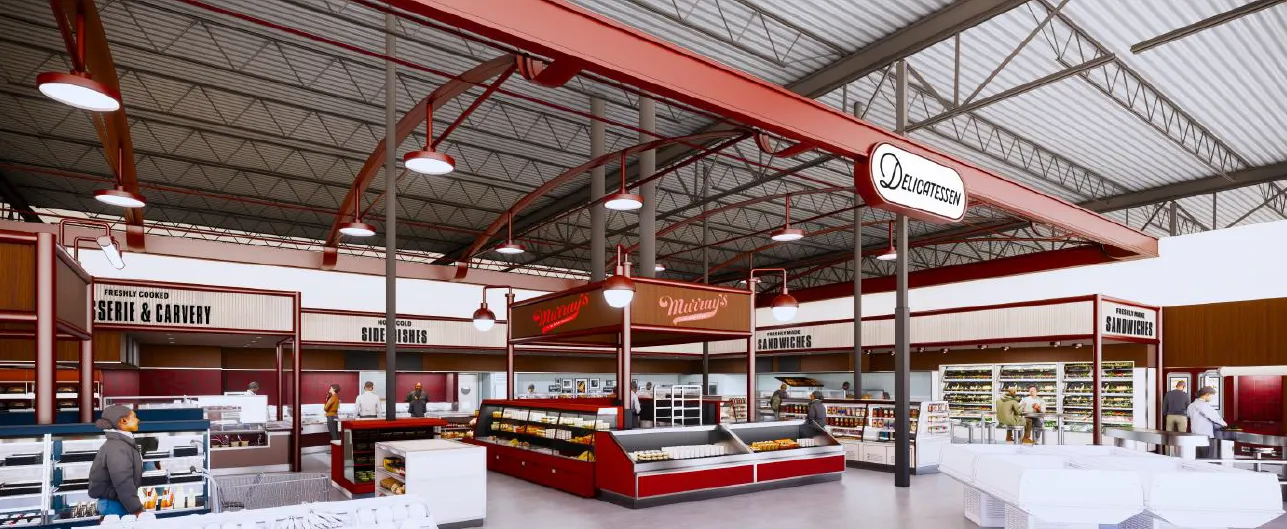
Kroger is also developing a 122,000-square-foot Marketplace store in South Charleston, West Virginia, that is set to open in June. That store will be Kroger’s first Marketplace store in West Virginia and be the grocer’s largest retail location in the state. Kroger currently runs 36 stores in West Virginia.
Kroger plans to close two grocery stores it currently operates in the vicinity of the South Charleston location when the new store opens.
Kroger's decision to invest in its Marketplace fleet represents a significant capital investment at a time when the retailer has been looking to cut expenses. Each Marketplace location costs about $40 million to develop, according to the company.
But while the Marketplace stores may be costly, they represent a powerful opportunity for Kroger to differentiate itself after years of holding off on expansion while it tried to combine with Albertsons, said Arun Sundaram, senior vice president of equity research at CFRA Research.
Sundaram said one benefit for Kroger of investing in the stores is that general merchandise tends to generate higher margins than groceries. The larger stores will also give Kroger the opportunity to boost basket sizes, he added.
“They’re going to continuously reinvent themselves [because] traditional grocers have kind of lost touch with the modern consumer,” Sundaram said. “Times are really changing, and legacy grocers have been slow to react.”
Kroger said last June that it intended to close about 60 underperforming stores by the end of 2026. That month, interim CEO Ron Sargent told investors that the company was “reassessing our capital allocation strategy to make sure we are spending our capital on projects that offer the highest returns.”
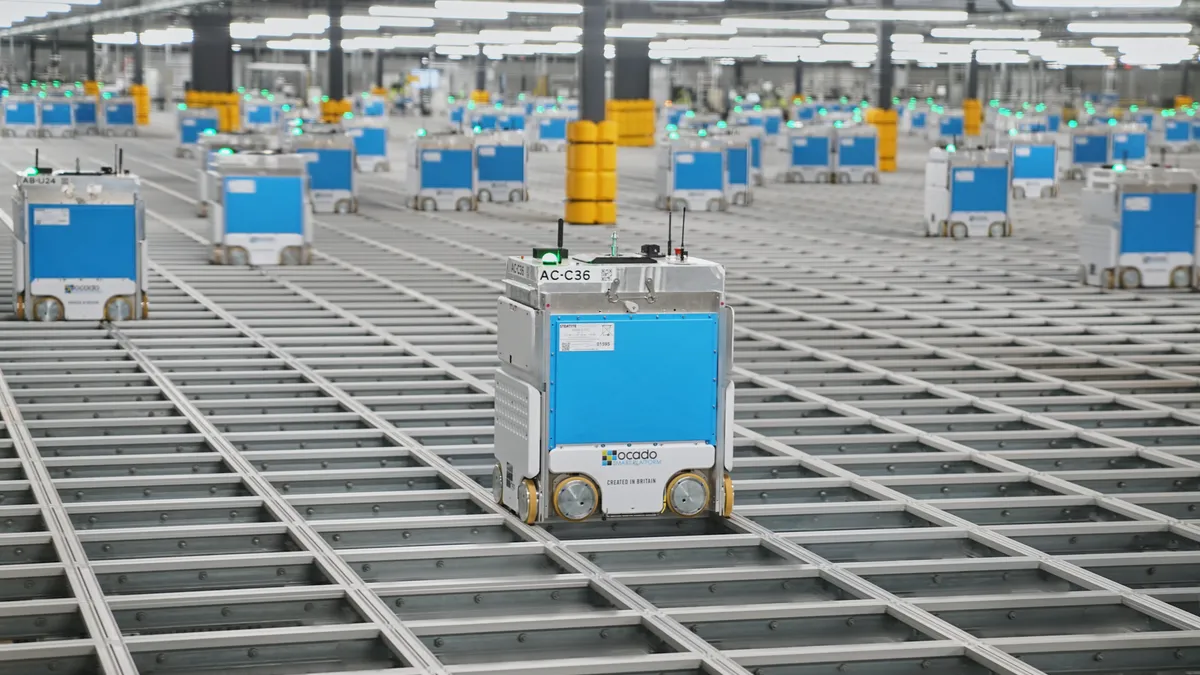
Sundaram noted that Kroger is expanding the Marketplace banner and has made other big decisions, such as pulling back on its fleet of automated e-commerce fulfillment centers, without a permanent CEO in place. But he said that Kroger has little choice but to move aggressively because it has been losing market share to rivals.
Kroger said last December that it plans to announce its selection for a new chief executive to take over from Sargent during the first few months of 2026.
Kroger is “playing offense because they need to do something,” Sundaram said. “They just can’t really wait that much longer.”
Catherine Douglas Moran contributed reporting.