Nearly a year after Kroger abruptly parted ways with former Chairman and CEO Rodney McMullen, the supermarket operator has yet to announce who will take over as its permanent leader. But whoever the grocery company names as its next chief executive will be greeted with a litany of pressing issues that demand rapid attention, according to grocery industry experts.
Kroger’s interim CEO, Ron Sargent, who took over when McMullen left last March after nearly 50 years with the company, said in December that Kroger intends to tap someone from outside the company to serve as its top executive and expects to announce its decision during the first few months of 2026.
Among the top priorities for Kroger’s new CEO will be strengthening the grocer’s value proposition with shoppers in a highly competitive market where the company has been struggling mightily to define itself, said David Halliday, associate teaching professor of strategic management and public policy at the George Washington University School of Business.
That longstanding challenge has taken on new urgency as consumers increasingly focus on saving money and Kroger’s chief rivals, like Walmart and Aldi, continue to resonate with shoppers, Halliday said.
Kroger has lost its edge in offering low prices across the board as other retailers have made shaving costs for consumers their No. 1 mission, he said, adding that other large supermarket companies, like Ahold Delhaize and Albertsons, are in a similar predicament.
“The middle tier of grocers has focused a great deal of their time and energy on optimizing per-item pricing and maximizing the gross margin on those items, which naturally increases the total gross margin per customer,” said Halliday. “But that is diametrically opposed to offering a generally low-price, convenient grocery environment the way that Walmart conceives it, where they’re not trying to maximize price per item, they’re trying to maximize revenue [through] the overall experience and long-term retention of the customer.”
This dichotomy has put Kroger and other traditional grocers in a bind. In the current operating environment, companies need to offer either a low-price experience or one that places a higher priority on quality, Halliday said.
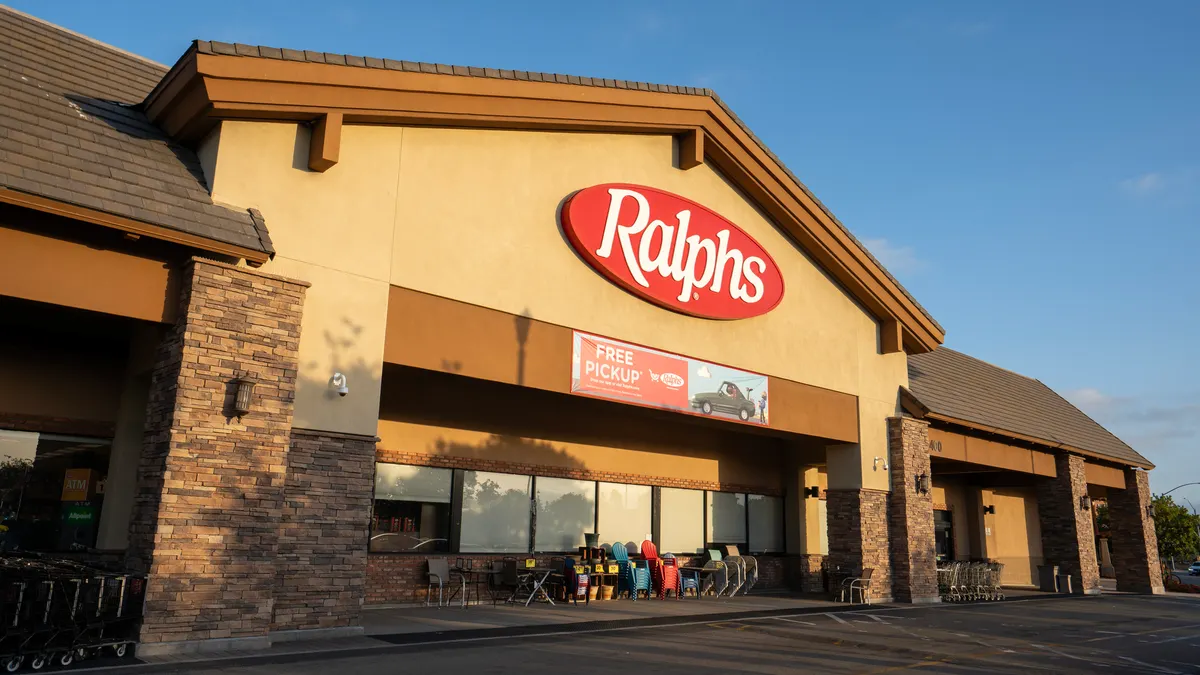
At a time when affordability is a paramount concern for shoppers across the income spectrum, Kroger needs to upgrade its facilities to keep up with Walmart — a costly proposition, said Scott Mushkin, CEO of retail market research and advisory firm R5 Capital.
“The thing that strikes me a lot with Kroger is they need a significant capital investment in their store base,” which is showing signs of age, Mushkin said, adding that Kroger banners have become less differentiated in recent years.
Under Sargent, Kroger has pruned its fleet of more than 2,700 stores, revealing last June that it would close roughly 60 underperforming locations by the end of 2026 in an effort to boost its results. The company also announced plans last year to add locations in regions including the Cincinnati and Dallas areas and expand its Harris Teeter banner in three Southeastern states.
“Changing strategy in real time for an embedded company is challenging. You’ve got an icon of American retail, and it has inertia that will make it very challenging to change what they’re doing.”

David Halliday
Associate teaching professor of strategic management and public policy at the George Washington University School of Business
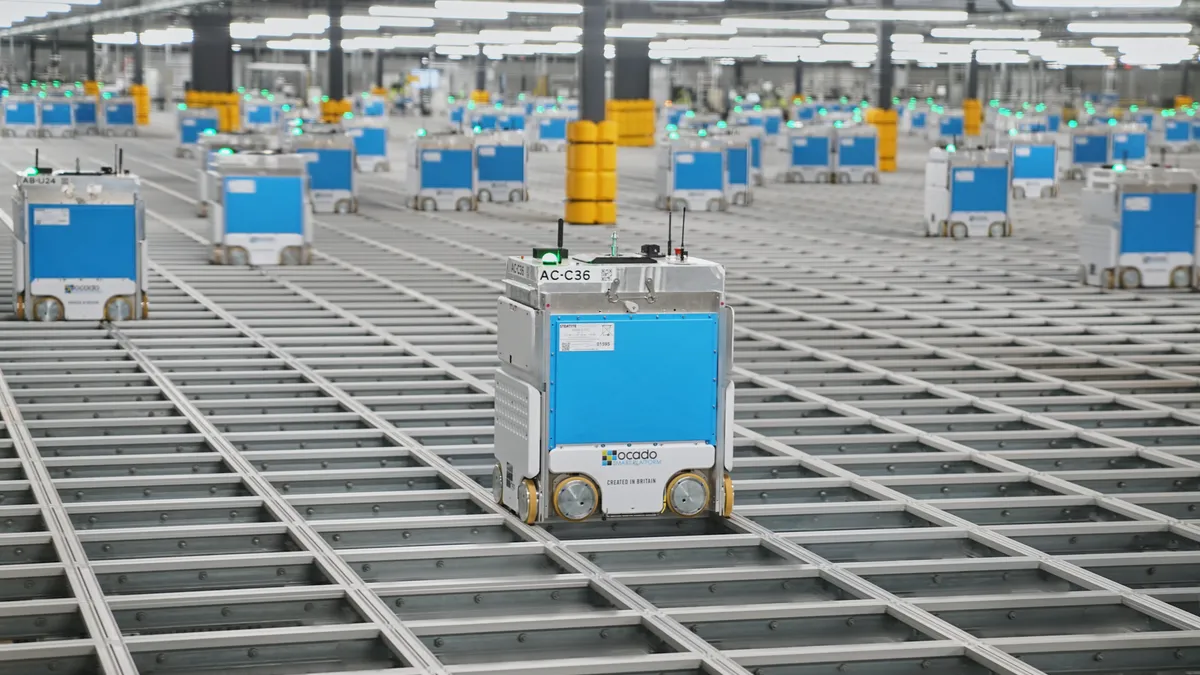
Another challenge facing Kroger’s next CEO will be turning the grocer’s fast-growing e-commerce operation into a money-maker. The company dramatically rethought its approach to its digital business last year, shifting resources away from the multibillion-dollar network of automated fulfillment centers it developed under McMullen in favor of relying more heavily on its stores to assemble online orders.
Kroger has also made good progress over the past year in finding ways to reduce its expenses, a positive sign for the company as it looks to sharpen its pitch with consumers during the months to come, analysts said.
Kroger is “definitely recognizing that that pressure is real. And if you look at the shifts in the share of customers shopping in clubs, discounters, masks, like Walmart, etc., it continues to grow and grow — and that comes out of traditionals,” said Matt Hamory, co-leader of the global grocery practice at management consulting firm AlixPartners.
Satisfying both consumers and shareholders will be tricky, however. Kroger has been plowing money into a multibillion-dollar share-repurchase program aimed at boosting its stock price even as it faces the need to invest in its stores, hold down prices for shoppers and fund other urgent priorities, Halliday said. In December, Kroger’s board of directors approved an additional $2 billion share repurchase authorization.
Kroger’s shares have recently sagged in value after hitting a multiyear intraday high of $74.90 on Aug. 11, 2025. The company’s stock price has fallen more than 15% since that point, closing at $61.47 on Tuesday.
“It’s concerning that they’re burning through cash to buy stock back exactly at the time when they need to invest in the future,” Halliday said. “It’s just simply a capital allocation concern that the new CEO, coming in from the outside, is going to have to deal with [as they confront] decisions that have been made by their predecessors.”
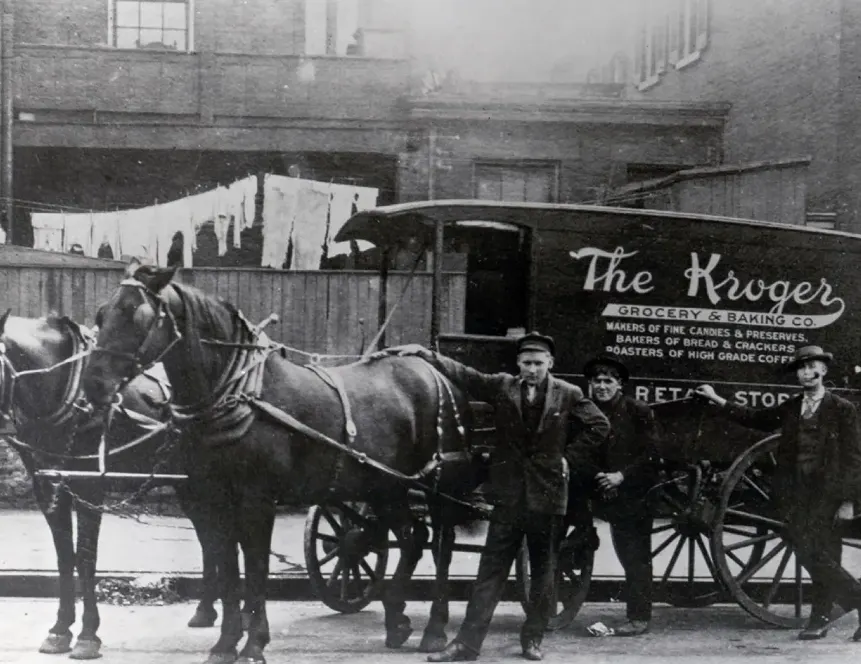
When tackling the challenges it faces, Kroger’s next leader will also need to deal with the reality that the company is long-established and has deeply entrenched ways of operating, Halliday said, observing that Kroger’s roots date back to the 19th century.
“Changing strategy in real time for an embedded company is challenging,” he said. “You’ve got an icon of American retail, and it has inertia that will make it very challenging to change what they’re doing.”