As traditional supermarket operators continue to look for ways to withstand growing competition from other types of retailers, many are leaning on their relationships with smaller suppliers as a way to stand out with shoppers.
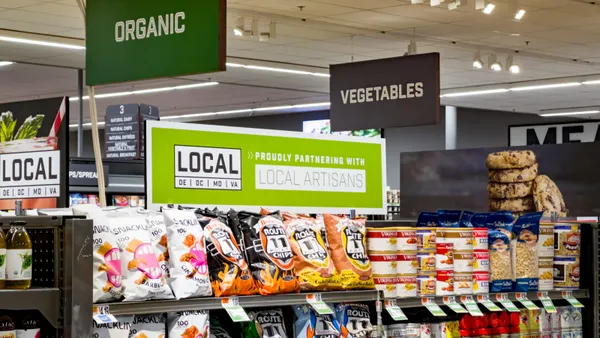
Selling niche products from local producers — often in just a single store — can be an especially effective way for independent and regional grocers to differentiate themselves, said Sandy Brown, chairwoman and executive vice president of Brown’s Super Stores, a family-owned company that owns and operates 12 ShopRite stores in the Philadelphia area.
“One of the things that we feel differentiates our ShopRites — and it’s not really just Brown’s, but ShopRite in general — is we all are in our local communities, versus a big chain that is catering to numerous communities in a region or across the country,” said Brown. “By partnering with local entrepreneurs, that definitely gives us an opportunity to not only be more entrenched in the community, but also to offer different types of products,” said Brown.
ShopRite is one of several banners that fall under the purview of cooperative Wakefern Food Corp., which comprises about 380 stores in nine East Coast states. The co-op comprises about 45 separately owned member companies, including Brown’s.
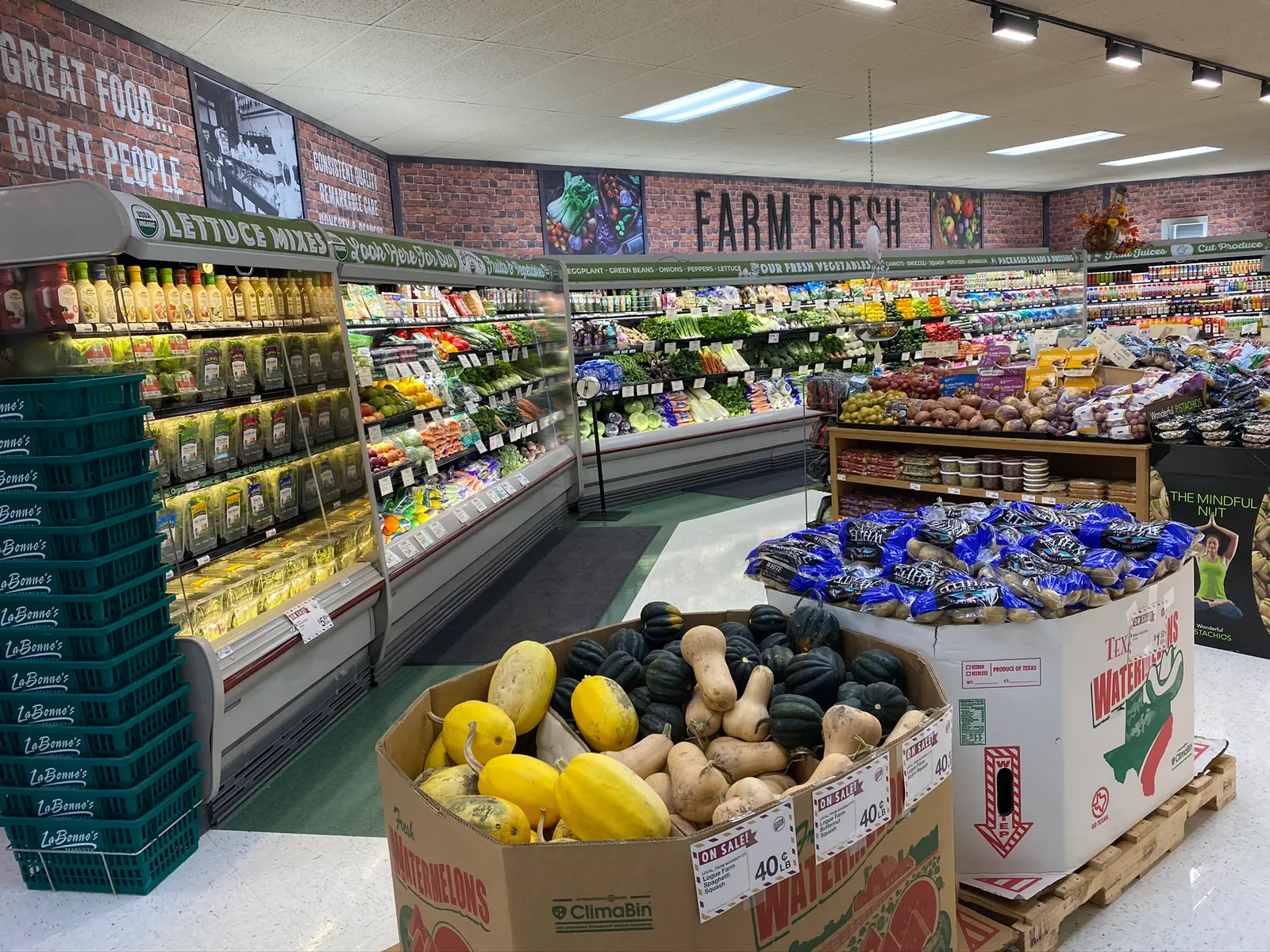
Focusing on unique products sourced from local suppliers also plays a central role in how Eric Siperas, who runs one of the four supermarkets independent grocer LaBonne’s Markets operates in western Connecticut, looks to differentiate his store. Those products are especially important because distributors that his store relies on also serve competitors, he said.
“If you’re just getting [groceries] from them, then it’s really hard to be different than [other stores],” Siperas said about distributors.
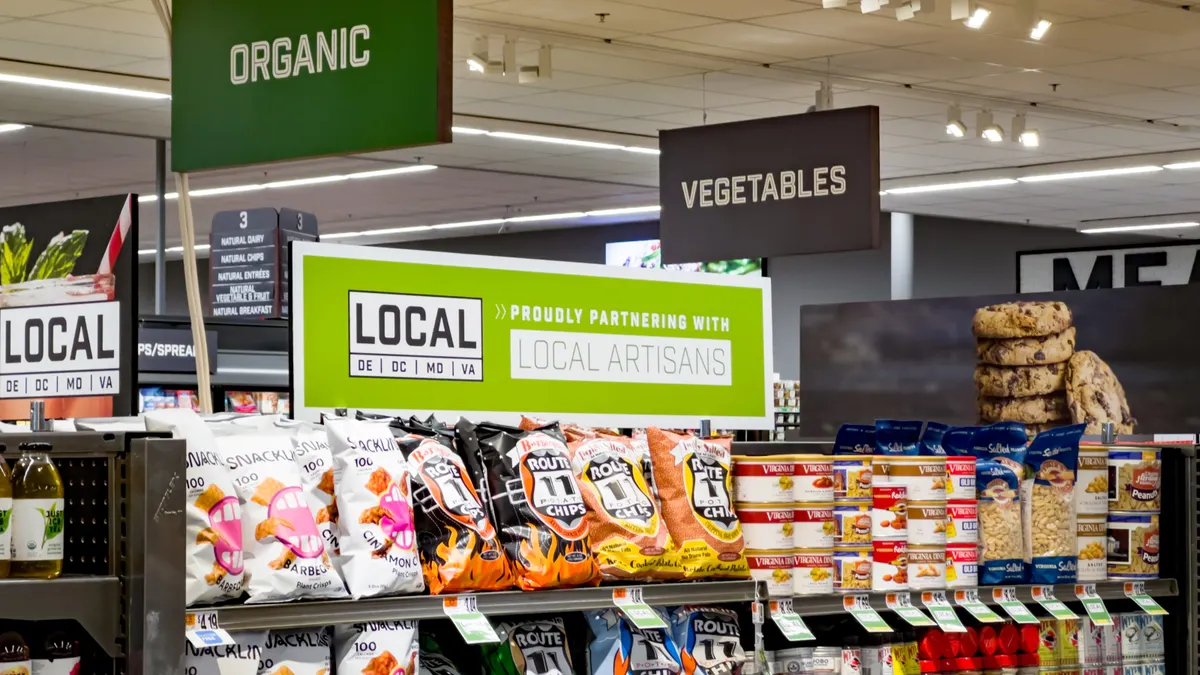
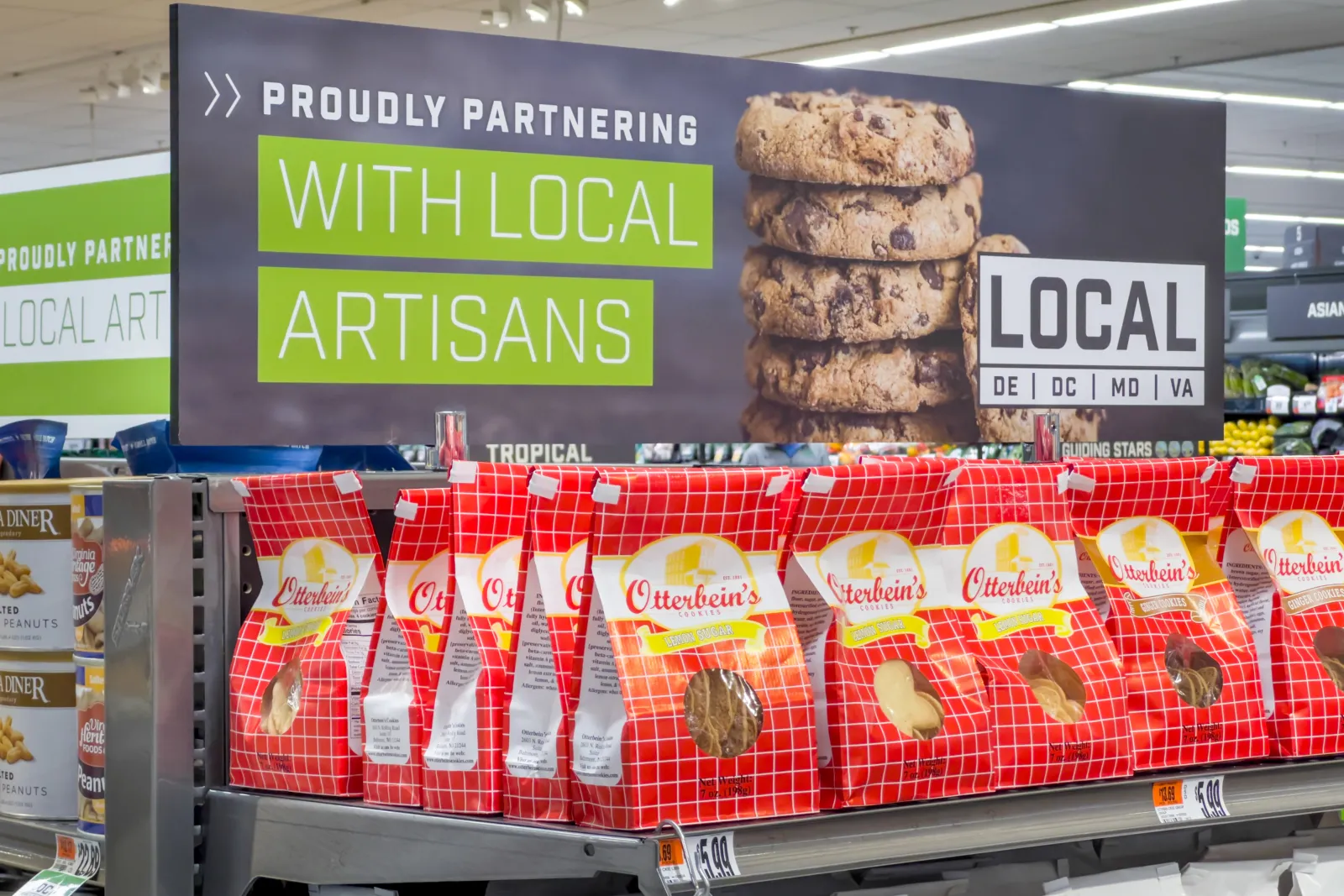
Larger grocers also benefit by making products from nearby suppliers available to shoppers. For instance, Giant Food, an Ahold Delhaize-owned banner with over 160 stores in the Mid-Atlantic area, says sourcing local brands ties directly into customer demand.
Shoppers “continuously tell us how important it is to support local brands and to offer a diverse range of flavors, and our sets reflect that,” said Meg MacAvoy, the grocer’s category manager for multicultural and kosher foods.
MacAvoy has found that smaller brands can sometimes be nimble in a way that larger ones aren’t, such as shifting quickly to evolving customer tastes.
Nut purveyor Nuts.com, which has long depended on its own direct-to-consumer platform to sell its products, uses its data from its e-commerce business to demonstrate to retailers that its products are worth putting in front of shoppers, Sam Neumann, the company’s head of sales, said in comments sent by e-mail.
Nuts.com, which sells its products in ShopRite stores as well as through retailers like Walmart, Target and The Fresh Market, also looks to distributors to help find avenues to reach customers.
David Kroll, CEO of Egglife, which makes products including egg white wraps and high-protein pasta, pointed out that niche brands like his can help retailers fine-tune their sense of what shoppers look for when they buy groceries. Egglife works with retailers, including ShopRite, Publix and Costco.
“Category management is still hugely important, but it’s the insights that I think the smaller players, like Egglife, we’re bringing to the table to help retailers understand the evolving dynamic of shoppers,” Kroll said.
Kroll added that Egglife makes a point of working with retailers to test customer reaction to its products before moving ahead with plans to offer those goods on a larger scale. For example, when Egglife launched its egg white wraps several years ago, the company started in the Chicago area, using data from that market to demonstrate that the product appealed to shoppers at higher-end retailers as well as value-oriented stores.
“The repeatability of the model gives [retailers] more and more confidence [that] what we’re bringing to them will sell and drive incremental growth for their business,” Kroll said.
Serving shoppers’ preferences for local products
Siperas said shoppers who visit LaBonne’s stores are often aware of farms and other food producers located nearby and look to the chain to carry items from those suppliers. He and his team make a point of bringing in items like apples, corn, Greek yogurt and coffee that people know come from their area.
LaBonne’s also carries dairy products that come from nearby producers, Siperas said, noting that the chain sells milk and cheese from Arethusa Farm in Litchfield, Connecticut, and ice cream from The Big Dipper of Prospect, Connecticut.
“Their ice cream is known, and we carry it in all our stores,” Siperas said about The Big Dipper. “They’re not open in the wintertime at their scoop shop, [but shoppers] can get it from us [year-round].”
While some local products LaBonne’s brings in go to more than one of its locations, the company sources other products specifically for individual stores. For example, Siperas noted LaBonne’s does not consider honey to be local if it comes from more than about 40 miles away, making it necessary for the grocer to maintain relationships with multiple bee yards.
Siperas said he keeps an eye out for products that have the potential to connect with shoppers.
“You go to a farmers market, or you go somewhere and you see something, and you’re like, ‘Wow, that seems cool.’ And then you start making a contact, and just see what you can do,” he said.
Other employees also keep an eye out for local products for LaBonne’s to consider selling, Siperas added.
“Sometimes it’s actually the manager of the department that sees the item somewhere else, and then they want to bring it in,” Siperas said. “It can grow their department and grow their sales.”
Nurturing promising small brands
Brown’s connections with local brands extend to helping entrepreneurs develop the infrastructure they need to establish and manage sustainable businesses. For example, some vendors are so small that they need help with basic operational issues, like ensuring they comply with legal requirements, determining how much insurance they need, developing packaging or making arrangements with a commercial kitchen, she said.
Brown’s also lets brands she and her team think are promising test their products in the chain’s stores.
“Because ours are so locally based, a lot of them still have a ways to go, to be able to come and sell in the stores … they’ll get feedback from customers. They’ll see what is working with their products and what isn’t.”
The grocer also runs an incubator to help promising suppliers get their idea ready to go to market, Brown said. Sometimes the grocer allows a supplier to run a pop-up shop in one of its stores to gauge interest from shoppers, she added.
Niche brand sourcing takes patience
For Giant Food, timing is everything when working with smaller brands. Discovering a brand doesn’t mean it will hit the grocer’s shelves right away.
To discover smaller, lesser-known and local brands, MacAvoy said she goes to community events, farmer’s markets and local restaurants that source local and “interesting” ingredients. Startup CPG and ECRM — platforms that connect emerging brands with retailers and suppliers — as well as food shows can also be prime opportunities for niche brand discovery, she noted.
MacAvoy said she looks for brands that are focused on differentiation. It’s a bonus if suppliers also have a devoted customer base, are first to market with a concept or are strongly identified with a locale.
“An elevator speech is important: customers need to be able to tell, at a glance, what your product is and how it’s different from what’s already on the shelf or in the market,” she said, adding that working with a broker or distributor can help brands have the “logistical support” needed for working with a supermarket chain.
MacAvoy also has to keep the category’s needs in mind. A “healthy” category needs to both grow sales for the retailer and meet shoppers’ needs. For multicultural categories, specifically, customer demand for innovative products is driving MacAvoy to focus on sourcing more spicy snacking options, she said.
MacAvoy said she has advised smaller brands to think about the best-case and worst-case scenarios for being in stores and game plan for what to do if their product doesn’t perform as expected.
“Going from being in a few retailers to 150+ stores can be whiplash if you haven’t prepared to scale … the most successful smaller brands understand that getting into a chain isn’t the end result. It’s the beginning of a partnership and one that requires both sides to work together for success,” she said.