Higher-income shoppers tend to purchase fresh foods while people with less money often direct their grocery spending toward shelf-stable products, according to NielsenIQ findings shared by FMI.
With the increasing bifurcation of the economy, people with more resources feel empowered to spend more on food while those with less are cutting back, according to NielsenIQ findings shared by FMI.
Shoppers at the low end of the income spectrum are continuing to struggle under the weight of higher prices while more affluent people amp up their spending, creating a dynamic where richer consumers are increasingly driving grocery spending in the U.S., panelists said during an online webinar hosted on Tuesday by FMI — The Food Industry Association.
Forty percent of shoppers who are doing well financially said they plan to spend more on groceries in 2026, compared with 23% of people with less comfortable economic circumstances who said the same, according to NielsenIQ data presented during the session.
“In general, there’s an attitude amongst the struggling cohort of intention to try to spend less. And there’s an attitude amongst the thriver cohort of reality and awareness that they might have to spend more on certain categories here, and there’s very few categories that they can simply spend less in the years to come,” Jack O’Leary, director of e-commerce strategic thought leadership for NielsenIQ, said during the session.
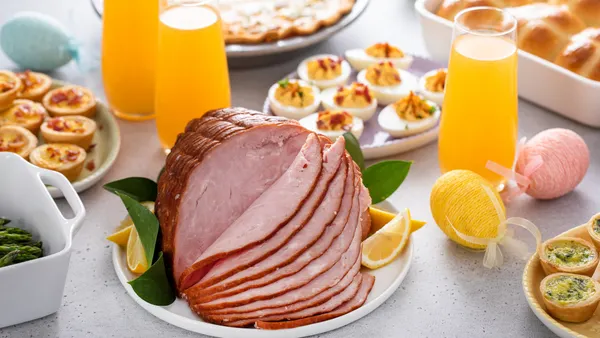
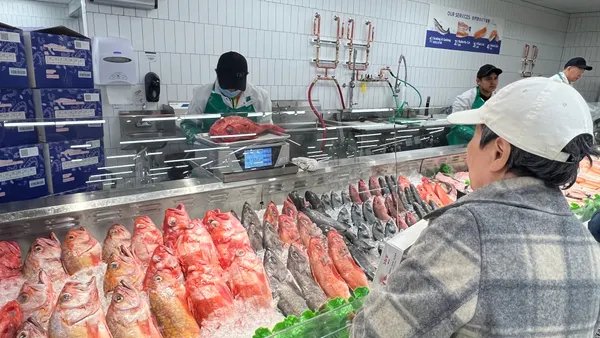
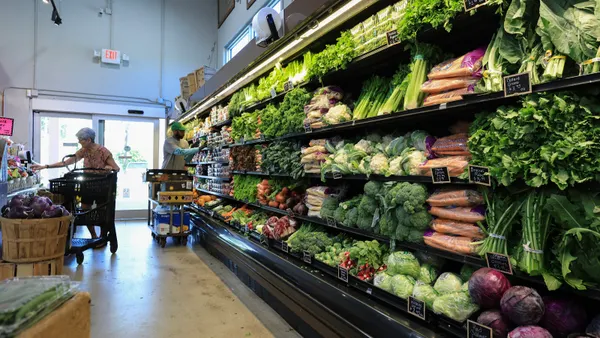
In addition, higher-income shoppers tend to purchase fresh foods while people with less money often direct their grocery spending toward shelf-stable products, NielsenIQ found.
Shoppers with household income above $150,000 are particularly drawn to fresh fruit, beverages, vegetables and meat and have significantly boosted their spending in those categories, according to data O’Leary presented. Meanwhile, people with incomes below $50,000 are cutting back in some areas — even on basic goods like baking supplies.
“I think that is a major challenge to those of us in the industry — retailers and brands — of how to better market to those consumers and to potentially reignite unit growth into the future amongst those low-income cohorts,” O’Leary said.
People who are struggling to make ends meet are not only facing financial pressure today but also tend to indicate that their economic situations are worsening, said Steve Markenson, vice president of research and insights for FMI. More than three-quarters of those people described their household finances as weaker than they were a year ago, while almost 90% of people who said they are financially comfortable reported their financial situation is either the same or better, Markenson said, citing data from FMI’s December Shopper Snapshot.
The increasing bifurcation of the economy is creating what economists call a K-shaped recovery, where people with more resources feel empowered to spend more while those with less are cutting back. The economy is developing in this direction even though inflation has cooled markedly over the past few years, O’Leary said.
The annualized rate of inflation over the four-year period that ended in November 2025 was 4.5% — well above the level that the Federal Reserve considers healthy, he noted.
“The fact that these struggler cohorts are still identifying some of these inflationary points as concerns for them indicates that while inflation maybe slowed down a little bit, it’s still affecting them meaningfully,” O’Leary said.
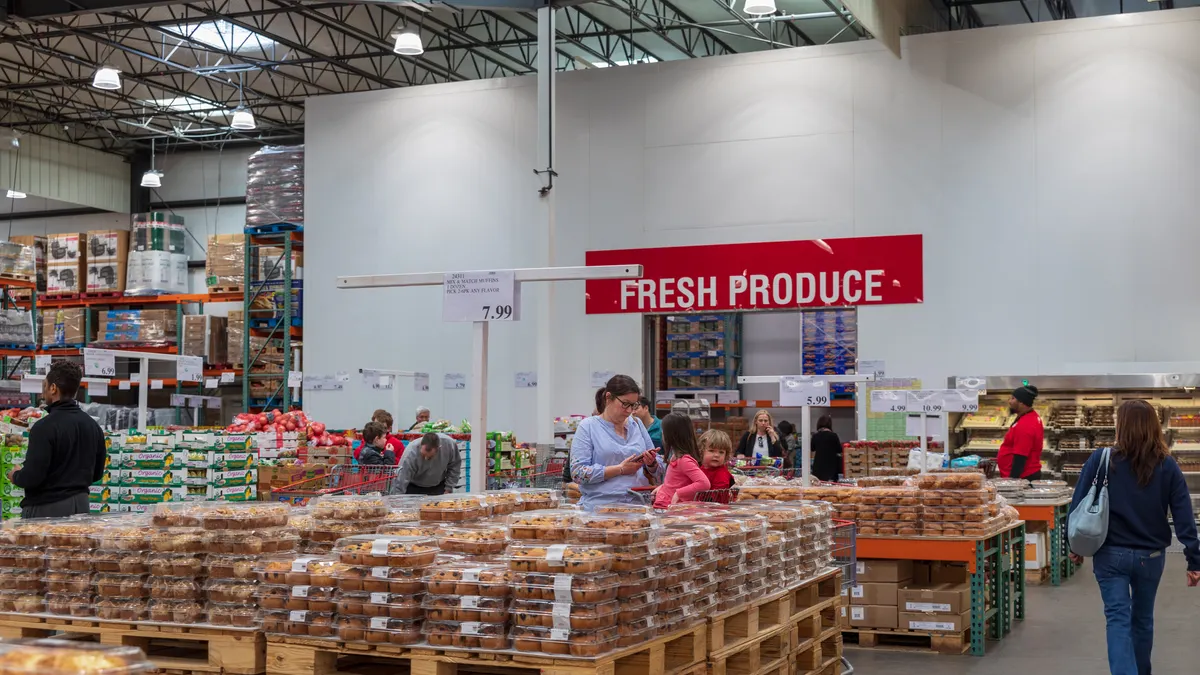
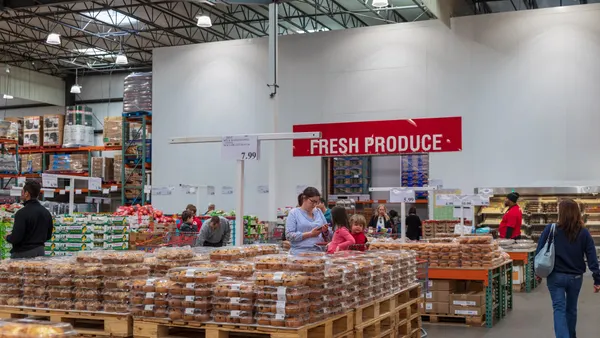
According to NielsenIQ data, warehouse clubs are growing their share of food spending across income groups, especially among those with higher incomes. Those retailers saw growth of more than one-third among shoppers with household incomes above $150,000, representing a share gain of more than 2%. Among people with income below $50,000, those retailers saw growth of 6%, leading to a share gain of 1%.
By comparison, grocery stores lost market share among people in both income groups, NielsenIQ’s data shows.