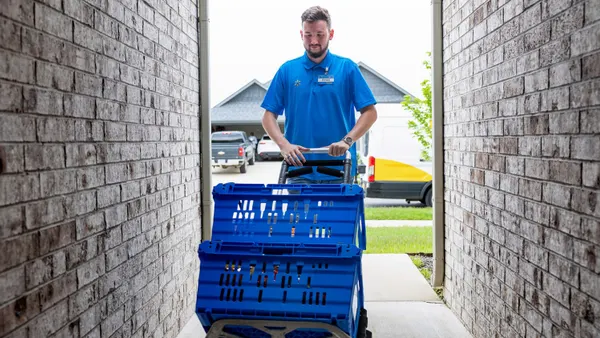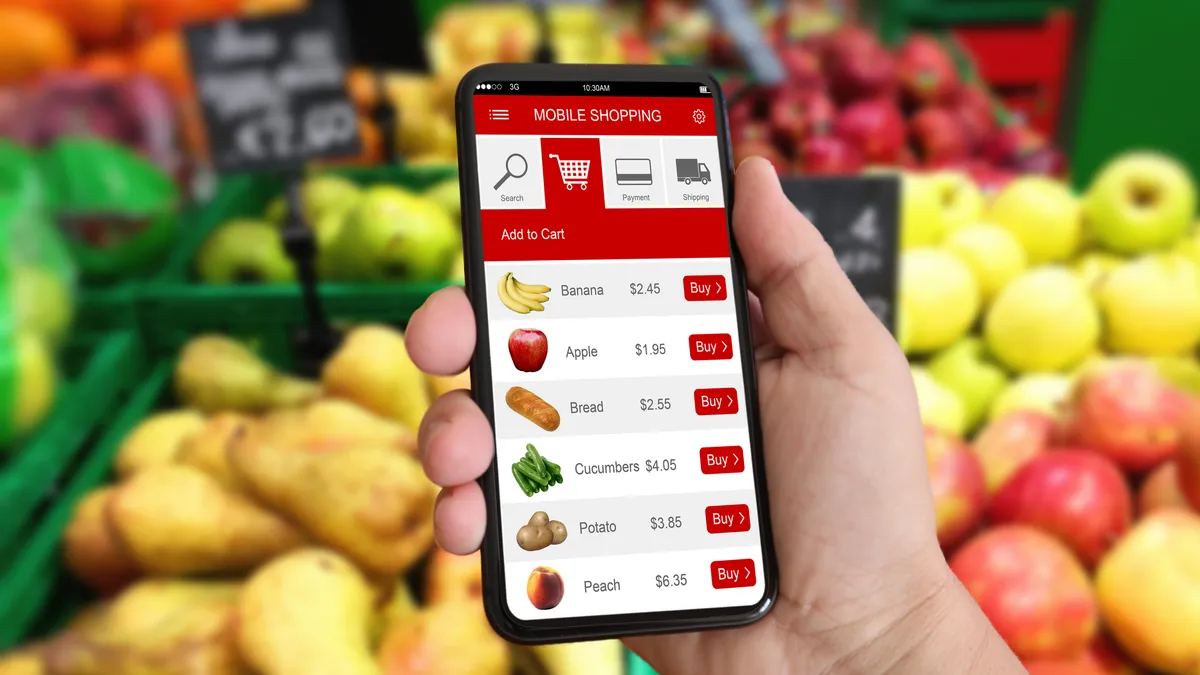
Grocery e-commerce in 2025 hit a slew of monthly record-highs, cementing the shopping method as “no longer an alternative channel” but as a “dominant habit,” according to Brick Meets Click.
Nearly every month in 2025 saw year-over-year growth in e-grocery sales, and December was no exception, with sales surging to a record $12.7 billion, up 32% year-over-year. The final month of 2025 also saw the online share of total grocery spending reach 19%, up 430 basis points year-over-year, as order frequency rates increased, per Brick Meets Click’s most recent monthly findings.
While December’s results emphasize grocery e-commerce’s banner year, regional grocers remain in a tough spot.
“Structural shifts in shopping behavior drove much of eGrocery’s growth in 2025, and this will create stiffer headwinds in 2026 – especially for regional grocers,” David Bishop, a partner at Brick Meets Click, said in a statement.
Customers are increasingly fragmenting their online grocery spend across several methods, meaning regionals need to be strong across the board in terms of delivery, pickup and ship-to-home services.
For nearly all of 2025, regional grocers’ biggest e-commerce threat was Walmart and fellow mass retailers due to the increase in cross-shopping between those retailers and traditional grocery stores — a metric that has risen every June since 2020, when Brick Meets Click began tracking this shopping behavior.
In the second half of the year, regional grocers encountered a new e-commerce hurdle: Amazon. In August, Amazon announced the launch of its same-day delivery of perishable groceries across more than 1,000 U.S. towns and cities. By December, Amazon expanded the service to 2,300 markets.
Already, Amazon’s grocery delivery offering is bolstering ship-to-home’s performance. In December, the segment’s average order value grew 14%, exceeding delivery and pickup, because of Amazon’s same-day fresh grocery delivery offering, according to Brick Meets Click.
Correction: A previous version of this story misstated a detail regarding the sponsorship of Brick Meets Click’s December survey.