Dive Brief:
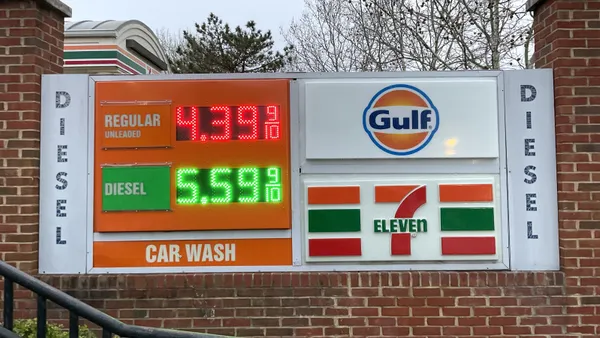
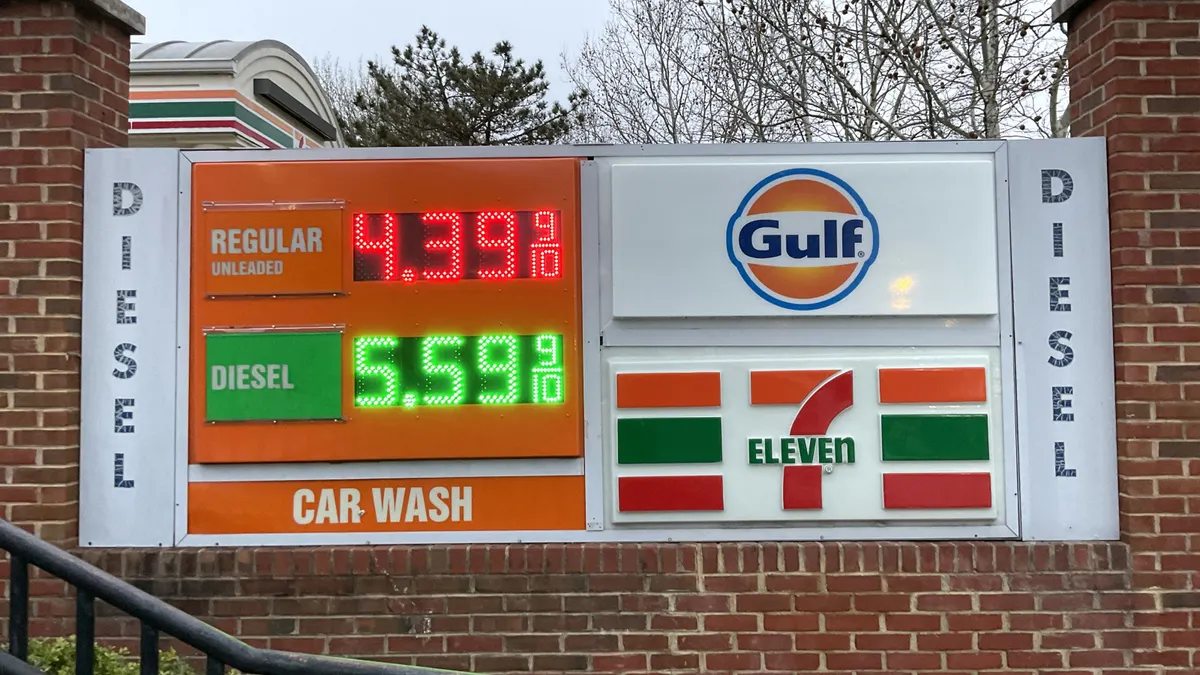
- The rapidly rising price of gasoline during the past few weeks has significantly impacted people’s grocery-shopping patterns, according to survey data released Tuesday by Snipp, a company that helps retailers run customer-engagement programs.
- More than a third of respondents to a survey of 1,000 grocery shoppers Snipp conducted last month said they have cut back on their grocery spending by either trading down or buying less.
- Snipp also said it found that people have been trying to cut their grocery spending even as prices have been going up. More than 37% of shoppers in the survey said their weekly grocery bill has increased compared to three months ago.
Dive Insight:
Respondents were most likely to indicate that they have cut spending on snacks and beverages, followed by the alcohol, fresh meat and seafood, and prepared/deli foods categories. People also said they have reduced spending on fresh produce and dairy goods.
Over half of participants in the poll, which drew responses from 1,000 U.S. consumers who shop for groceries at least once a month, said they have changed their in-store shopping activity due to higher gas prices. Nearly 30% said they are consolidating trips to reduce driving, and more than 20% are shopping less often.
Fuel prices have surged since the United States began its war with Iran several weeks ago. The national average price of a gallon of regular gas was about 32% higher on Wednesday than it was a month ago, according to data from AAA.
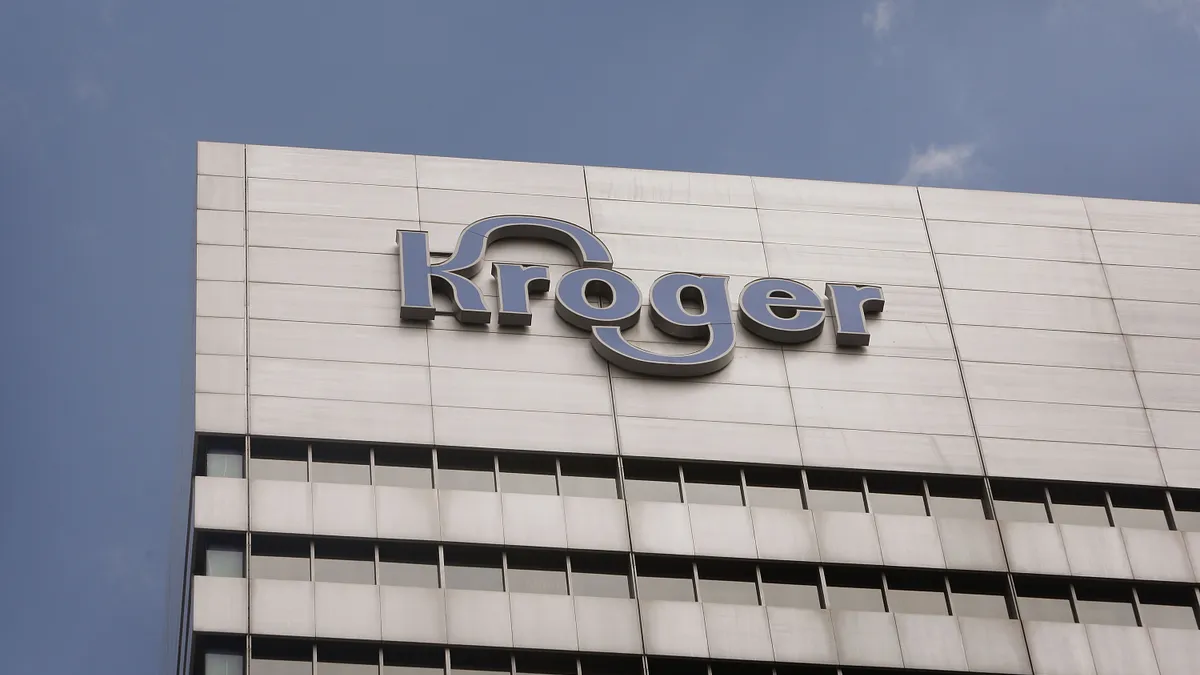
The grocery industry has taken notice of the pinch people are feeling from higher energy costs. Last week, Kroger said shoppers would receive four times the usual amount of fuel points from March 27-29 and April 3-5.
Companies that depend on independent contractors who use their own vehicles have also taken steps to soften the blow of rising fuel prices. DoorDash, for instance, announced recently that it will provide drivers who use the company’s branded debit card to pay for gas with 10% cash back — five times the normal rate. In addition, DoorDash workers who drive at least 125 miles per week will receive a weekly “fuel relief payment” of at least $5.