Dive Brief:
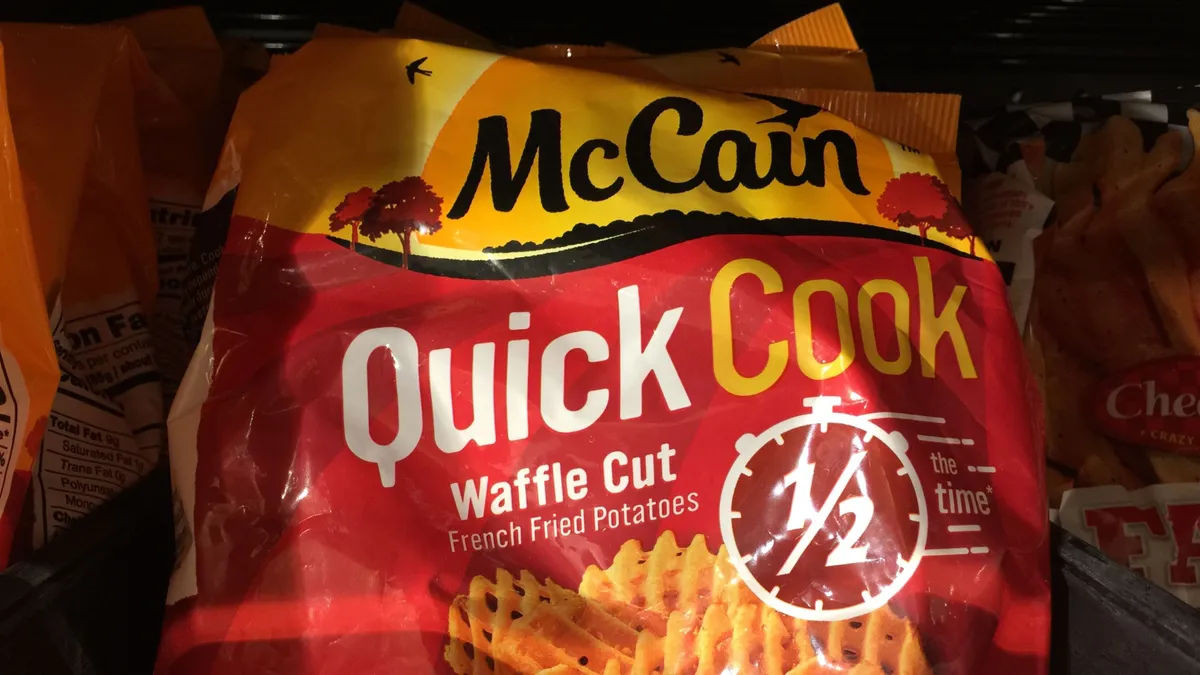
- Frozen food sales in the U.S. were more than 45% higher during the 52-week period that ended in September 2025 compared with calendar year 2019, hitting $87 billion, according to a report released this week by the American Frozen Food Institute and FMI — the Food Industry Association. The sales growth reflects both inflation and volume growth.
- Sales of frozen processed meat and poultry more than doubled, to $8 billion, while frozen snack sales rose almost 70%, to $4.4 billion.
- Shoppers are increasingly combining frozen and fresh ingredients in the same meal, with more than three-quarters of respondents indicating that they do so.
Dive Insight:
The sharp growth in frozen food consumption in recent years is due in part to the difficult economic circumstances many shoppers have dealt with, which has spurred greater interest in cost-saving measures such as at-home cooking, meal planning and food waste prevention, according to the Power of Frozen in Retail report.
The study drew 1,560 participants, all of whom consume frozen foods several times per year, and was conducted in October 2025 by 210 Analytics using a sales overlay provided by Circana.
Nearly a third of respondents said they intend to buy more frozen foods during the year ahead. About 40% of participants in the study indicated that they are “very interested” in using frozen foods made from “real” ingredients that are minimally processed, high in protein and free of artificial components. The proportion of survey participants who said they believe the quality of frozen food is better than that of fresh food rose by 3 percentage points to 15%.
Notably, supermarkets shed share in the frozen category to club and mass retailers, which now collectively account for the same proportion of frozen food spending as traditional grocers. Mass retailers saw frozen food sales rise by more than a quarter during the year that ended in September 2025 compared with 2019, while club retailers recorded an increase of nearly 14%. Traditional grocers, meanwhile, saw frozen food sales decline by almost 40% over the same period.
Almost 90% of online shoppers said they ordered frozen food using digital channels in the past six months, up from 86% in 2023 and 82% in 2020, with delivery gaining share while pickup declined.
The report recommends that retailers lean into growing shopper interest in buying frozen foods by focusing on signage, layouts and thematic merchandising as ways to stoke sales. Retailers should also take steps to connect frozen and fresh foods, such as using co-located or dual-temperature displays, and employ visuals to reinforce attributes such as “flash-frozen freshness” and “farm-to-freezer,” according to the study.
The trade groups also suggested in their report that consistency is an area where retailers can improve how they manage their frozen departments. More than a quarter of participants in the research said that the availability of products they want to buy is “very inconsistent,” and almost a fifth said they often have trouble finding what they are looking for.