Dive Brief:
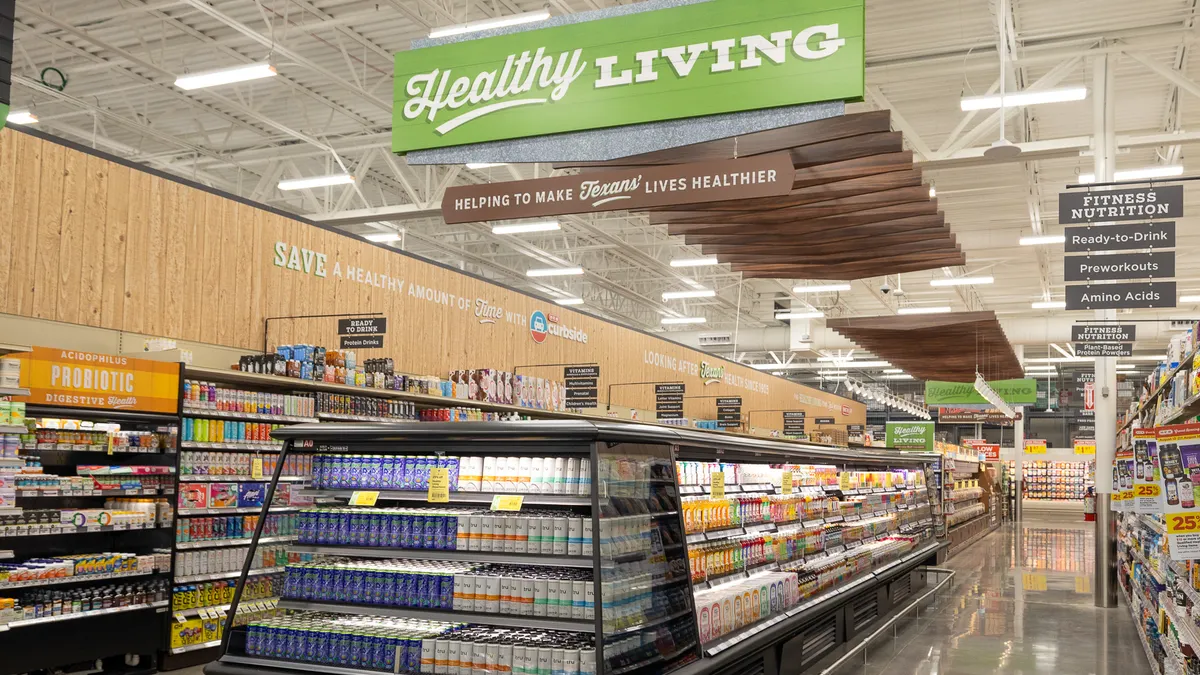
- With eating well serving as a guidepost to “virtually everything about [consumer] choices,” grocers should continue carving out their reputation as a health destination, according to the newest FMI — The Food Industry Association report.
- The Power of Health and Well-Being in the Food Industry report, published Tuesday, found that grocery shoppers view healthy foods as investments that pay off, providing a prime opportunity for grocers to introduce more comprehensive health offerings, such as nutrition services and digital engagement around health goals.
- Consumer interest in health and wellness continues to transcend ongoing economic pressures, as 47% of U.S. shoppers are pursuing a “deliberate diet or eating approach,” FMI stated.
Dive Insight:
Health has risen to the strongest driver of grocery spending, with nearly half (46%) of shoppers saying they anticipate “eating more healthfully in the future,” according to FMI, which referred to “eating well” as the “North Star of a constellation of shopper needs, values and desires.”
Food-as-medicine initiatives are nothing new to the grocery industry, but nonetheless they continue to pay off for grocers. Fifty-one percent of surveyed consumers said their primary food store is “on my side” in terms of supporting their health — an increase of 3 percentage points from 2024.
While shoppers’ definition of “healthy” for 2026 includes nutrient-rich foods with no added sugars and with whole-body benefits, their approach to healthy eating is becoming more personalized. GLP-1s and other similar weight loss medications, which 13% of FMI respondents said they have used in the past 12 months, are also on the rise and impacting buying habits and approaches to health.
The new dietary guidelines — which include the much-discussed flipped food pyramid — released in early January by the Trump administration introduces new recommendations around healthy eating and nutrition. According to FMI, grocers would do well to position themselves as a go-to destination for consumers aiming to align with these new recommendations by:
- Establishing a fully-integrated health and well-being team;
- Connecting food, pharmacy, nutrition and public health;
- Creating personalized support for health-seeking consumers; and
- Leveraging technology and data to support health programs.