Given the strategic shifts and underwhelming growth that have defined Amazon Fresh over the past few years, it seemed only a matter of time before parent company Amazon made a significant decision about the chain’s future.
That decision came down Tuesday, when Amazon announced it will close all of the Amazon Fresh and Amazon Go stores it operates. The e-tailer didn’t give a timeline for the closures, but said it would convert some of the stores it is shuttering into Whole Foods Market locations. It also said it would focus more on its online grocery services, including its popular same-day service that now includes perishables.
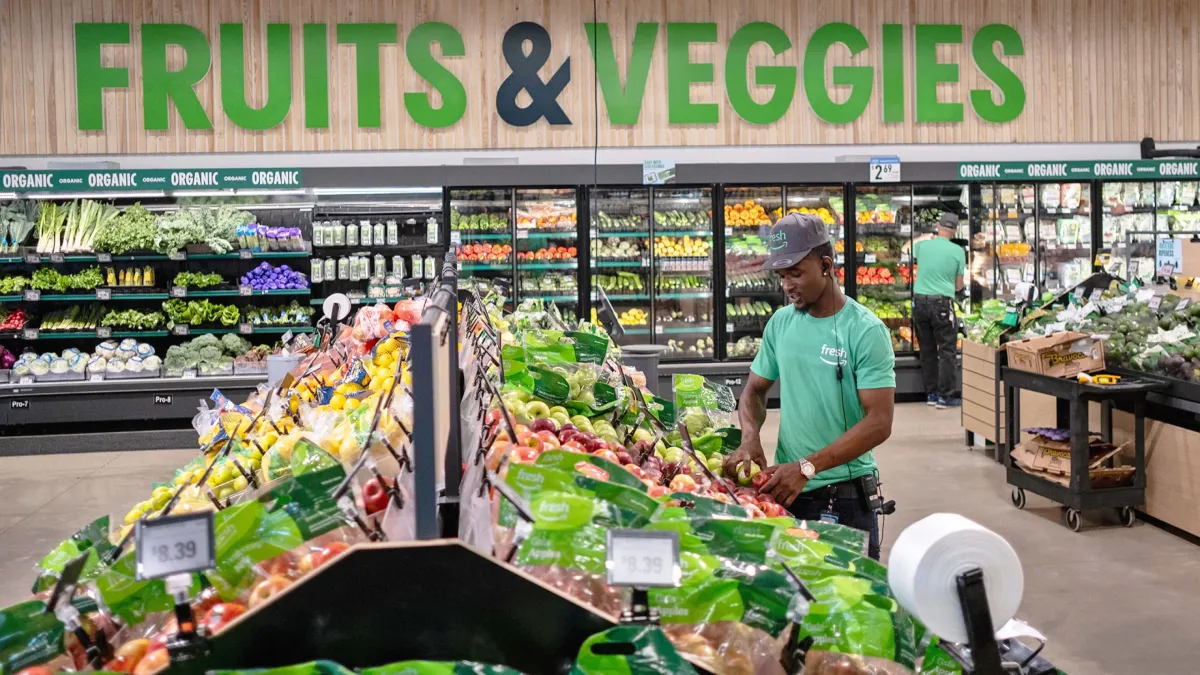
The brick-and-mortar Amazon Fresh chain operated for more than five years and reached around 50 locations across several states. The chain’s closure is a significant failure for Amazon in its quest to crack the code on mainstream grocery. But Amazon, in its signature way, made sure to position the shuttering of Fresh and Go as a learning experience for the company.
“Throughout our operation of these stores, we’ve gathered valuable insights about what matters to customers,” Amazon said in its announcement.
For instance, although its checkout-free technology didn’t prove to be a strong differentiator at Amazon Go or Amazon Fresh stores, the company said it gained valuable data that helped it figure out where that technology could succeed — namely, in non-retail locations like hospitals, warehouses and stadiums.
Experts said they weren’t surprised by Amazon’s decision to shutter Fresh and Go, and noted that its deep pockets combined with its test-and-learn culture mean it will continue to press ahead in grocery.
“[Amazon is] disciplined about experimentation and equally disciplined about walking away when a concept doesn’t meet their long-term objectives,” Tom Furphy, CEO and managing director of venture capital firm Consumer Equity Partners, wrote in an email.
Neil Saunders, managing director with GlobalData, said Amazon is making headway in food retailing, with more than $150 billion in gross sales annually, according to the company’s Tuesday announcement. Although it’s closing Fresh and Go stores, Whole Foods has been successful under its ownership, and the company has made significant progress expanding the availability of fresh foods online.
“While Fresh and Go will no longer form part of Amazon’s grocery ambitions, this should not be taken as a signal that Amazon has given up on the category. Nor does it mean that Amazon has failed in grocery,” Saunders wrote in emailed comments. “On the contrary, while it has struggled with its own-brand physical formats, Amazon has found huge success in online grocery and has found traction with Whole Foods.”
Timeline of Amazon Fresh
-
August 2020First Amazon Fresh store opens.
-
February 2023Amazon Fresh expansion pauses.
-
November 2023Refreshed Amazon Fresh stores debut in Chicago and Southern California.
-
April 2024Amazon said it will drop Just Walk Out at some grocery stores.
-
September 2024Amazon Fresh breaks the 50-store mark, debuts a simplified online storefront and adds a new private label line, Amazon Saver.
-
October 2024Tony Hoggett leaves role as Amazon’s senior vice president of worldwide grocery stores.
-
January 2025Amazon taps Whole Foods CEO Jason Buechel to helm its entire grocery business.
-
March 2025Amazon says it’s merging its Amazon Fresh and Amazon Go corporate teams.
-
June 2025Amazon names a restructured leadership team for its Worldwide Grocery division.
-
January 2026Amazon announces it will close all Amazon Fresh and Amazon Go stores.
Can Amazon accomplish its grocery goals online?
While Amazon has in its arsenal a growing online grocery business and a popular specialty chain, it’s still missing an effective brick-and-mortar outlet for mainstream groceries.
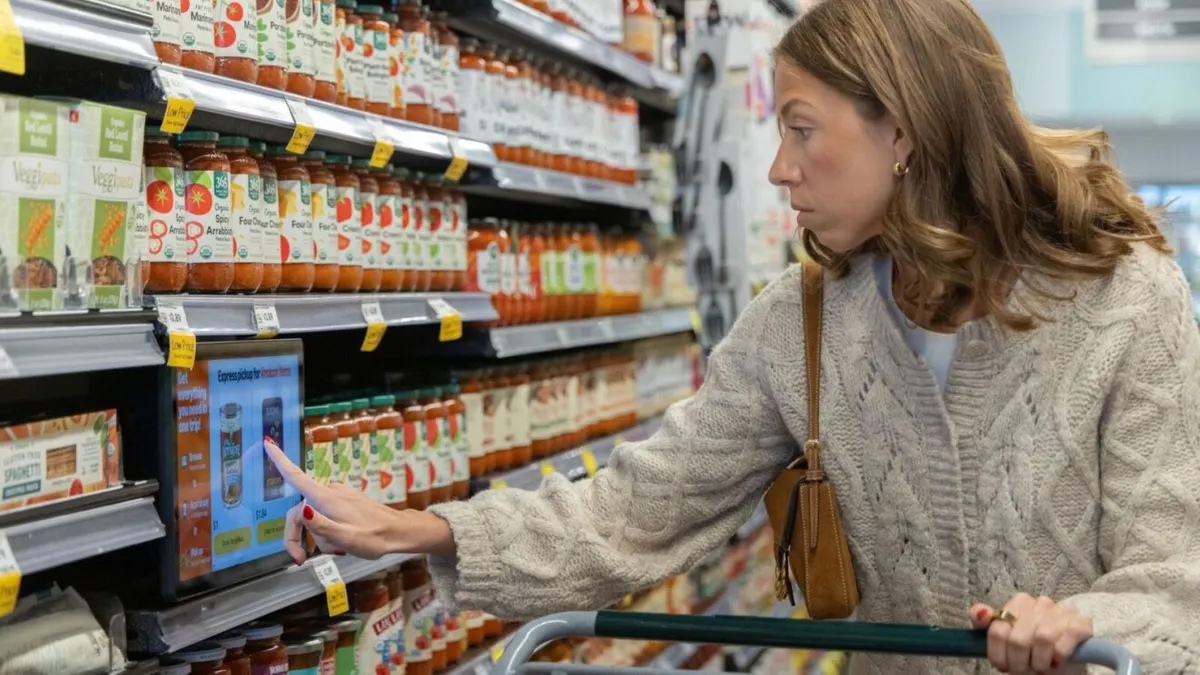
Amazon Fresh was supposed to be that outlet, but its stores didn’t offer a compelling enough experience to pry people away from their local Safeway or Walmart. Not even cutting-edge checkout technology, including a proprietary smart cart, could convince shoppers, underscoring the limits of flashy new tech in selling bananas, cereal and frozen meals.
Amazon is betting on e-commerce, the channel it excels in, to grow its grocery share among consumers. Adding perishables to its same-day delivery service has earned glowing remarks from executives, and all told Amazon offers grocery delivery in more than 5,000 communities.
But most consumers still prefer to do most of their grocery shopping in stores. Even with Amazon’s rapid innovation in price, speed and convenience, it will struggle to overcome that ingrained habit among millions of shoppers.
What remains to be seen is how Amazon navigates omnichannel shopping. The recent addition of QR-code ordering at a Whole Foods store seems to preview a focus on connected stores that combine in-person shopping with digital fulfillment. Amazon could use a large retail store it is preparing to open in suburban Chicago to fulfill a large volume of online orders, said Jordan Berke, president and CEO of Tomorrow Retail Consulting, in an earlier interview.
Cavernous stores that feature a large assortment of general merchandise and groceries along with online fulfillment capabilities could be a better fit for Amazon than its ventures into smaller locations like c-stores, book stores and apparel outlets.
“Amazon can leverage these locations for warehousing in addition to grocery/essentials stores, further feeding the flywheel and getting them into more regions where they can compete with Walmart, providing an affordable ‘upscale’ option,” Anne Mezzenga, co-CEO of retail blog OmniTalk, wrote in a text message.
While Amazon has stumbled on its grocery journey with the closure of Fresh and Go stores, it has still achieved some notable wins and has the resources and innovative spirit to continue making gains over the long run, experts said.
“Amazon remains extremely well positioned to deepen customer value and continue gaining meaningful grocery and household share for years to come,” said Furphy.
Correction: A previous version of this story misstated Amazon’s gross annual sales in grocery. The total is $150 billion.
Catherine Douglas Moran and Sam Silverstein contributed reporting