Dive Brief:
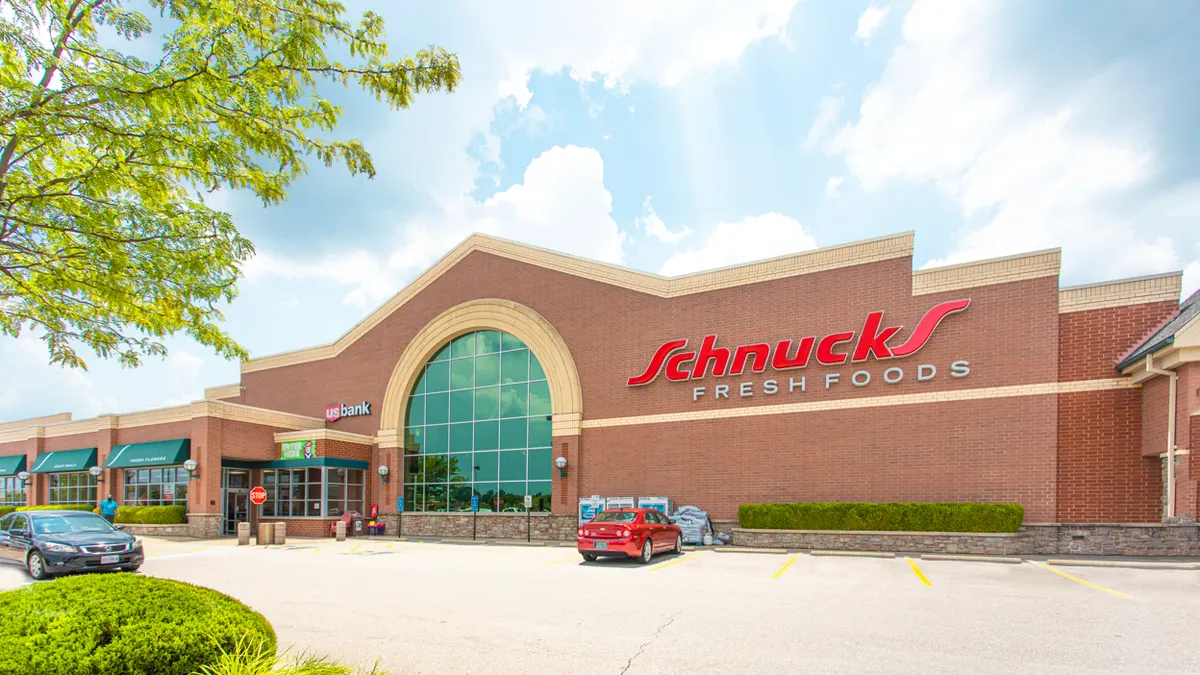
- Schnuck Markets unveiled a freshness guarantee that allows customers who are dissatisfied with a perishable item they purchased to exchange the item or get a full refund, according to a Wednesday press release.
- The chain said it will honor the promise for perishable items from its floral, produce, bakery, deli, meat, seafood or dairy departments. Schnucks noted that the guarantee covers not only in-store purchases but also delivery and pickup orders.
- Schnucks joins a cohort of major grocers that offer their customers freshness guarantees.
Dive Insight:
Schnucks wants grocery shoppers to know that quality is top of mind — especially for its perishable items — as traditional grocers look to regain their footing against larger rivals and woo grocery shoppers in the key fresh categories.
“Our confidence in the ‘Fresh Guarantee’ comes from the proprietary sourcing programs and expert in-store execution happening behind the scenes every single day. We are proud to put our name on a guarantee this strong because our teams do the daily work to earn our customers' trust,” Schnucks Chief Merchant Kim Gray said in a statement.
Customers must have a copy of their receipt that is a week or less old in order to qualify for the freshness guarantee.
Schnucks highlighted several initiatives that it says enhance the quality and freshness of its products. The grocer runs a bakery plant and floral design center, which supply its entire store fleet. The chain’s butchers cut and hand-trim meats while its produce department triple-inspects fruits and vegetables as a quality control measure.
Several major grocery chains also offer customers freshness guarantees, including Safeway, Kroger and Stop & Shop. Last year, Uber rolled out a freshness guarantee that “ensures a full review and a refund for eligible items.”
The move by Schnucks, which runs 112 stores across the Midwest, comes at a time when mass retailers have gained ground in fresh sales. According to data compiled by Circana last July for an AlixPartners report, traditional grocers accounted for 46% of consumer spending on fresh fruits and vegetables — down 5 percentage points from 2019 — while mass and club stores’ share climbed 4 percentage points to 33%.