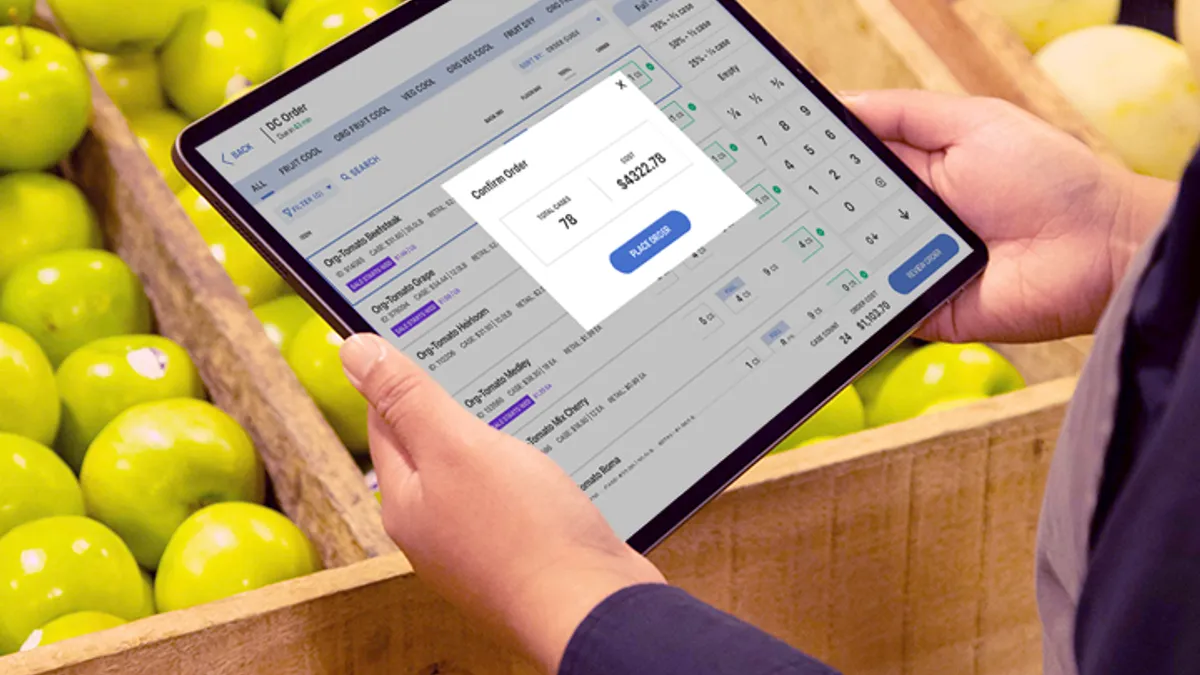
At the end of last year, Albertsons launched an agentic shopping assistant that can take shoppers from a vague query — “I’m in the mood for something spicy” — to an online basket full of products along with the recipes they need to prepare everything.
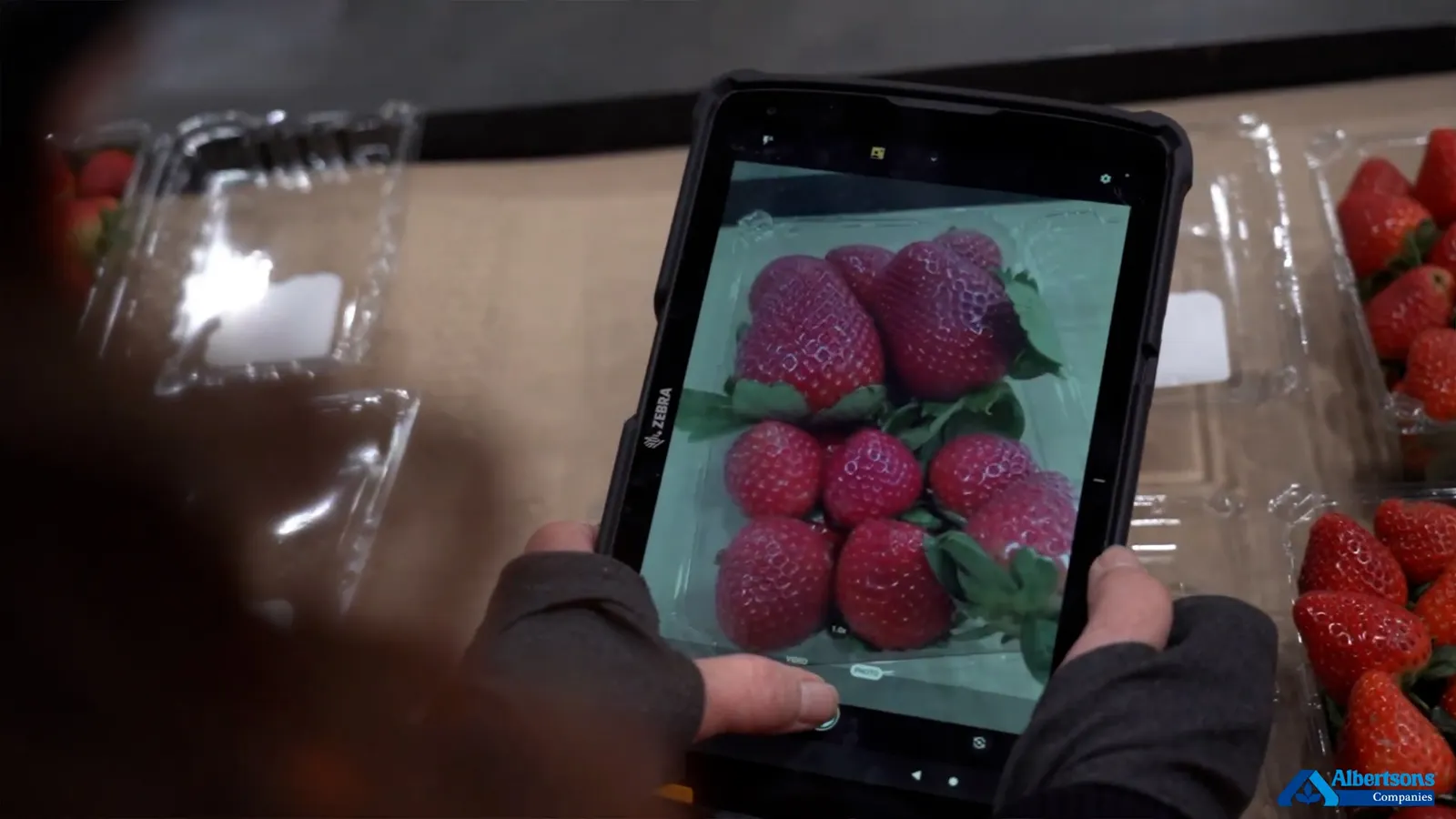
Five months later, the grocer rolled out another notable but decidedly less glamorous tool — a proprietary program that its warehouse workers can use to quickly determine if pallets of fresh strawberries meet the company’s quality standards.
These two artificial intelligence-powered initiatives underscore the speed at which retailers are moving to capture the benefits of the rapidly evolving technology. But according to experts, one of these programs is a lot more valuable than the other right now.
While AI-powered chatbots and personalized recommendations may garner headlines and drive industry buzz, back-end tools can tackle challenges that have bedeviled grocers for decades. These concerns include shrink, escalating labor costs, complex promotions and setting the right price at the right time for consumers.
Grocers see the potential in operational AI and have made strategic investments. But they can’t just approach this as a plug-and-play strategy, experts say.
Forging partnerships with tech companies can work in the short term, but harnessing the full power of AI will require grocers to clean up and connect their data, sources said. Retailers will also need to break down organizational silos, clearly define their business objectives and altogether prepare their companies for an agentic future, they noted.
“Executives across retail simply see AI as a new technology that can help do things better and faster … but they've not understood that it really signifies a transformation in how the operating model of retail works,” said Gary Hawkins, founder and CEO of the Center for Advancing Retail & Technology.
Addressing pain points in the near term
Operational AI solutions are tackling a wide range of challenges across grocers’ backrooms, warehouses and corporate offices. Hy-Vee recently partnered with Relex to improve its fresh product forecasting, ordering and replenishment, for example, while Heritage Grocers Group is using an AI-powered system to scale pricing promotions. Grocery Outlet recently announced it’s incorporating a system from Afresh that will sharpen ordering across departments.
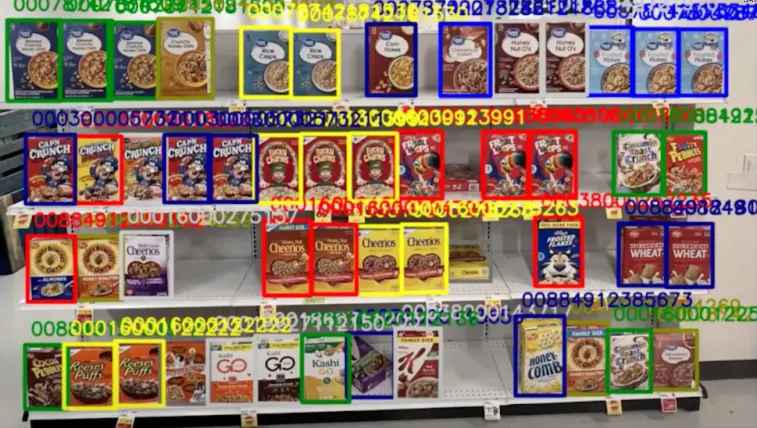
Retail media, store circulars, planograms and stock levels also have AI enhancements that retailers can license. AI is even tackling worker engagement, as Kroger has shown with Sage, a virtual assistant for employees that helps them manage their schedules and store tasks.
Curt Prins, a senior product manager for Albertsons who has also worked for Kroger and writes extensively about grocery AI for his Substack newsletter, said back-end AI solutions can provide a much better return on investment than flashy consumer-facing tools. And getting started can be as straightforward as determining where operational pain points lie, he said.
Although industry giants like Walmart and Amazon are renowned for their in-house AI capabilities, regional grocers and even independent grocers can also use AI solutions to cut waste and boost accuracy across their operations, giving them a better chance of competing with larger rivals.
“[Grocers] don’t need a 2,000-head technology team to do this,” Prins said. “They can make smart partnerships and focus on impact as opposed to the bright and shiny things.”
The problem is that grocers will struggle to get the full benefit of these AI solutions if those tools are feeding off company data that is disjointed and incomplete, said Prins.
Bad data management can also undercut consumer-facing efforts. A shopper might get a personalized promotion but if that product isn’t in stock, then the effort becomes a customer loyalty problem, he noted.
“AI is a capability, not a strategy,” Prins said.
A priority for grocers working with back-end AI solutions should be cleaning up their internal data, said Tom Furphy, a former Amazon and Wegmans executive who is CEO and managing director of venture capital firm Consumer Equity Partners. But retailers don’t need to fully accomplish this before diving in.
“You don’t necessarily have to wait completely until your data is fixed or is ready, but don’t go too far with AI on top of that data because it’s going to give you bad signals,” said Furphy.
Looking ahead to agentic retailing
Beyond the one-off AI tools that retailers are deploying lies a tantalizing future in which more of grocers’ operations are not just automated, but agentic. Walmart and Amazon have already made considerable strides here. Walmart, for instance, uses agentic AI tools to get a unified view of inventory across its stores and supply facilities.
Experts aren’t sure what agentic retailing will look like several years from now, but they are confident that AI-powered operations will get faster, smarter and more connected.
Key roles like category manager will change dramatically. Agentic technology could, for example, improve managers’ ability to negotiate with vendors by seamlessly drawing data from across the enterprise and running several test scenarios instead of just one, said Bobby Gibbs, principal with management consulting firm Oliver Wyman.
Advanced AI will eventually be able to automate assortment planning, price optimization and other tasks within parameters set by category managers, said Hawkins.
“What’s happening is that retail is moving from human speed to machine speed,” he said.
Moving toward agentic retailing requires retailers to become less organizationally siloed and more connected through data. Hawkins advocates building a “data fabric” that runs like a spine across all facets of the business, allowing AI to draw information from across the enterprise in order to make informed, holistic decisions.
"AI is a capability, not a strategy."

Curt Prins
Senior Product Manager for Albertsons
Preparing for an agentic future is less about picking the right technology and more about navigating change management, said Capri Brixey, a partner with consultancy The Partnering Group who works with companies on AI strategy. Because advanced AI promises to speed up and improve decision-making, a top-down organizational structure may prove cumbersome for retailers, she said, noting that many companies are moving to a more diffuse internal structure — commonly known as a matrixed organization — as they pave the way for AI.
Retailers will need to streamline decision-making, open up pipelines for innovation and effectively measure progress in a fast-moving AI-enabled environment, Brixey said.
“The companies seeing the best outcomes are investing as much in enablement and process redesign as they are in technology,” she explained.
Retailers like Dollar General and Ahold Delhaize have recently made hires for AI-specific leadership roles. Companies don’t necessarily need an AI guru in the C-suite to unlock the benefits of the rapidly evolving technology, but they do need buy-in from the very top of the company, sources said.
“This has got to be driven by the CEO. It’s got to be driven by the boards. It’s got to be driven by the owners,” said Hawkins.
A bumpy road to AI enablement
It’s one thing to lay out all the waypoints on the road to agentic retailing, but quite another to actually reach them.
Retooling an organization is a complex and risky undertaking that grocery CEOs won’t embark on without considerable assurance that it will be worthwhile, sources said. And right now, the mood is more cautious than emboldened, they noted. Many grocers are reluctant to even forge AI partnerships with tech companies because they’re unsure if they’ll get a sufficient return on their investment, said Gibbs.
A 2025 survey by FMI — The Food Industry Association found that just 47% of grocers reported using AI in their operations, compared with 93% of suppliers who said they do. Large grocers are significantly more likely to use the technology, however, with 77% saying they use AI and 74% saying they use generative AI.
“Food retailers operate on a narrow profit margin, currently an average of 1.7%, which means their investments need to be strategic, and they are not often fast followers,” Steve Markenson, vice president of research and insights at FMI, said in emailed comments.
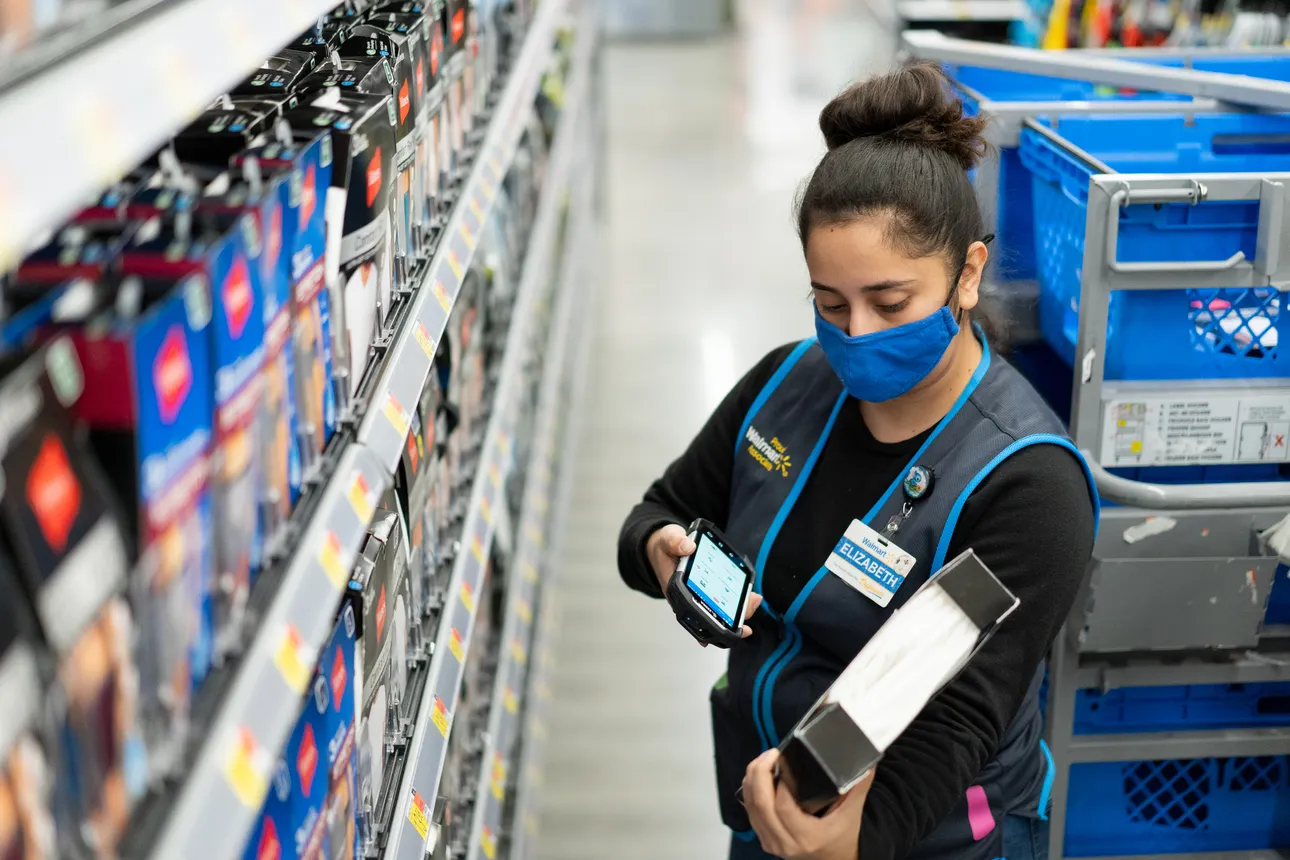
Company leaders also have to address concerns from workers about the impact AI will have on their jobs and the overall labor market. Ninety percent of job seekers in a recent joint survey by Express Employment Professionals and Harris Poll said they have growing concerns about AI in the workplace.
The technology is also proving to be more costly than many companies anticipated. Walmart recently capped the amount of agentic AI workers can use after usage costs exploded, Bloomberg reported in June. The Economist warned recently that the cost of AI, which requires significant processing power, “could spiral out of control.”
Does all of this mean the AI revolution will be yet another disruptive force that widens the performance gap between the industry’s largest players and smaller competitors?
Not necessarily, sources say.
Furphy said embracing operational AI will allow independent grocers and small chains to become more nimble and better able to compete against rivals that rely on legacy systems and processes. Brixey, meanwhile, emphasized that the main challenge lies in how leadership approaches the issue, not how much investment capital the company has.
“Finding the resources to be able to implement AI is not difficult. It’s about making your organization ready to take advantage of it, and being able to effectively measure the outcome,” she said.
Gibbs noted that he’s worked with the CEO of a five-store retailer who requires employees to use Microsoft Copilot, an AI-powered conversational assistant, in their day-to-day work.
“There’s a level of capability that does require major capital investment, but there’s also some cultural change that doesn’t require that kind of investment,” he said.
Hawkins believes the performance gap between companies that embrace advanced AI and those that don’t will be considerable — existential, even.
“I think we’re going to see more change in the next 24 to 36 months than we’ve seen in the last three or four decades,” he said.