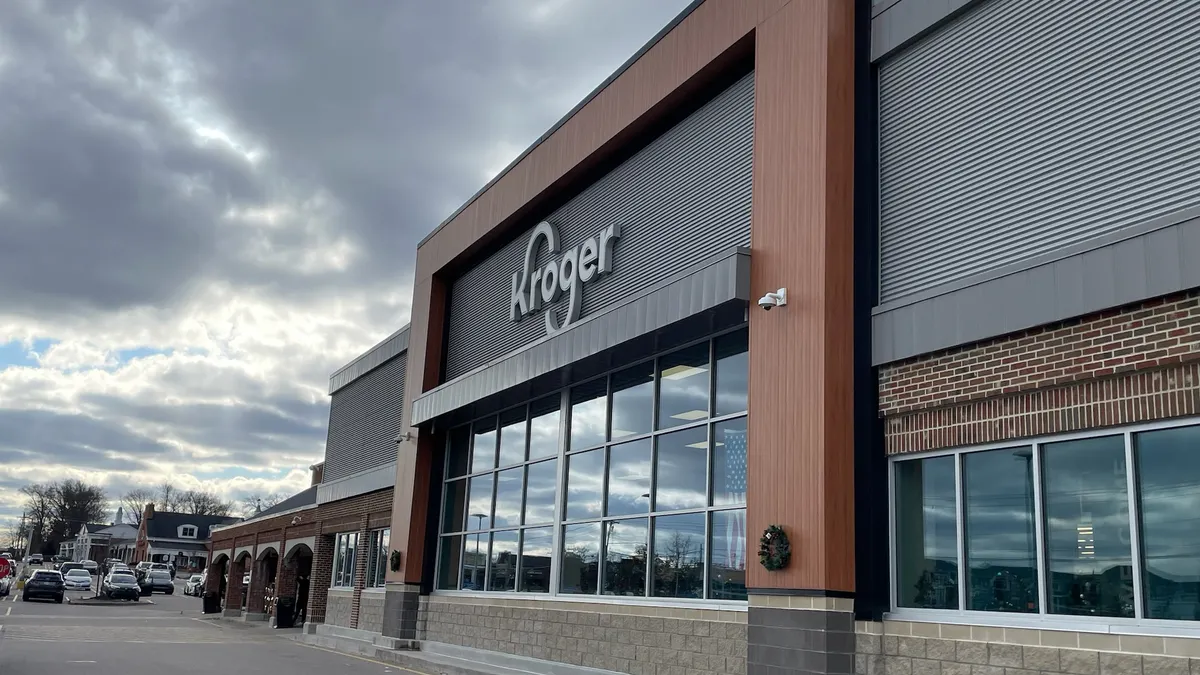
When he addressed investors in March barely a month after becoming Kroger’s CEO, Greg Foran said he intended to make improving the shopper experience a top order of business for the company — but pointed out that he had only had a chance to visit a handful of stores to judge conditions for himself.
Three months later, after spending time in more than 100 of Kroger’s locations, Foran is doubling down on his earlier assertion that the grocer urgently needs to sharpen its relationship with customers to remain competitive in the fast-changing grocery industry.
Speaking during Kroger’s first-quarter earnings call last week, Foran declared that while he sees a clear path to success for Kroger, the company has lost ground because its value proposition is muddy and it has not adequately tended to its fleet of about 2,700 supermarkets.
“We do not need to be the lowest-priced retailer,” said Foran, who is a former chief of Walmart’s U.S. operations. “We need to be more competitive, more consistent and easier for customers to understand. When a customer is deciding where to shop, we want more of them choosing Kroger more often because the value is clear, the experience is great and the trust is there.”
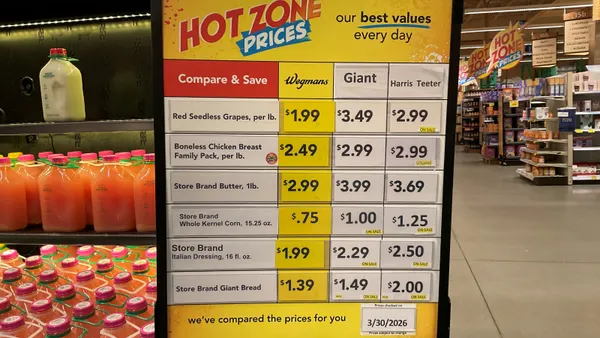
A central challenge is that Kroger’s approach to pricing is confusing, Foran said. “Over time, our promotions have gotten too complicated, and our price position has not kept pace where it needed to,” he said, adding that the company will focus on “simpler, more consistent everyday value.”
Foran indicated that he wants to blaze a trail that will allow Kroger to focus on its strengths without engaging in an all-out price war with everyday-low-price rivals like Aldi and Walmart.
“The objective actually is not to get down and be the same price as … some of the discounters in the marketplace,” said Foran. “The objective here is to get to a situation where customers feel comfortable that the price that they’re getting when they shop in a Kroger store or a Kroger brand is actually fair and reasonable.”
Foran added that he wants the company to place greater emphasis on its stores in order to convince its shoppers that they are getting their money’s worth. As part of that, he wants Kroger’s back-end operations teams to work more effectively as the company strives to reset its image with shoppers.
“[T]he way we operate behind the stores needs to improve. We need to move faster, make decisions more quickly and get more out of the assets and the talent we already have,” he said.
In an effort to make sure shoppers sense that it has overhauled more than its pricing strategy, Kroger will also press harder to cut costs, improve efficiency and squeeze better terms from suppliers, then use those savings to build value for shoppers, Foran said.
Foran also said Kroger needs to be more aggressive in expanding its store fleet to keep up with rivals.
“Competitors have continued to grow their footprint while we stepped back. Our existing footprint is one of our strongest assets, but standing still in store growth means standing still in market share,” he said. “The good news is we have started to ramp our pipeline thoughtfully focused on the markets and formats that can generate the strongest returns.”
Kroger opened 16 new stores and closed 50 during its most recent fiscal year, which ended Jan. 31.
David Kennerley, Kroger’s CFO, noted during the call that the company’s e-commerce momentum is dependent in part on the store-based fulfillment model it has ramped up through partnerships with third-party vendors like DoorDash and Uber Eats, adding that those e-commerce operations benefit from its store network. The company gained share through all of its third-party partnerships during the fourth quarter, Kennerley said.
Foran faces a tide of investor discontent as he digs into his job as Kroger’s CEO. The retailer’s shares are down more than 10% since the start of 2026, a decline that includes a drop of more than 8% on Thursday in the wake of its latest earnings announcement that brought Kroger’s stock price to a new 52-week low.