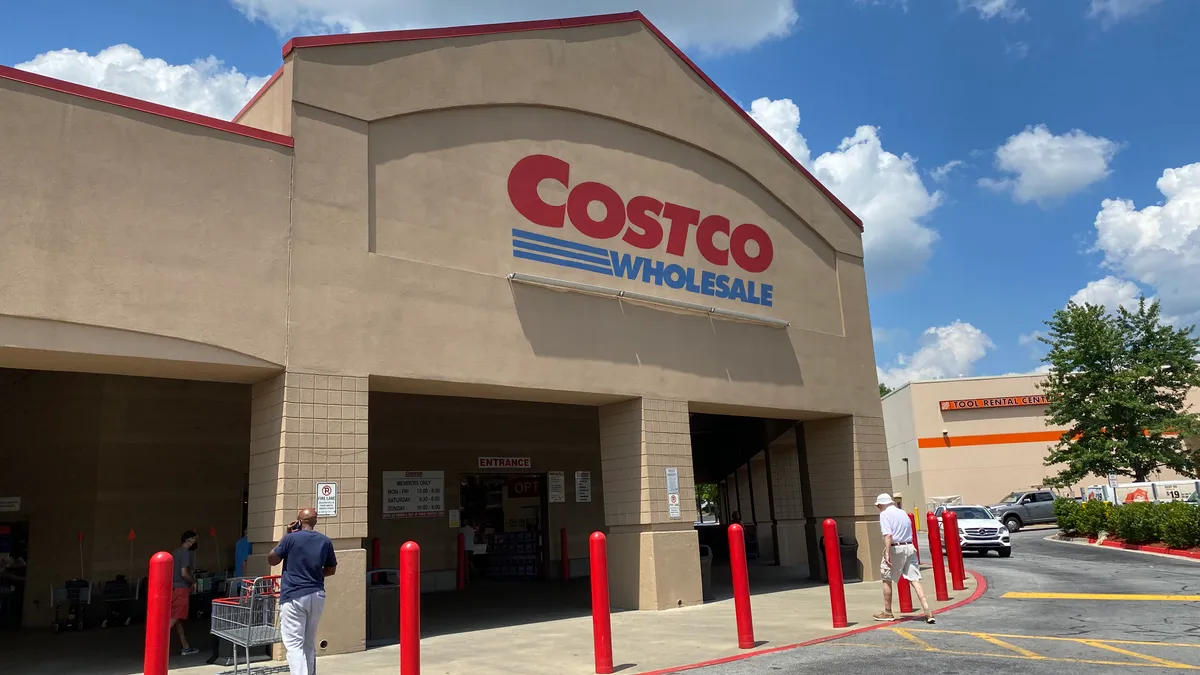
Mass retailers have become just as likely as supermarkets to be people’s main source of groceries, underscoring the powerful role merchants like Walmart and Target play in defining how U.S. consumers keep their homes stocked with food, a new report from FMI — The Food Industry Association shows.
Thirty-seven percent of shoppers who participated in the trade group’s annual shopper trends survey earlier this year cited a mass merchant when asked where they “spend the most money on grocery-type items” — about the same as the share who mentioned a traditional grocery banner. By contrast, people who took part in the research a year ago were considerably more likely to name a supermarket than a mass retailer as their primary grocery store.
Compounding the headwinds facing traditional supermarket operators, younger shoppers tend to favor mass retailers while people in older generations lean toward traditional retailers, FMI said in its U.S. Grocery Shopper Trends 2026 report, which it developed with consulting firm The Hartman Group. The report is based on responses to an online survey from 2,023 people conducted from Feb. 4-18.
Underscoring the critical role brick-and-mortar stores continue to play in food retailing, just over half (54%) of participants in the survey said they always visit physical locations to purchase groceries. Another 20% do so most of the time, and only 15% divide their purchases evenly between physical and online stores.
Traditional supermarkets are even more dependent on in-store shoppers, with more than two-thirds of respondents indicating that they always make purchases in person through that type of retailer. By contrast, just 40% said they shop at mass retailers like Walmart only by visiting physical stores, FMI found.
While only a small minority (12%) of shoppers buy groceries almost exclusively online, the share of people who use digital grocery channels for some of their purchases is rising. Seventy-two percent of participants in the survey said they use grocery e-commerce services “at least occasionally,” up from 67% in last year’s poll and 49% in early 2020, according to FMI.
Among shoppers who use delivery or pickup for groceries, 62% identified the same retail location as their primary store for online purchases and in-person shopping.
According to the report, shoppers place an especially high priority on factors like cleanliness, clear signage and the ability to inspect fresh foods when assessing the in-store experience. On the other hand, people’s interest in visiting physical stores for inspiration and ideas is waning as they grow more reliant on digital platforms for exploration, FMI said.
“Discovery is one of the areas where the lost ground of the physical store is most telling. Once among brick-and-mortar’s strongest domains, discovery (including browsing for inspiration and ideas) is increasingly also happening online, particularly through social media,” the report said.