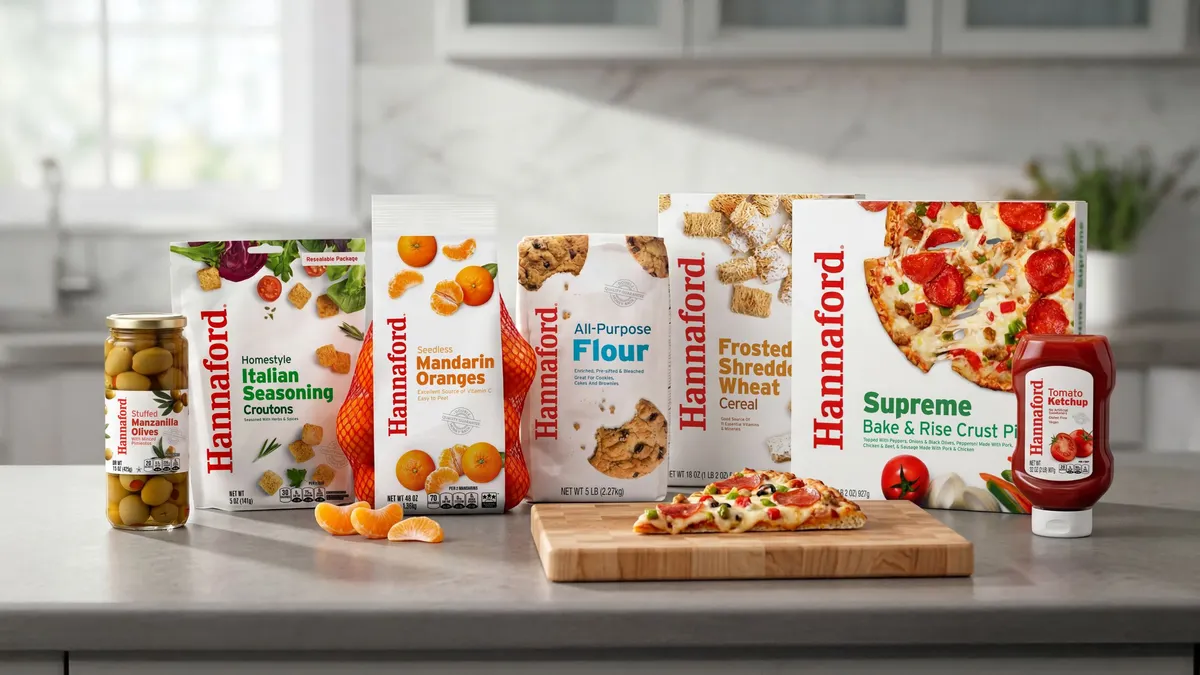
Ahold Delhaize has been carrying out its Growing Together strategy since 2024, and private label’s role in this strategy has only grown more crucial as the company aims to have store brands account for 45% of its total store sales.
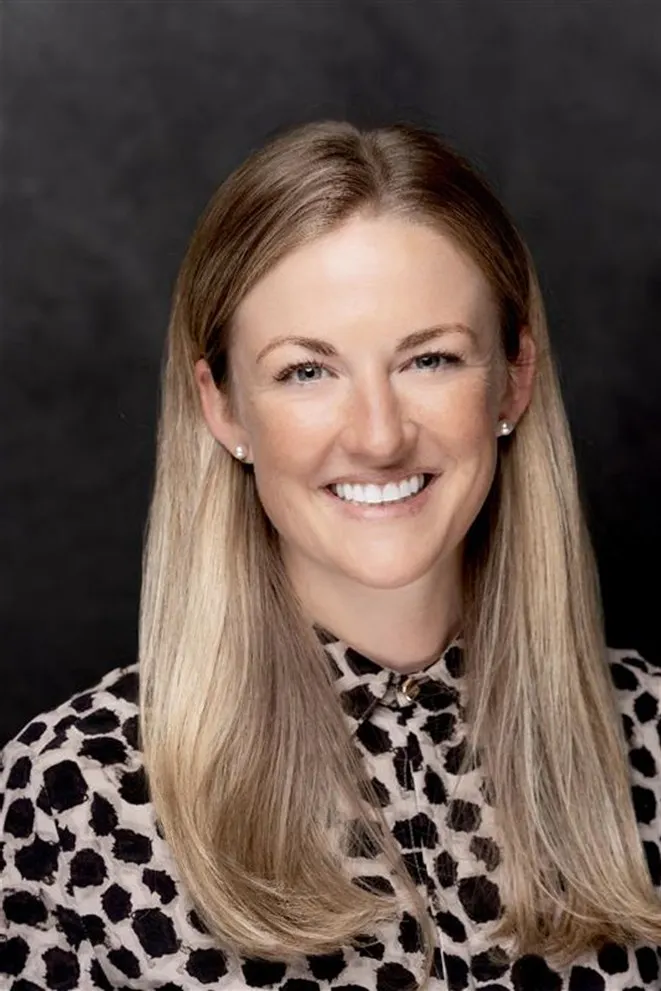
To position its private brands portfolio for its next phase of growth, Ahold Delhaize USA promoted Abby Cook to the newly established role of senior vice president of Own Brands in March.
Currently, ADUSA’s Own Brands portfolio consists of six private label lines sold across all five of its US banners, two of which are food and beverage lines: Nature’s Promise, which offers organic, free-form, plant-based foods, and Taste of Inspirations, the company’s premium specialty and gourmet food line. Banners like Food Lion and Hannaford also have namesake lines that are available in their respective stores.
Last year, Ahold Delhaize’s private brands reached nearly 40% of total food sales as the grocer expanded the assortment, with the U.S. introducing 1,100 new items that primarily focused on healthier options and ready-to-eat offerings, per the company’s 2025 annual report.
Cook said in an interview that its Own Brands business has always been a central part of ADUSA’s Growing Together strategy, as the assortment is the best reflection of a store’s local community. For example, ADUSA’s private label products are included in the grocer’s ongoing price investments.
“Creating that loyalty with the customer and being able to react or get in front of customer needs as quickly as possible and bring that combination of quality, value, transparency, innovation all to the forefront — it’s been a priority since we launched the strategy, and I think it’s just more and more clear that [private label] is a very important aspect of grocery that’s here to stay,” Cook said.
Cook has been with ADUSA for nearly five years, joining the company as director of commercial strategy before becoming vice president of U.S. strategy and portfolio, per her LinkedIn profile.
Cook spoke with Grocery Dive about what this new role means for ADUSA’s private label growth as well as what her and her team’s priorities are for the rest of 2026, including further expanding its Nature’s Promise offerings and continuing to roll out Hannaford’s private label redesign.
“I believe the role of my team is to be a couple horizons ahead of the current customer in how we’re thinking — and honestly, we should be a couple horizons ahead of even how our [store banners] are thinking,” she said.
GROCERY DIVE: Can you walk me through what your first few months as senior vice president of Own Brands, a newly created position within ADUSA, has looked like?
ABBY COOK: When I was stepping into this role, we wanted to clarify the focus of the portfolio as all of Own Brands and make sure the function is fully encompassing to help us differentiate and innovate and deliver value for our five local [supermarket banners]. So I’d say I'm transitioning over from a strategy role, where I was also a bit focused on our aspirations for Own Brands, to [leading] how we are executing on that strategy.
I’ve been focused on our innovation pipeline with the team and understanding what that is and how we’re creating internal excitement at ADUSA for future innovation. I’ve been focused on category-level strategy development and how we bring in more and more customer-oriented factors.
Customers are more focused on health. Customers want specialty and premium also in their own brand space. They want clean labels. And so, how are we ensuring that when we help the brands develop products [that] we’re taking into account everything that the modern customer is looking for?
ADUSA’s private brands continue to outpace the rest of the store in both sales and volume. What is driving such strong performance?
We’ve been very, very thoughtful around how we both leverage scale and local in our portfolio to be able to deliver the right products, and I think that’s the reason it's outperforming.
We have a thoughtful framework of how we’re thinking about which products are relevant across the board — what items, what sizes, etc. should everyone carry because they’re pretty universal. And then, how do we leave enough freedom in that framework to develop what’s needed for the regions or for a local brand? It’s a hard balance to strike.
At the beginning of the Growing Together strategy, we took a very methodical approach, and we’ve started to see many of those decisions come to shelf. Having that foundation has been really, really helpful.
And then, as we think about future growth, there’s a lot of momentum in Nature’s Promise. There’s more customer acceptance of premium and specialty-owned brands. So our Taste of Inspirations brand has a lot of headroom. And we’re of course still focused on providing the most value where we can across the store.
You talk about using Own Brands to meet the needs of local communities. How does your team figure out these consumer needs between five different banners up and down the East Coast?
It’s a two-way street in terms of: I expect my team to have all of the customer insights, know all of the market trends, know where the categories are going, so they should really be the expert in where things are going, and then you have local brands that are very close to their local customer, and they absolutely raise things where they see them.
When we’re looking at a category, which we’ll do once or twice a year, my team and local brands are talking then, but they’re also keeping a pulse on:
- “How have recently launched items performed?”
- “What’s in the pipeline?”
- “How are items performing online?”
- “Are we prioritizing the most important items there?”
- “How have different marketing campaigns resonated?”
- “What are some best practices we’re seeing and how can we consider them across all of our brands?”
I think the biggest challenge I have right now is that there’s so much demand for Own Brands across the store. How do we do more of everything? — which is a good problem to have.
What is top of mind for you right now in pushing ADUSA’s Own Brands assortment and strategy?
The biggest thing I want to make sure we have is a really clear role of our different brands and what need state they are achieving. Do we have a good opening price point across as much of the store as possible? Do we have those trade-up opportunities, because customers are shopping for Own Brands in every category, but they don’t necessarily want just a value item in every category? Some of them want a value item. Some of them want a trade-up opportunity similar to a national brand.
It’s making sure that we have that optionality, and it’s clear to the customer what the options are. My focus is, “How do we also bring real intentionality to our category strategy builds that the team works so hard on.”
Hannaford recently announced plans to roll out an updated design for its private label line — and the banner isn’t the first ADUSA Own Brand line to do so. What prompts an update to a private label line’s look, and what is the goal?
You definitely want to be customer-first when you’re redesigning. We’re not going to redesign if the customer isn’t giving us the signals that they’re looking for that, but we do try to make sure we kind of touch all labels that require it.
It’s making sure that the role we see a brand playing in the portfolio comes to life for the customer in a way that is very easy to digest, but also that it’s conveying the quality and all the brand attributes that we stand for in terms of, what is inside our packages, and what our packaging is made of. So for Taste of Inspirations, we want it to feel premium and specialty. And for Nature’s Promise, it does resonate [with] that better-for-you approach.