
For weeks during COVID-19, grocery store shelves were bare, as consumers panic-bought foods to tide them through the lockdown. Without knowing how long the lockdown would last, consumers sought foods that wouldn’t spoil quickly and that were economical, tasty and nutritious.
One food that flew off the shelf was Alaska canned salmon. “The trade was seeing as much as five times the normal volume at many accounts for wild Alaska canned salmon,” said Ron Christianson, vice president of retail sales, Ocean Beauty Seafoods. That strong demand continues, he added.
When consumers purchased Alaska salmon that was caught wild and canned, they made a great choice, said Megan Rider, domestic marketing director, Alaska Seafood Marketing Institute. “It is a perfect option for a clean, healthy, delicious protein that is versatile and convenient,” she said.
Unfortunately, most people don’t eat as much seafood as they’d like, primarily due to a lack of confidence in knowing how to cook it. A U.S. Department of Agriculture study found that only 10% to 20% of U.S. consumers eat the recommended 8 ounces of seafood a week.[1] [2]
Now, with a heightened interest in canned salmon, grocers have a perfect opportunity to expand on interest in healthier eating to educate and entice customers about the advantages of consuming salmon. By doing this, grocers can support consumers’ health goals while also increasing product segment growth.
Getting to Know Canned Salmon: Shelf-Stable Gold
What’s not to love about canned salmon? After all, it checks many boxes on today’s shoppers’ wish lists.
It’s good for your health
That’s critical for the 93% of consumers who say they want to eat healthier at least some of the time.[3] Salmon contains vitamins E, C, D and A and the minerals zinc, iron, calcium and selenium, which are essential nutrients for the health and repair of the body.
Also, with nearly one in four Americans cutting back on eating meat,[4] but also wanting the health benefits of protein, salmon is a high-quality protein that satisfies both needs. “Wild Alaska canned salmon is a great fit for many popular diet choices, including paleo, and is strongly recommended by nutritionists,” Christianson said.
Today’s shoppers, especially millennials, expect their food to be more than filling — they want it to improve their physical and mental health.[5] Salmon does that, too. It contains a generous amount of heart-healthy omega-3 fatty acids, which also help brain function and flexibility, suppress inflammation and improve blood flow.[6]
It offers endless variety
Canned salmon isn’t boring. It offers superior flavor and texture that comes from its natural diet and environment. What’s more, different types of salmon offer even more variety of flavors.
Pink salmon, also called humpy, is the most abundant species of Alaska salmon. It has a light, rose-colored flesh and a correspondingly delicate flavor. Pink salmon is often canned, smoked or sold whole.
Because of its abundance, it is very economical. Sockeye (or red) salmon is the next most frequently found. It has a rich flavor and is canned or sold as steaks, fillets and whole fish. The high quality and incredible flavor of sockeye makes it a favorite. It is also sold in tall cans, which make it convenient for making recipes for the whole family like Wild Alaska Salmon Cakes or Alaska Salmon and Grilled Vegetable Quesadillas.
It’s budget-friendly
Alaska canned salmon is easy on the budget and also is valuable as a satisfying and healthy meal extender when used as an ingredient in soups, chowders, salads, pasta and dips, Christianson said. With crises like COVID-19 and increasing weather-disaster events, canned salmon is an inexpensive way to keep the cupboard — and bellies — full.
It’s easy to prepare, from simple to sophisticated recipes
But canned salmon isn’t limited to emergency meals, Rider said. “Alaska salmon is such a delightful and delicious protein to cook with and enjoy. Those new to the category undoubtedly enjoyed the ease of preparation that produces beautiful results with relatively little effort whether it is a classic Alaska salmon burger or a more delicate Alaska salmon cakes egg benedict. There is something for everyone.”
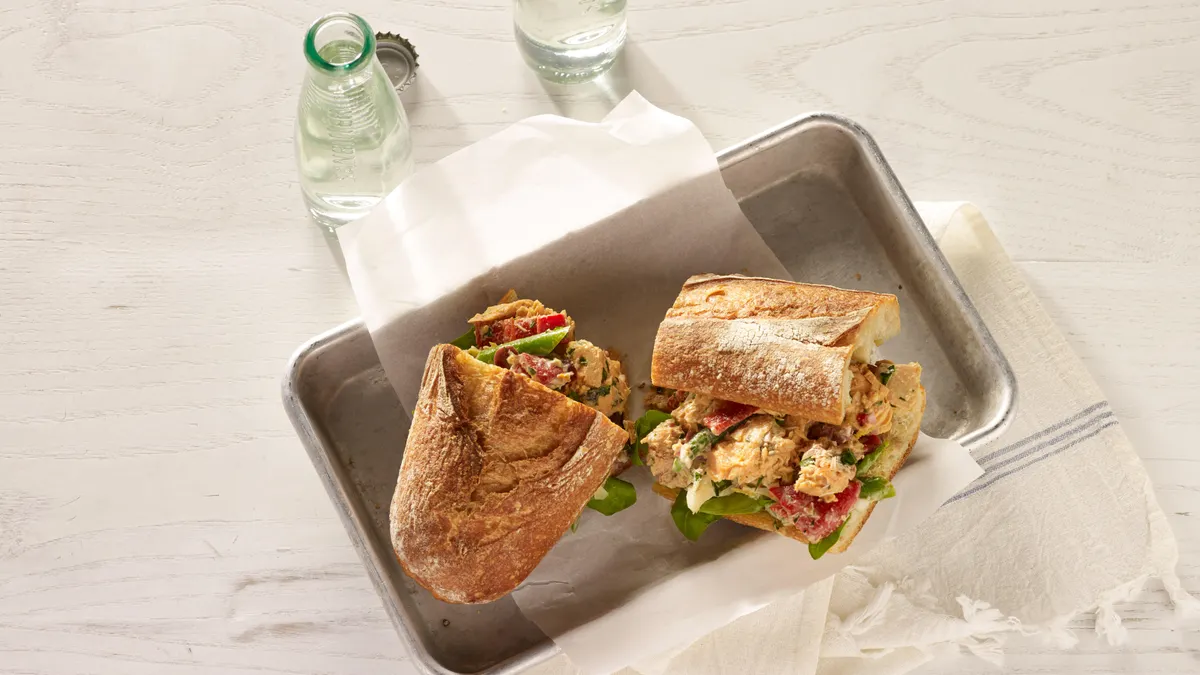
With so many people cooking at home, amateur chefs can easily prepare gourmet meals ranging from Alaska salmon salad baguettes with tomato-basil mayo to an Alaska salmon puttanesca. In honor of October Seafood Month, the Alaska Seafood Marketing Institute has launched many new, easy and mouthwatering canned salmon recipes, Rider added.
How grocers can boost Alaska canned salmon sales
Grocers can help new customers become repeat buyers by continuing to educate them on the many benefits of Alaska canned salmon, Rider said. Consumers are busy multitasking at home and are watching their budgets, but they still want to provide nutritious and immunity-boosting foods. Recognizing this, grocers can share the good-for-you aspects of eating salmon and suggest simple ways to incorporate canned salmon into the regular meal rotation.
To highlight quality, grocers should emphasize canned salmon with “Alaska” and “wild” in the name or description, Christianson said. Research from Datassential found that 70% of consumers are more likely to buy Alaska seafood if they see the word “Alaska” on it. Furthermore, 79% of consumers are more likely to buy when they see the Alaska seafood logo.[7]
Grocers should market and promote Alaska canned salmon throughout the year, he added. Although grocers traditionally spotlight fish during Lent as a meat alternative, don’t forget to focus on this product segment throughout the year, he said. “Healthy foods should not be considered seasonal.”
By responding to consumers’ desire to eat healthier foods, grocers can give customers new ideas for preparation, increase customer satisfaction and increase sales in Alaska canned salmon.
[1] “Consumers Missing Out on Seafood Benefits.” U.S. Department of Agriculture AgResearch Magazine, August 2015, agresearchmag.ars.usda.gov/2015/aug/seafood.
[2] “Questions & Answers From the FDA/EPA Advice About Eating Fish.” U.S. Food and Drug Administration, July 2, 2019, www.fda.gov/food/consumers/questions-answers-fdaepa-advice-about-eating-fish-women-who-are-or-might-become-pregnant.
[3] Wiley, Carol. “Consumers Say They Want to Eat Healthy.” Food Industry Executive, March 4, 2019, foodindustryexecutive.com/2019/03/consumers-say-they-want-to-eat-healthy.
[4] McCarthy, Justin, and Scott DeKoster. “Nearly One in Four in U.S. Have Cut Back on Eating Meat.” Gallup.com, Jan. 27, 2020, news.gallup.com/poll/282779/nearly-one-four-cut-back-eating-meat.aspx.
[5] “How America Will Eat.” Nielsen Insights, Dec. 11, 2019, www.nielsen.com/us/en/insights/report/2019/how-america-will-eat.
[6] “Wild Alaska Nutrition Values.” Alaska Seafood, June 17, 2020, www.alaskaseafood.org/health-nutrition.
[7] “Alaska Seafood at Foodservice.” Www.Alaskaseafood.Org, 2019, uploads.alaskaseafood.org/2019/10/All-Hands-Datassential-Research-Deck.pdf.