Dive Brief:
- The Environmental Protection Agency announced today that it loosened compliance requirements for refrigeration updates — changes heralded by the two main grocery associations: FMI — The Food Industry Association and the National Grocers Association.
- As part of the deregulation effort, the EPA extended compliance deadlines for the use of hydrofluorocarbons (HFCs) — widely used in commercial refrigerants and air conditioning systems — under the Technology Transitions Rule.
- The EPA claimed the change to the Technology Transitions Rule will result in $800 million in savings “at the supermarket.”
Dive Insight:
FMI and the NGA praised the Trump administration’s deregulation, saying that grocers would have grappled with steep compliance costs under the previous deadlines and requirements.
FMI President and CEO Leslie G. Sarasin said the changes lift “unnecessary financial burdens on the food industry and grocery shoppers” and give food retailers more time to address challenges, such as labor and supply chain constraints, when upgrading refrigeration systems.
The NGA said that smaller grocers faced “billions of dollars” in refrigeration costs due to the previous compliance deadline under the Technology Transitions Final Rule. The rule required new commercial refrigeration systems to begin using low global warming potential refrigerants, with Jan. 1, 2027, as the compliance deadline for grocers.
The EPA has now pushed that deadline to Jan. 1, 2032, and allows supermarkets to increase system cooling capacity up to 15% without being classified as a “new system,” which must comply with stricter refrigerant requirements.
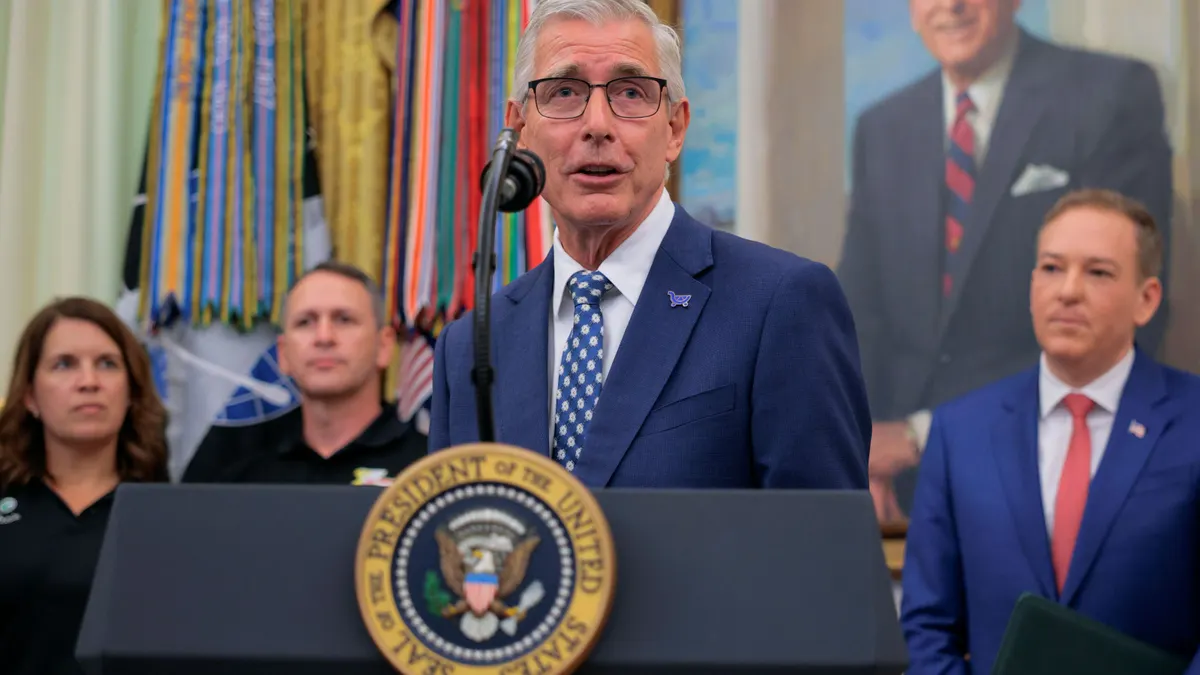
At a White House event on Thursday, representatives from Piggly Wiggly, Kroger and Food Fresh, an independent community grocery store based in Claxton, Georgia, praised the deregulation.
“An orderly transition of equipment reduces both capital costs and operating costs,” Kroger CEO Greg Foran said at the event. “And at the end of the day, that’s good for consumers because we’re able to take that and put that into lowering prices, which is the key objective that we have in our business.”
Kevin McDaniel, an operator of 14 Piggly Wiggly stores in Alabama, Florida and Georgia, said that the steep refrigeration costs under the regulation would have resulted in price hikes and independents going out of business.
The EPA had been considering deregulation since 2025, claiming that the Technology Transitions Rule did not give companies enough time to deal with expensive compliance deadlines.
The Trump administration described the deregulation as a step toward improving affordability for U.S. consumers. The EPA claimed that the Technology Transitions Rule and the Emissions Reduction and Reclamation rule “significantly increased grocery prices and the transportation of refrigerated goods to grocery stores and restaurants.”
“Had the 2023 Technology Transitions Rule been fully implemented, grocery stores would not have been able to afford equipment to store perishable foods, semiconductor manufacturing would have come to a halt, and families would have been left without AC in the summer,” the EPA said in its announcement.
While the Trump administration claimed that the deregulation targets policy made under the Biden administration, the Technology Transitions rule was one of three components under the American Innovation and Manufacturing Act, which President Donald Trump signed into law during his first presidential term.
The deregulation comes just days after Kroger agreed to pay a $2.5 million civil penalty and spend $100 million over two years to retrofit or replace 600 refrigeration units as part of a settlement with the Department of Justice and the EPA.