A sign directing customers to order pickup at a Food Lion.
Courtesy of Ahold Delhaize
Note from the editor
Grocery e-commerce sales continue to grow as retailers leverage their stores to fulfill online sales and ramp up digital tools that provide a strong omnichannel experience for customers.
On the delivery front, grocers have continued to rely on providers such as Instacart and DoorDash for incremental revenue. And Instacart is pushing retailers to adopt in-store prices online to help ease consumers’ affordability woes.
A few years ago, rapid delivery firms quickly proliferated and then just as quickly exited the U.S.. Now, speedy delivery is finally taking hold in the grocery industry, driven by new services from Walmart and Amazon.
These two industry giants have also expanded the perishable items they can bring to people’s doorsteps. Walmart, for example, rolled out 30-minute restaurant delivery, starting with Subway locations in select stores.
In this trendline, you’ll read about some of the most significant steps grocers have recenlty taken to boost their e-commerce operations. You’ll learn about how traditional supermarkets are trying to compete with mass merchants, and how those rivals, in turn, are working to maintain their strong positions in online selling.
Rapid delivery cements itself as a ‘mainstream’ grocery option, report says
The fulfillment method has established a loyal user base that uses it for a full range of household purchases, Coresight found.
By: Peyton Bigora• Published July 9, 2026
Rapid delivery has evolved into a “mainstream fulfillment option,” Coresight reported in its U.S. online grocery survey published in July 2026.
More than one-third (37.9%) of surveyed online grocery shoppers reported that they conducted “most” or “all, or almost all” of their digital grocery shopping with a rapid delivery service over the past year, signaling that this fulfillment method is increasingly being used for routine grocery shopping, according to the report.
Coresight advised retailers to continue positioning their rapid delivery service as a full-basket shopping option in order to capitalize on the growing use of the service.
Delivery has been a fulfillment frontrunner in online grocery for some time, and now rapid delivery is further strengthening the digital channel’s appeal, Coresight reported in its U.S. Online Grocery Survey, which included input from more than 2,000 consumers.
The speedy fulfillment method has garnered a loyal user base, with most consumers either maintaining or increasing their usage over the past year, per the report.
A significant percentage of consumers say they’re increasing their use of rapid delivery.
How rapid delivery service has changed over the past 12 months, according to Coresight’s survey.
Retailers have linked up with tech platforms like Instacart and DoorDash for speedy delivery, while major players Walmart and Amazon have their own quick delivery services. Walmart Express is the most-used rapid delivery service, a title it has held since 2023, the report noted. While Instacart’s user percentage has remained in the 40s since 2023, DoorDash surpassed it for the first time in 2026, reporting a 45.2% respondent usage compared to Instacart’s 43.9%.
Coresight noted that Amazon’s rapid delivery posted “one of the strongest rebounds,” jumping to 42% respondent usage in 2026 from just shy of 35% respondent usage in 2025. This tracks with the numerous omnichannel initiatives Amazon rolled out in the first half of 2026 and early 2025, including the expansion of its 30-minute delivery service.
Just as rapid delivery isn’t only for time-crunch situations anymore, the items shoppers are purchasing through rapid delivery now cover a full spectrum of household essentials, Coresight reported.
Packaged non-fresh food topped the list, with nearly 53% of respondents saying they have purchased these items over the past year, while just over half say they’ve purchased fresh fruit and vegetables, and 49% have bought fresh dairy, meat, fish or eggs. These high marks indicate consumers’ growing trust in rapid delivery for their perishable goods, Coresight noted.
Shoppers are drawn to the speediness of rapid delivery because a shorter fulfillment window means the freshness and quality of their products are better preserved, according to the report. It also allows them to replenish fresh foods more frequently without a dedicated store trip.
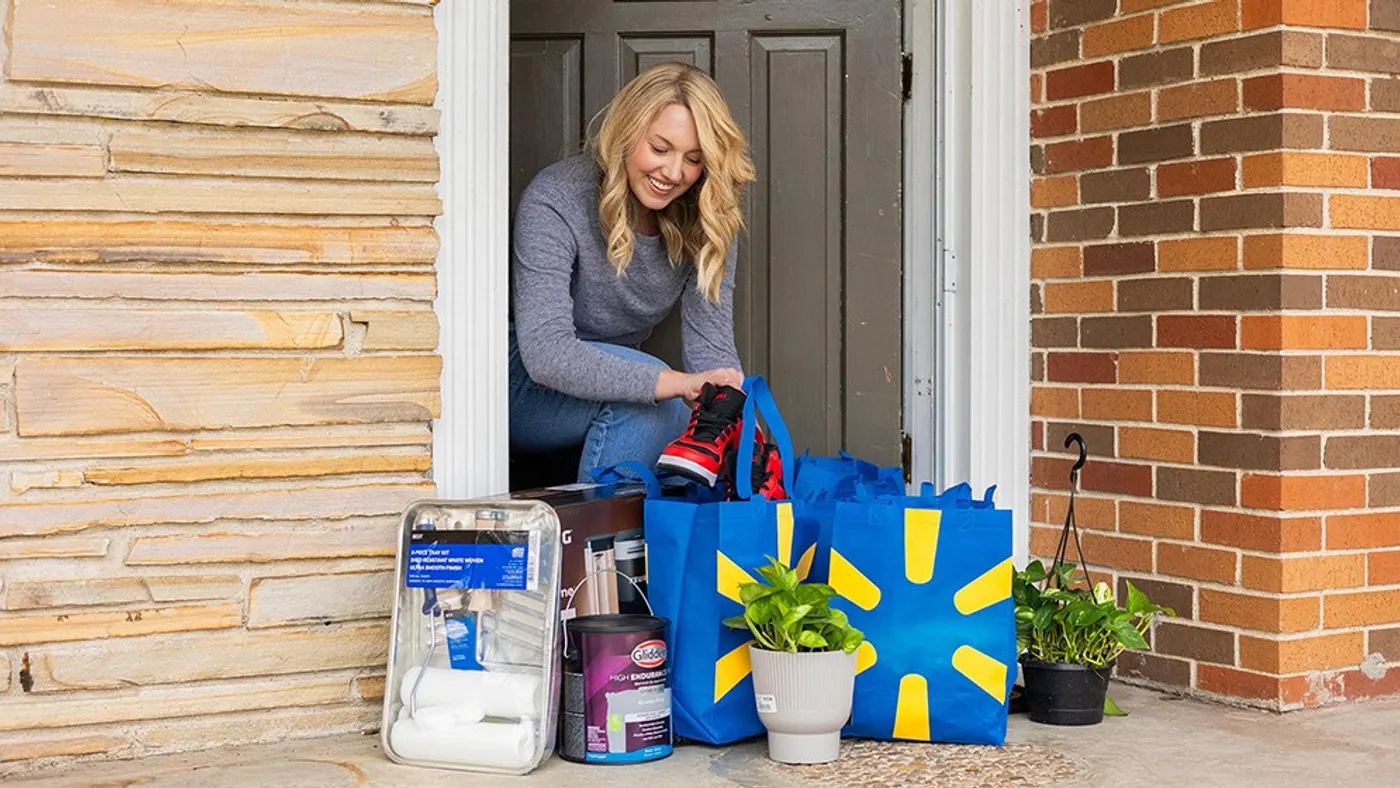
Article top image credit: Courtesy of Walmart
Instacart and DoorDash wrestle with online grocery’s growing affordability problem
Cost concerns have long challenged e-grocery, and addressing the issue is becoming more urgent as consumer price sensitivity rises, executives of the companies said.
By: Jeff Wells• Published Sept. 24, 2026
LAS VEGAS — Instacart and DoorDash have been busy in 2026 signing up new retailers and rolling out high-tech online grocery services.
But there’s one lurking challenge that threatens to spoil the party: A growing number of price-sensitive shoppers in the U.S. think online grocery shopping is too expensive.
Affordability has long challenged the growth of grocery e-commerce, with its high fees and high fulfillment costs proving to be a turn-off for shoppers. Speaking at Groceryshop 2026, executives from Instacart and DoorDash acknowledged that price concerns pose a growing challenge for e-commerce right now and detailed some of the ways they’re trying to meet it.
“Affordability is the number one reason that people churn off online grocery,” Instacart CEO Chris Rogers said during a keynote session at the conference. “It’s actually the number one barrier to people adopting it in the first place, and so it’s why it’s been one of my biggest priorities since becoming CEO.”
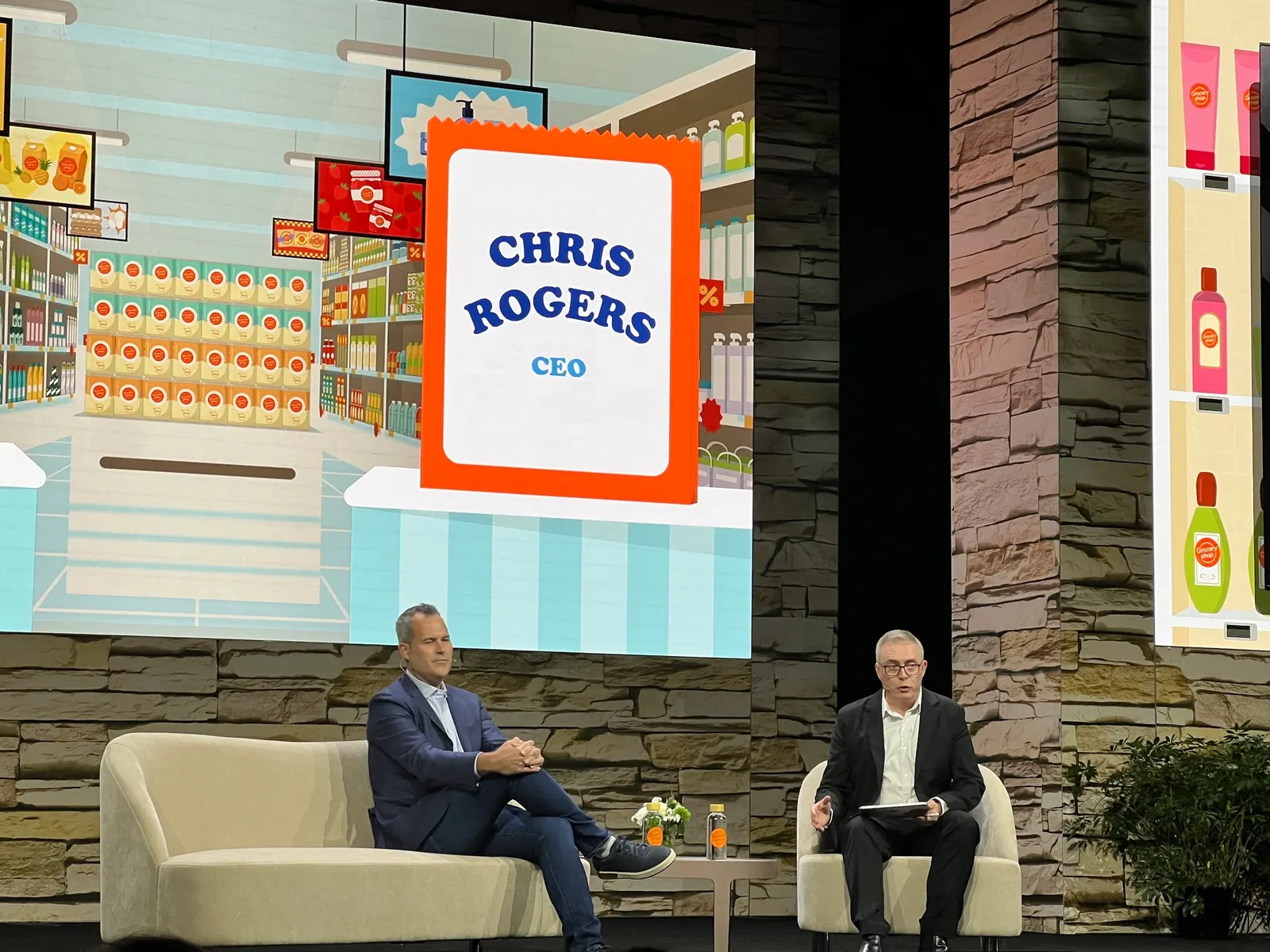
Instacart CEO Chris Rogers (left) spoke at the Groceryshop conference in Las Vegas on Sept. 22, 2026.
Jeff Wells/Grocery Dive
For more than a year, Instacart has lobbied retailers to price their products at or just above in-store prices. Rogers, who became Instacart’s chief executive in August 2025, said the company’s data shows that retailers who adopt price parity are seeing their online sales grow 10 percentage points faster than retailers that mark up their products. Retailers that don’t charge extra for e-commerce orders are also doing a better job of retaining online shoppers, he said — a critical step at a time when low-price retailers are gaining more share of wallet.
Retailers use markups to cover fees and other costs associated with online fulfillment, so bringing down prices can cut into their bottom lines. Rogers acknowledged this challenge.
“I’ve been meeting with so many people in this room on this topic. And I know it’s a very difficult conversation,” he said.
Rogers didn’t say how many retailers it works with offer price parity, but in an emailed announcement, Instacart said 90% of U.S. consumers have access to no-markup retailers on its platform. Raley’s, Bashas, Fareway and Grocery Outlet are among the chains that have recently chosen to eliminate markups.
“The cost of losing sales and share over time to some of the largest digital players might be greater than the cost of removing markups today,” Rogers said.
In addition to lobbying for prices to come down, Instacart has been encouraging retailers to enable promotions and integrate their loyalty programs with its platform. It’s also been promoting the value of its Instacart+ membership, which waives delivery fees on grocery orders over $10 and restaurant orders over $25, as well as lower-fee services like no-rush delivery, which offers shoppers a $2 discount.
DoorDash Co-Founder Andy Fang gave a keynote interview at Groceryshop on Sept. 23, 2026.
Jeff Wells/Grocery Dive
DoorDash, meanwhile, continues to discuss price parity with retailers, Vice President of Grocery and Retail Partnerships Mike Goldblatt said in an interview with Grocery Dive at Groceryshop.
“I would describe it as a two-way conversation,” he said. “It’s not, ‘Hey, this is all on you, retailers.’ We're trying to make sure that there’s a path that solves for the real profitability concerns that a grocer may have while also recognizing that over the long term we’ve got to get prices down.”
Goldblatt said affordability is a key concern for online shoppers right now. And like Instacart, the company is playing up the value of its membership and working with retailers to enable promotions where it makes sense.
In an apparent bid to burnish its affordability image, DoorDash released data showing how SNAP consumers and retailers are using its delivery service. Three years after launching SNAP/EBT payments on its platform, 4.5 million shoppers have added their SNAP cards to DoorDash and 75,000 stores accept the benefit, according to the company. Eighty-five percent of consumers who used the benefit were new to that particular store.
The push by Instacart and DoorDash to improve their price positioning comes as Walmart and Amazon ramp up their proprietary delivery services, touting significant savings for members. Amazon now offers same-day delivery in thousands of markets across the country through a service that lets shoppers bundle groceries and non-grocery items in the same order.
The battle for online shopping dollars will also hinge on factors like quality, speed and convenience, Rogers said. To that end, he expressed enthusiasm for AI’s growing ability to make online grocery shopping faster and more relevant for consumers.
“I believe that AI is going to transform grocery more than any other technology shift to date, and I also think that grocery is going to be the category out of every retail category that’s most transformed by AI,” said Rogers.
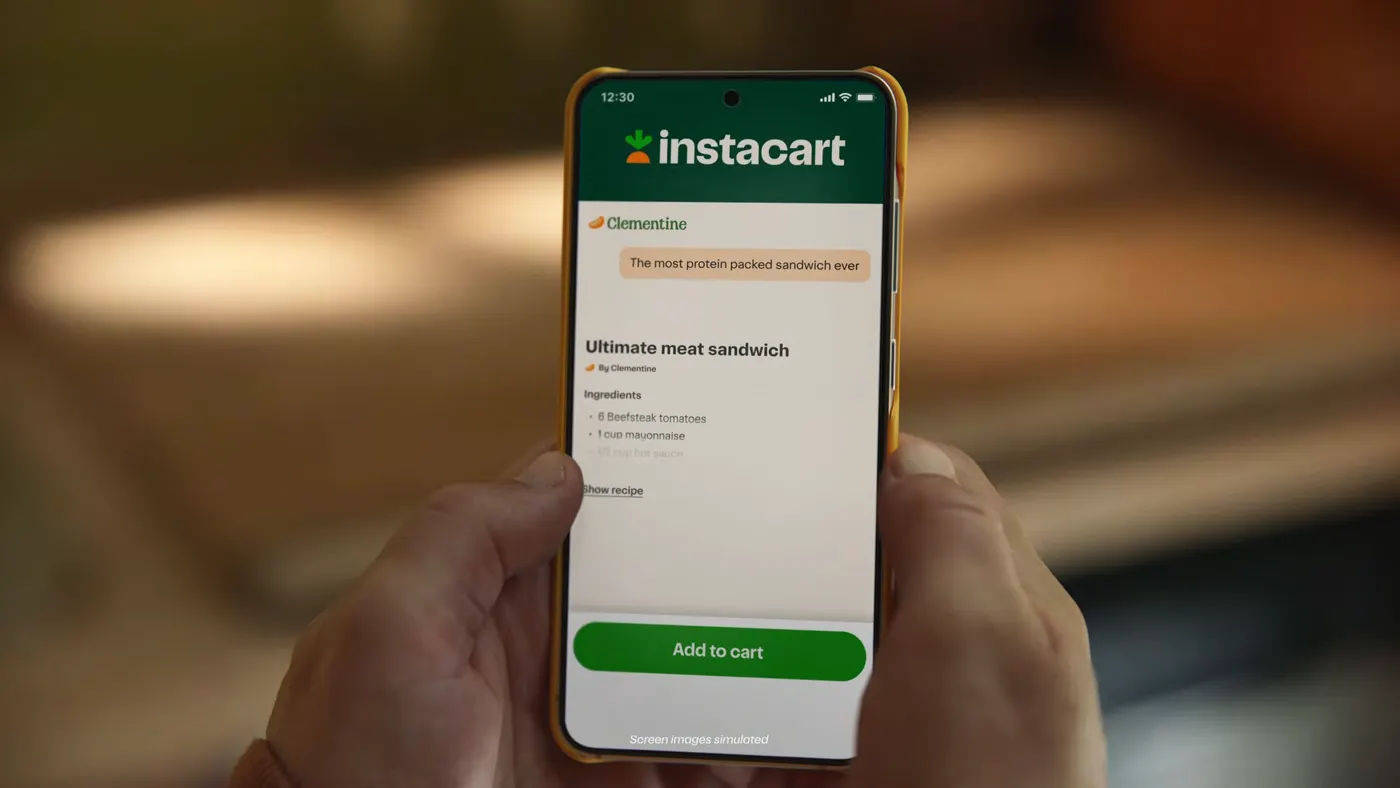
Article top image credit: Courtesy of Instacart
Sponsored
New consumer research shows how online shopping relieves Holiday pressure
New consumer research shows how online shopping relieves Holiday pressure
Online shopping currently captures 31% of everyday household spend, and the holidays are expected to push that higher. In our survey of 1,200 shoppers, 43% said they increased their online shopping over the past six months, versus just 9% who decreased. Holiday plans point toward further acceleration. Asked where they planned to shop this season, 65% of shoppers named mass merchandisers likeWalmart and 58% named online-only retailers, well ahead of grocery stores (36%) and drugstores or pharmacies (11%).¹
Those plans offer a leading indicator on where holiday dollars are expected to flow — and how brands need to be present on the digital shelf when they do.
Delivery handles the logistics, and promotions shape the cart
For a busy household, delivery works as a logistical layer. It takes the crowds, the extra trip and the last-minute scramble off the shopper’s plate. Avoiding crowds (48%) and last-minute needs (36%) sit right alongside convenience as reasons delivery users order more.²
Online shoppers weigh price and convenience core aspects of purchase decisions. This season, the cost of food, beverages and hosting supplies is the top holiday stressor at 44%³, putting further emphasis on consumer value, even within channels that prioritize convenience and time savings.
Among delivery users, 57% look for promotions before they start a cart and 89% say deals influence what they buy.² Done correctly, promotions help integrate the brand directly into the conversion flow as busy shoppers build their hosting carts.
Last Mile Delivery plays a critical role throughout the holiday season
Last mile delivery platforms see a 20% jump in grocery, beauty and household essential orders during peak holiday periods.⁴ These spikes are driven by two distinct behaviors; shoppers proactively outsourcing a portion of holiday shopping logistics and reactively making ‘need-it-now’ purchases during key holiday moments.
The hosting season is a key contributor to ‘need-it-know’ buying, which is also expected to increase in 2026. Almost half of shoppers surveyed plan to move holiday celebrations home, saying they will host and entertain more than last year. When guests are on the way, the shopping list increases in urgency. Foil, cups and paper plates. Last-minute beauty picks. Things people need now, not next week. Two-thirds of shoppers moving celebrations home say they're open to trying a new brand if the deal is right, and 37% say promotions are the #1 influence on holiday purchases.³
Ibotta is uniquely placed to help brands win those moments — one activation reaches 90%+ of the Last Mile through our integrated partnerships with DoorDash, Uber and Instacart.
Three takeaways for brand marketers
Online shopping and Last Mile delivery play a critical role in holiday planning and execution. Delivery shoppers look for deals before they start a cart, and hosting season adds a dependable spike in ‘need-it-now’ purchases. With the Ibotta Performance Network, you can reach both through integrated retail partnerships and connection across 90% of third-party delivery platforms.
Brands should expect more celebrations to happen at home, but also increased competition for a seat at the holiday table. Almost half of surveyed shoppers plan to entertain more at home this holiday season, and 37% say promotions are the #1 influence on holiday purchases.
Shoppers are still celebrating the moments that matter — they're just looking to maximize value within the purchase process. Online shoppers look for promotions before they build a cart, and Ibotta offers give those shoppers a reason to choose your brand. With our pay per sale model, you pay only when campaigns directly result in a verified purchase.
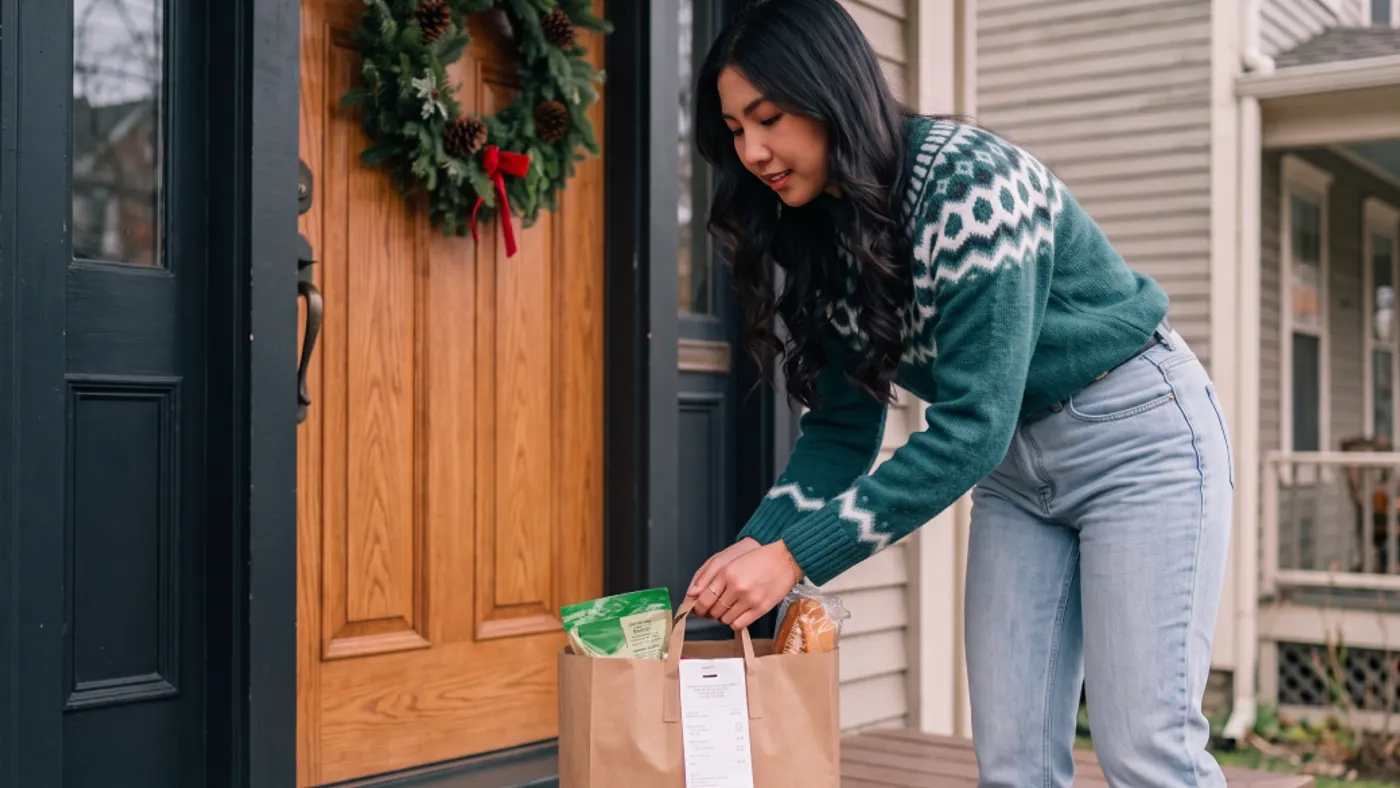
Article top image credit: Permission granted by Ibotta
Grocery e-commerce is soaring, but regional grocers remain in a tough spot
While average order frequency grew in 2025, the likes of Walmart and Amazon created a tricky digital competitive environment for traditional chains.
By: Peyton Bigora• Published Jan. 28, 2026
Grocery e-commerce in 2025 hit a slew of monthly record highs, cementing the shopping method as “no longer an alternative channel” but as a “dominant habit,” according to Brick Meets Click.
Nearly every month in 2025 saw year-over-year growth in e-grocery sales, and December 2025 was no exception, with sales surging to a record $12.7 billion, up 32% year-over-year. The final month of 2025 also saw the online share of total grocery spending reach 19%, up 430 basis points year-over-year, as order frequency rates increased, per Brick Meets Click’s most recent monthly findings.
While December’s results emphasize grocery e-commerce’s banner year, regional grocers remain in a tough spot.
“Structural shifts in shopping behavior drove much of eGrocery’s growth in 2025, and this will create stiffer headwinds in 2026 – especially for regional grocers,” David Bishop, a partner at Brick Meets Click, said in a statement.
Customers are increasingly fragmenting their online grocery spend across several methods, meaning regionals need to be strong across the board in terms of delivery, pickup and ship-to-home services.
For nearly all of 2025, regional grocers’ biggest e-commerce threat was Walmart and fellow mass retailers due to the increase in cross-shopping between those retailers and traditional grocery stores — a metric that has risen every June since 2020, when Brick Meets Click began tracking this shopping behavior.
Already, Amazon’s grocery delivery offering is bolstering ship-to-home’s performance. In December 2025, the segment’s average order value grew 14%, exceeding delivery and pickup, because of Amazon’s same-day fresh grocery delivery offering, according to Brick Meets Click.
Article top image credit: Getty Images
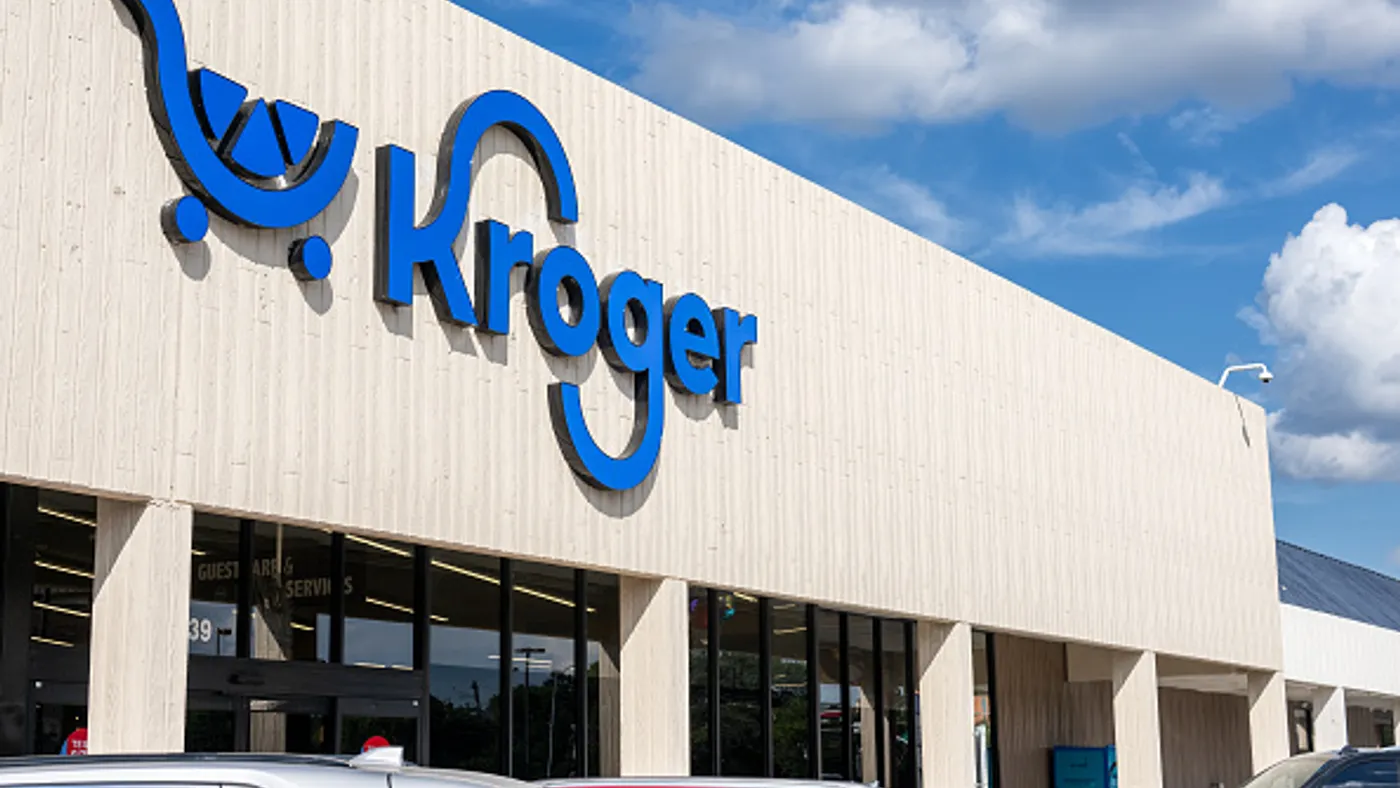
Kroger names former Walmart executive as first e-commerce chief
The grocer tapped Nate Faust for the new top digital role just months after it named fellow Walmart veteran Greg Foran as its CEO.
By: Catherine Douglas Moran• Published Aug. 11, 2026
Kroger announced that Nate Faust will become its executive vice president and chief e-commerce officer on Sept. 1, 2026. Kroger confirmed to Grocery Dive that this is a new role for the company.
Faust brings extensive e-commerce experience to the role, including co-founding Jet.com and serving as senior vice president of Walmart’s e-commerce supply chain. He recently helped start Olive, a sustainable e-commerce logistics company.
Faust’s hiring marks another instance of Kroger naming someone from outside the company to a key role and comes just a few months after Greg Foran, another Walmart veteran, became the grocer’s CEO.
Faust is joining Kroger at a time when the grocery company aims to sharpen its e-commerce operations as a key part of its business improvement strategy.
Kroger is among the bevy of grocers that have seen their comps take a hit in 2026 from weakened pharmacy sales due to impacts from the Inflation Reduction Act and declining egg prices, but e-commerce remains a bright spot.
While Kroger’s identical store sales growth has slowed for the last four consecutive quarters, the grocer’s online sales have brought in double-digit growth. For its most recent quarter, Kroger said that its e-commerce operations turned a profit for the first time. During that quarter, Kroger recorded 19% year-over-year growth in its online sales, led by delivery, and attracted a record number of new households to its e-commerce business, Foran told investors during an earnings call in June 2026.
During that call, Foran said that Kroger needs more consistent execution in online shopping, noting that e-commerce “powers” the company’s high-margin retail media business.Kroger made a big bet on automated online fulfillment centers when it partnered with British tech company Ocado, but it recently scaled back that project and has focused more recently on store-based fulfillment as well as its membership program, Boost.
“Most of the growth in grocery today is happening online,” Foran said on the call. “That’s where the customer is moving, and that’s where we have to lead.”
In the announcement of Faust’s hire, Kroger noted that he brings more than two decades of experience “building and scaling highly impactful eCommerce businesses.” In addition to his time at Jet.com and Walmart, Faust’s resume includes serving as an executive of Diapers.com, which Amazon bought in 2010 when it purchased parent company Quidsi.
“Nate built businesses that redefined what customers expect from eCommerce, built on speed, value and the experience of getting exactly what the customer ordered," Foran said in a statement. “That is the standard we are holding ourselves to as we grow our digital business. I am thrilled to welcome Nate to the team.”
Faust’s time at Walmart overlapped with Foran, who was president and CEO of Walmart U.S. from 2014 to 2019.
Faust marks the latest C-suite change at Kroger since Foran joined the company in February 2026. Kroger named a new chief people officer in July and in March tapped Milen Mahadevan, formerly president of its 84.51° analytics unit, to serve as the grocer’s chief data and AI officer. Tim Massa, Kroger’s executive vice president and chief associate experience officer, plans to retire from the company on Sept. 18, 2026.
Article top image credit: Brandon Bell / Staff via Getty Images
Will high-speed grocery delivery allow Amazon and Walmart to close the gap on convenience?
As the retailers tap their vast fulfillment capabilities to build out 30-minute delivery services, they’re threatening advantages supermarkets enjoy by being close to their customers.
Look beneath the surface, however, and the race between the two retail giants to satisfy consumers' desire for speed exposes an emerging trend that could eventually have profound implications across the grocery sector, according to industry analysts.
Amazon and Walmart have long posed a threat to brick-and-mortar grocers online because of their vast reach and deep pockets. But as they build out their 30-minute offerings, they are taking away perhaps the top benefit grocery chains provide customers — convenience — said David Bishop, partner at grocery e-commerce consultancy Brick Meets Click.
Rapid delivery is “undercutting one of the core strategic advantages that regional grocers or supermarkets have historically enjoyed in the physical world, which is proximity to the customer,” Bishop said.
Amazon’s 30-minute delivery service, Amazon Now, already serves several major markets, including Atlanta, the Dallas-Fort Worth area, Philadelphia and Seattle. The company plans to bring the service to dozens more cities by the end of 2026.
Walmart, meanwhile, currently offers its 30-minute service in 33 markets, noting that its network of stores gives it “significant opportunity to continue expanding delivery capabilities to more communities over time.” While Walmart formally announced the 30-minute service on May 28, 2026 it has been fulfilling orders that fast for more than a year, according to the retailer.
In another example of how Walmart is flexing its delivery muscles, the retailer recently announced that it would begin providing 30-minute restaurant delivery, starting with Subway locations in select stores.
Bishop pointed out that Amazon and Walmart pose an especially potent threat because they can quickly deliver basic goods that people are highly familiar with and buy often.
“If Amazon is able to demonstrate to households the ability to consistently and reliably deliver a quality product that’s a banana, to say the least, that’s concerning, because that has traditionally been one of the main trip drivers for supermarkets,” he said.
Michael Infranco, assistant vice president of RetailStat, observed that the recent steps by Walmart and Amazon to make grocery delivery more accessible are key reasons why traditional retailers are working with third-party providers to quickly scale up their e-commerce capabilities.
“They’re definitely putting pressure on [grocers], and you would expect them to keep running with that as long as they can,” Infranco said. “Anything that they can do to get a leg up on somebody else, they’re going to do via their size.”
In an example of how supermarket operators have looked outside for assistance in building up their delivery services, Kroger over the past year stepped up its partnerships with providers including Instacart, Uber and DoorDash. Kroger also works with those companies to provide 30-minute convenience delivery.
Albertsons and Ahold Delhaize have also looked to third-party providers to help them establish 30-minute delivery services.
Bishop noted that with its 30-minute service, Walmart is putting its stake in the ground as a “quick-trip” destination — a moniker the retailer has never had before.
Amazon, meanwhile, is gaining momentum by pivoting to better meet shopper expectations by putting groceries into the same category as its overall e-commerce business, Bishop said.
“They’ve realized, ‘Hey, you know what? We’re creating friction, so let’s bring the products to the customer and put them where the customers are shopping, instead of putting it in the Whole Foods tab or the grocery tab.’ It’s now in the same day tab or the Prime Now tab,” he said.
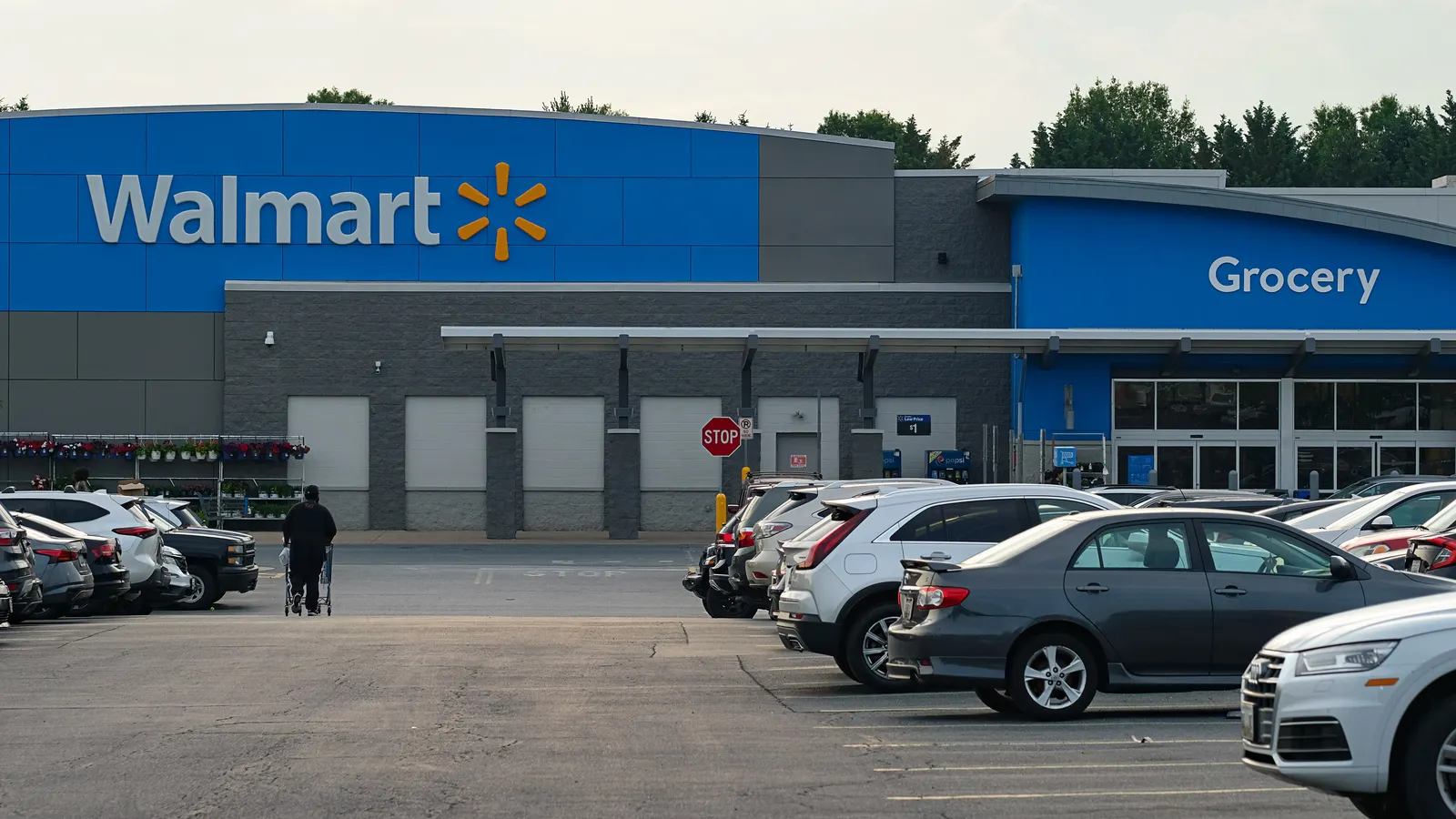
A Walmart location in Germantown, Md. The retailer is tapping its vast store network as it looks to expand its delivery capabilities.
Sam Silverstein/Grocery Dive
What’s in store for Amazon and Walmart in high-speed grocery delivery?
Bishop said he thinks that while Amazon’s dominant online presence gives it a powerful lever to expand its grocery business, its relatively small brick-and-mortar presence is a liability that it eventually will need to address.
The company’s decision in January 2026 to shutter its entire fleet of Amazon Fresh supermarkets left it with only Whole Foods Market as a foothold in the physical grocery store space.
On the other hand, Amazon’s ability to bring fresh foods into its enormous online fulfillment operations was a “seminal moment” for Amazon because it allowed the company to build momentum in the grocery space on turf it knows best, Bishop said.
“What’s clear is now, after 20 years of learning, Amazon has identified and aligned with its core shoppers currently, and that’s going to drive strong growth for them over the next year or two,” he said. “But eventually they’ve got to figure out the physical in-store presence, because without that they’re missing the pick-up segment.”
Pickup also presents an opportunity for Walmart to improve, Bishop added, noting that the company faces strong competition from Target — another mass retailer with a large physical store presence — in the pickup space. That could change if Walmart is able to speed up its pickup operations, including its efficiency in getting orders to people when they show up to collect them, he said.
“That’s helped Target compete against Walmart, because it has a point of competitive differentiation, which is the speed of its cycle times for drive up and its speed of service. It's still gold standard,” Bishop said.
Infranco said Amazon’s massive scale in e-commerce doesn’t guarantee it a leading spot in the 30-minute grocery-delivery space.
“Just because Amazon says they’re going to do it doesn’t mean they’re going to do it well or do it forever,” he said. “Grocery has been very hard for Amazon … they’ve been in that game for a while, and it seems like they’ve had just as many setbacks as they had victories.”
Infranco pointed to Amazon’s purchase of Whole Foods almost a decade ago as a development that didn’t turn out to be as disruptive as many in the grocery industry had anticipated.
“Amazon goes and buys Whole Foods, and everybody’s saying, ‘Oh my god, the grocery business has changed forever.’ Well, you’re almost 10 years later [and] from the Amazon owning Whole Foods standpoint, the sector hasn’t changed all that much,” he said.
Article top image credit: Daphne Howland/Grocery Dive
Walmart expands drone delivery of groceries and other goods
By next year, the retailer and partner Wing plan to offer aerial delivery from more than 270 stores across the country.
By: Peyton Bigora• Published Oct. 7, 2026
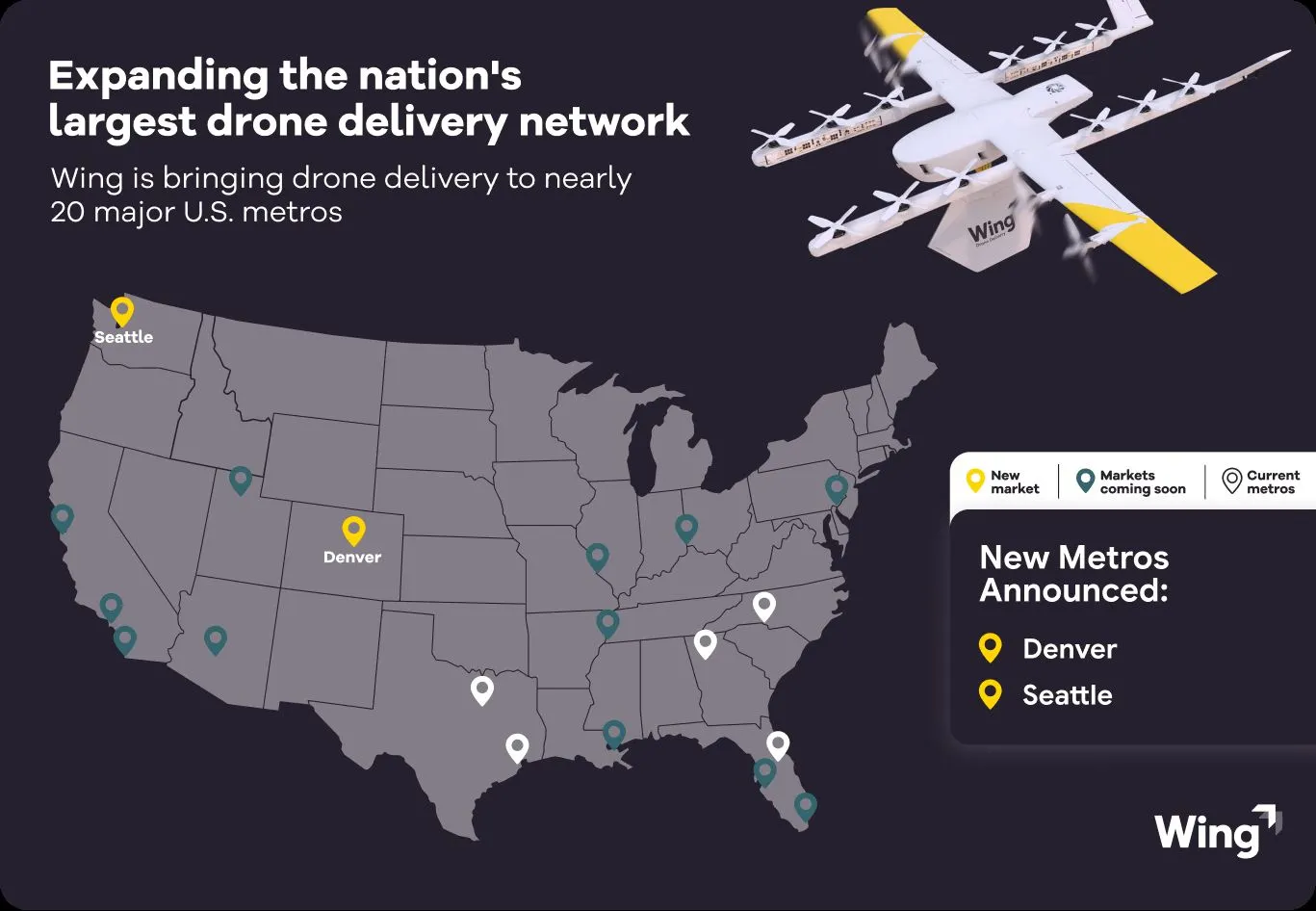
Walmart and Wing are expanding drone delivery to the Denver and Seattle metro areas in 2027, the companies recently announced. The companies currently provide drone delivery in five U.S. markets and have a dozen additional markets slated for expansion.
The addition of Denver and Seattle marks the latest development by Walmart and Wing to scale drone delivery coast to coast and to more than 270 Walmart stores in 2027.
Walmart and Wing announced at the start of 2026 plans to scale drone delivery to an additional 150 Walmart locations over the course of this year — an expansion that underscores the potential the retailer sees for aerial delivery of groceries and other goods.
“Expanding drone delivery to Seattle and Denver is about giving more customers a practical option when they need something quickly,” Greg Cathey, senior vice president of eCommerce transformation at Walmart, said in a statement.
Currently, Walmart offers drone delivery services to customers in the metropolitan Houston, Atlanta, Dallas-Fort Worth, Orlando and Charlotte markets, according to the press release. Markets listed as “coming soon” include Los Angeles, San Francisco, Cincinnati, New Orleans, St. Louis and Tampa. Walmart and Wing have yet to confirm when exactly drones will take flight in these “coming soon” regions.
Map of where Walmart and Wing already offer drone delivery as well as markets they plan to enter as of Oct. 5, 2026.
Wing’s drones can cruise at up to 60 mph and carry up to five pounds, per the announcement, including fresh and packaged groceries.
Once drone delivery becomes available, customers can request the service through the Walmart app or website. Shoppers can also place orders through the Wing app, the press release noted.
Article top image credit: Courtesy of Walmart
Mass retailers draw level with supermarkets as primary grocery destinations, research shows
People have become just as likely to cite a retailer like Walmart or Target as a supermarket when asked where they spend most of their food budget, according to data from FMI.
By: Sam Silverstein• Published May 28, 2026
Mass retailers have become just as likely as supermarkets to be people’s main source of groceries, underscoring the powerful role merchants like Walmart and Target play in defining how U.S. consumers keep their homes stocked with food, a new report from FMI — The Food Industry Association shows.
Thirty-seven percent of shoppers who participated in the trade group’s annual shopper trends survey in early 2026 cited a mass merchant when asked where they “spend the most money on grocery-type items” — about the same as the share who mentioned a traditional grocery banner. By contrast, people who took part in the research a year ago were considerably more likely to name a supermarket than a mass retailer as their primary grocery store.
Compounding the headwinds facing traditional supermarket operators, younger shoppers tend to favor mass retailers while people in older generations lean toward traditional retailers, FMI said in its U.S. Grocery Shopper Trends 2026 report, which it developed with consulting firm The Hartman Group. The report is based on responses to an online survey from 2,023 people conducted from Feb. 4-18, 2026.
Underscoring the critical role brick-and-mortar stores continue to play in food retailing, just over half (54%) of participants in the survey said they always visit physical locations to purchase groceries. Another 20% do so most of the time, and only 15% divide their purchases evenly between physical and online stores.
Traditional supermarkets are even more dependent on in-store shoppers, with more than two-thirds of respondents indicating that they always make purchases in person through that type of retailer. By contrast, just 40% said they shop at mass retailers like Walmart only by visiting physical stores, FMI found.
While only a small minority (12%) of shoppers buy groceries almost exclusively online, the share of people who use digital grocery channels for some of their purchases is rising. Seventy-two percent of participants in the survey said they use grocery e-commerce services “at least occasionally,” up from 67% in last year’s poll and 49% in early 2020, according to FMI.
Among shoppers who use delivery or pickup for groceries, 62% identified the same retail location as their primary store for online purchases and in-person shopping.
According to the report, shoppers place an especially high priority on factors like cleanliness, clear signage and the ability to inspect fresh foods when assessing the in-store experience. On the other hand, people’s interest in visiting physical stores for inspiration and ideas is waning as they grow more reliant on digital platforms for exploration, FMI said.
“Discovery is one of the areas where the lost ground of the physical store is most telling. Once among brick-and-mortar’s strongest domains, discovery (including browsing for inspiration and ideas) is increasingly also happening online, particularly through social media,” the report said.
Article top image credit: Getty Images
The new era of grocery e-commerce
A growing number of chains have established proprietary e-commerce platforms that put their brands front and center. Retailers are taking steps to improve profitability and the online shopping experience, realizing the important role digital still plays in their sales and customer loyalty.
included in this trendline
What new digital storefronts from Walmart and Aldi say about the future of e-grocery
6 takeaways from Instacart’s IPO filing
Why Save Mart believes the future is built on data
Our Trendlines go deep on the biggest trends. These special reports, produced by our team of award-winning journalists, help business leaders understand how their industries are changing.